
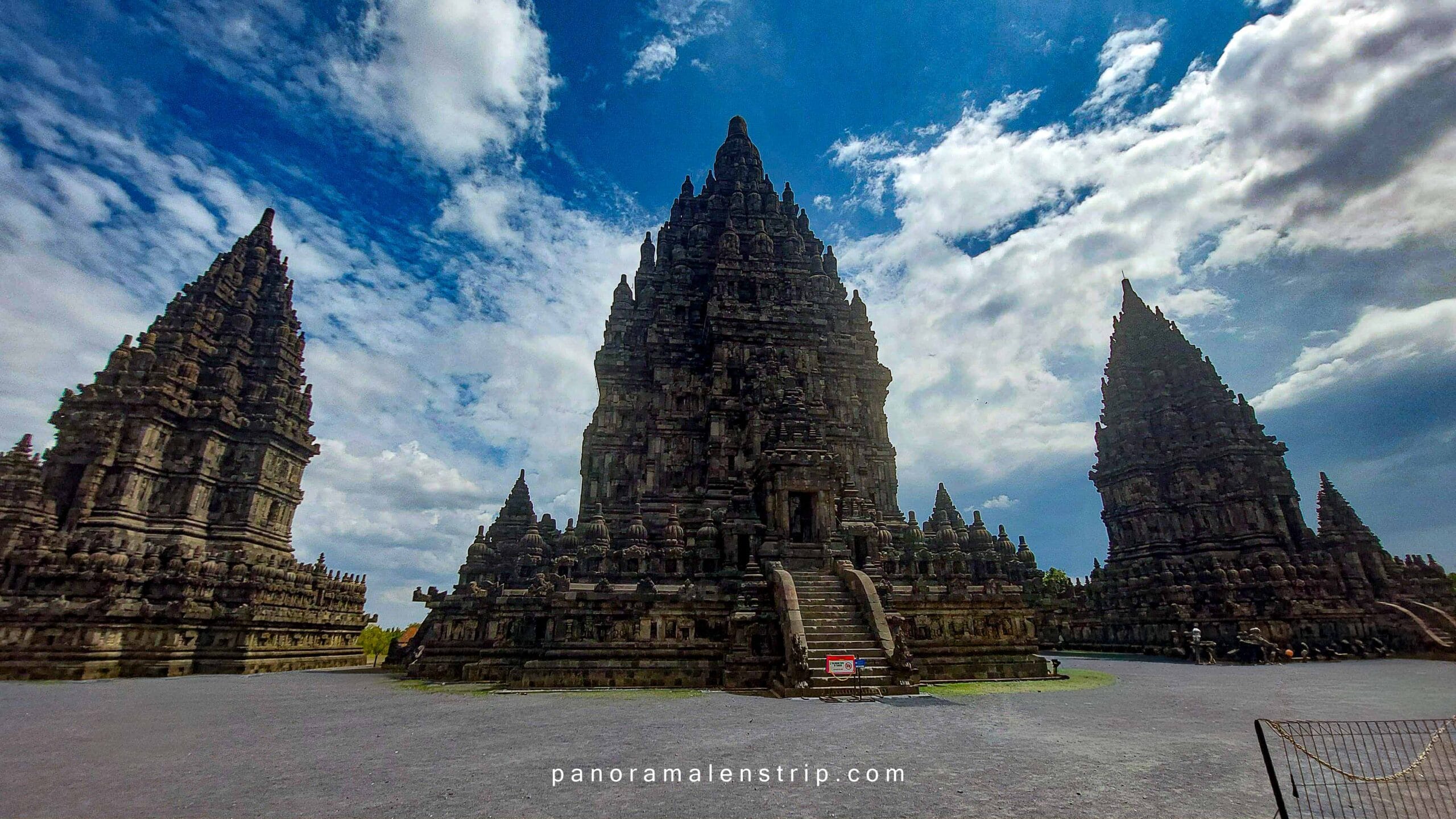
What Is Prambanan Temple and Why It Matters
Prambanan Temple is the largest Hindu temple complex in Southeast Asia and one of Indonesia’s most important heritage sites. Located near Yogyakarta in Central Java, it was built in the 9th century and dedicated to the Trimurti: Brahma, Vishnu, and Shiva. The central Shiva shrine rises dramatically above the surrounding temples, symbolizing Mount Meru, the sacred mountain in Hindu belief.
What makes Prambanan truly matter is its role as a cultural bridge between past and present. The site preserves classical Javanese art at its finest, from towering spires to narrative stone reliefs that depict episodes from the Ramayana. These carvings are not decorative alone; they transmit religious values, social order, and royal ideology.
Globally, Prambanan holds UNESCO World Heritage status, confirming its outstanding universal value. Locally, it is a living symbol of identity, education, and tourism. For visitors, the complex offers more than beauty—it reveals how faith, politics, and artistry once shaped a powerful civilization. Understanding Prambanan is essential to understanding Java’s historical soul.
Origins of Prambanan Temple in Ancient Java
Political and Religious Background
Prambanan emerged during the 9th century under the Mataram Kingdom, a period marked by dynamic political rivalry and religious expression. Central Java was then a crossroads of Hindu and Buddhist traditions. While nearby Borobudur celebrated Buddhism, Prambanan asserted Hindu devotion on a monumental scale. Temples were instruments of legitimacy: rulers built them to display divine sanction, consolidate authority, and unify diverse communities under shared beliefs.
This era valued cosmic order. Architecture followed sacred geometry, aligning earthly space with spiritual meaning. By dedicating the complex to Shiva and the Trimurti, the court communicated its alignment with powerful deities and reinforced a worldview that placed the king within a divine hierarchy.
Founders and Royal Patronage
Historical inscriptions attribute Prambanan’s construction to King Rakai Pikatan and subsequent rulers of the Sanjaya dynasty. Royal patronage funded vast labor forces, skilled artisans, and priestly supervision. The project unfolded over decades, reflecting sustained political commitment. More than a place of worship, Prambanan became a ceremonial center, projecting royal prestige and theological authority across Java. Its origins reveal how statecraft and spirituality were inseparable in ancient Indonesian society.
Architectural Design of Prambanan Temple Complex
Trimurti Concept
At the heart of Prambanan lies the Trimurti concept—three principal deities governing creation, preservation, and destruction. The towering Shiva temple dominates the complex, flanked by shrines to Vishnu and Brahma. This arrangement expresses theological hierarchy and cosmic balance, with Shiva’s central position symbolizing supreme spiritual power.
Layout, Towers, and Reliefs
Originally comprising over 240 structures, the complex is organized in concentric zones. Inner courtyards hold the main temples; outer rings once contained smaller shrines. Slender, pointed towers draw the eye upward, while stone reliefs along galleries narrate the Ramayana and other sacred stories. These carvings function as visual scripture, guiding devotees through moral lessons and mythic history.
Symbolism in Hindu Cosmology
Every architectural choice carries meaning. Vertical lines represent ascent toward the divine. The temple’s alignment mirrors cosmic order, linking the human realm to the heavens. Through form and ornament, Prambanan transforms stone into a three-dimensional map of Hindu cosmology.
Legends and Myths Surrounding Prambanan
The Tale of Roro Jonggrang
Among the most enduring stories is the legend of Princess Roro Jonggrang. According to folklore, Prince Bandung Bondowoso sought her hand in marriage. To avoid the union, the princess demanded he build a thousand temples in a single night. When he nearly succeeded, she tricked him, and he cursed her into becoming the final statue. Many locals identify a Durga figure in the Shiva temple as the princess herself.
Myth vs Historical Evidence
Archaeology tells a different story. Prambanan was built over decades, not overnight, and by organized royal labor. Yet myths persist because they humanize history. They embed emotion, cautionary lessons, and cultural memory into the monument. The coexistence of legend and fact enriches Prambanan’s meaning, allowing visitors to experience both scholarly history and living tradition.
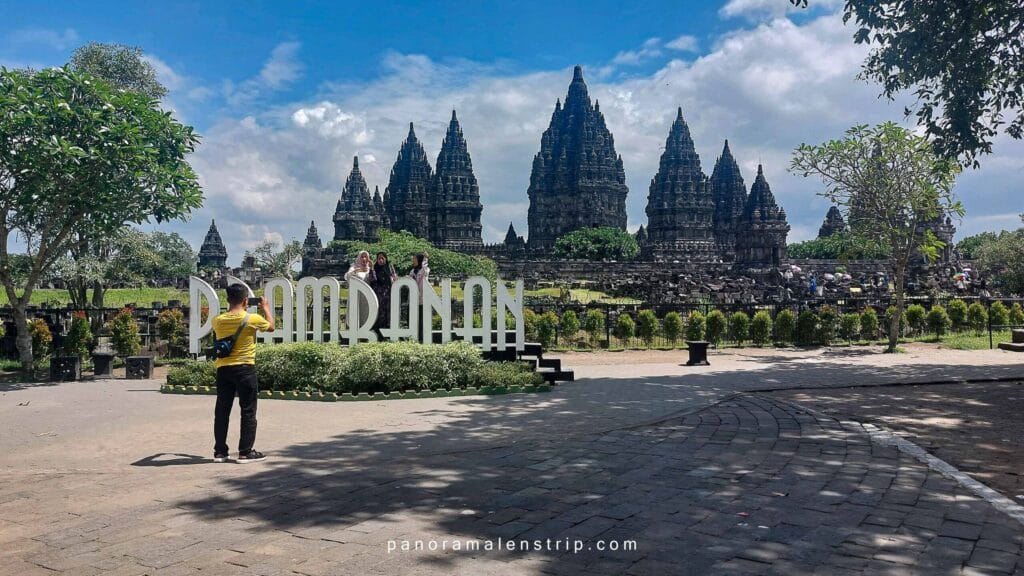
Religious Role in Ancient Javanese Society
Hindu Rituals and Ceremonies
In its prime, Prambanan functioned as a major religious center for Hindu worship in Central Java. Priests performed daily rituals, offerings, and seasonal ceremonies dedicated to the Trimurti—Brahma, Vishnu, and especially Shiva. The temple layout guided devotees through sacred space, symbolizing the journey from the human realm to the divine. Stone reliefs acted as visual scripture, helping worshippers understand epics such as the Ramayana and reinforcing moral values through storytelling. Major festivals likely drew pilgrims from surrounding regions, strengthening communal identity and affirming the spiritual authority of the ruling elite.
Relationship with Buddhism
Although Prambanan was a Hindu monument, it coexisted peacefully with nearby Buddhist sites such as Borobudur. This proximity reflects a period of religious pluralism rather than conflict. Hindu and Buddhist communities shared artistic styles, architectural techniques, and even philosophical ideas. The religious role of Prambanan therefore extended beyond devotion; it embodied a uniquely Javanese synthesis of faiths. This harmonious relationship illustrates how ancient Java balanced spiritual diversity within a single cultural landscape.
Decline and Abandonment Over the Centuries
Natural Disasters and Political Shifts
By the late 10th century, Prambanan began to lose its central role. Political power shifted eastward in Java, drawing royal attention and resources away from the region. Without continuous patronage, maintenance of the massive complex became difficult. As ceremonial life faded, the temples gradually fell into disuse. What was once a thriving religious center became vulnerable to time and neglect.
Impact of Volcanic Activity
Java’s volatile geology also contributed to Prambanan’s decline. Earthquakes damaged structures, while volcanic eruptions from nearby Mount Merapi blanketed the area in ash. Over centuries, stones collapsed, vegetation reclaimed courtyards, and the complex disappeared into the surrounding landscape. The site was not intentionally destroyed; rather, it was slowly surrendered to nature. This long period of abandonment forms a quiet but essential chapter in Prambanan’s history, reminding us how even the grandest monuments depend on human care.
Rediscovery and Restoration in Modern Times
Dutch Colonial Excavations
Prambanan reentered public awareness in the 18th and 19th centuries when European explorers documented the ruins. Systematic archaeological work began under Dutch colonial administration in the early 20th century. Researchers cataloged thousands of fallen stones, mapped original layouts, and initiated careful reconstruction of the main temples. The restoration of the Shiva temple in 1953 marked a major milestone, transforming a neglected ruin into a visible national treasure.
UNESCO and International Efforts
After Indonesian independence, conservation became a national priority. In 1991, Prambanan was inscribed as a UNESCO World Heritage Site, attracting global support. International experts contributed to structural stabilization, seismic reinforcement, and detailed documentation. Modern technology, combined with traditional craftsmanship, ensured that restoration respected historical authenticity. Today, Prambanan stands not as a replica, but as a carefully preserved testament to ancient engineering. Its revival demonstrates how global cooperation can protect shared human heritage.
Prambanan Temple and UNESCO World Heritage Status
UNESCO recognized Prambanan for its outstanding universal value as the largest Hindu temple complex in Southeast Asia and a masterpiece of classical Javanese architecture. This designation provides international protection, technical guidance, and funding for long-term conservation. It also obligates Indonesia to preserve the site for future generations.
World Heritage status elevated Prambanan from a national monument to a global cultural asset. It increased scholarly research, encouraged responsible tourism, and raised awareness of Indonesia’s historical contributions to world civilization. More importantly, it ensures that Prambanan’s spiritual, artistic, and historical significance remains intact. Through UNESCO stewardship, the temple continues to educate, inspire, and connect people across cultures, affirming its enduring place in humanity’s shared past.
Cultural Significance in Indonesian Identity
Arts, Dance, and Ramayana Ballet
Prambanan is not only a historical monument; it is a living stage for Indonesian culture. One of its most celebrated traditions is the Ramayana Ballet, performed in the open-air theater with the illuminated temples as a backdrop. Through dance, music, and drama, ancient stories carved in stone are brought to life. These performances preserve classical Javanese arts while making them accessible to modern audiences. Beyond the ballet, Prambanan inspires visual arts, literature, and education, reinforcing cultural continuity across generations.
National Heritage Symbol
As a UNESCO World Heritage Site, Prambanan represents Indonesia on the global stage. It embodies resilience, faith, and creativity—values deeply rooted in the nation’s identity. For Indonesians, the temple is a reminder that their heritage predates colonial history and reflects a sophisticated civilization. Prambanan’s careful preservation and promotion affirm a collective commitment to protecting cultural memory, making it a powerful symbol of national pride and unity.
Prambanan vs Borobudur: A Historic Comparison
Hindu vs Buddhist Worldviews
Prambanan and Borobudur, located only about 40 kilometers apart, present two distinct spiritual philosophies. Prambanan expresses Hindu devotion through towering shrines dedicated to the Trimurti, emphasizing divine hierarchy and ritual worship. Borobudur, by contrast, embodies Buddhist ideals of enlightenment, guiding pilgrims through a meditative journey toward spiritual awakening. Together, they reveal Java’s historical openness to diverse belief systems.
Architecture and Layout
Architecturally, the contrast is striking. Borobudur is a massive, stepped stupa with a circular plan, designed for contemplative movement. Prambanan is vertical and dramatic, with pointed spires and linear courtyards that draw the eye upward. Reliefs at Borobudur teach through calm symbolism, while Prambanan’s carvings narrate epic stories. Comparing the two deepens understanding of how religion shaped form, function, and meaning in ancient Java, highlighting a rare coexistence of monumental traditions.
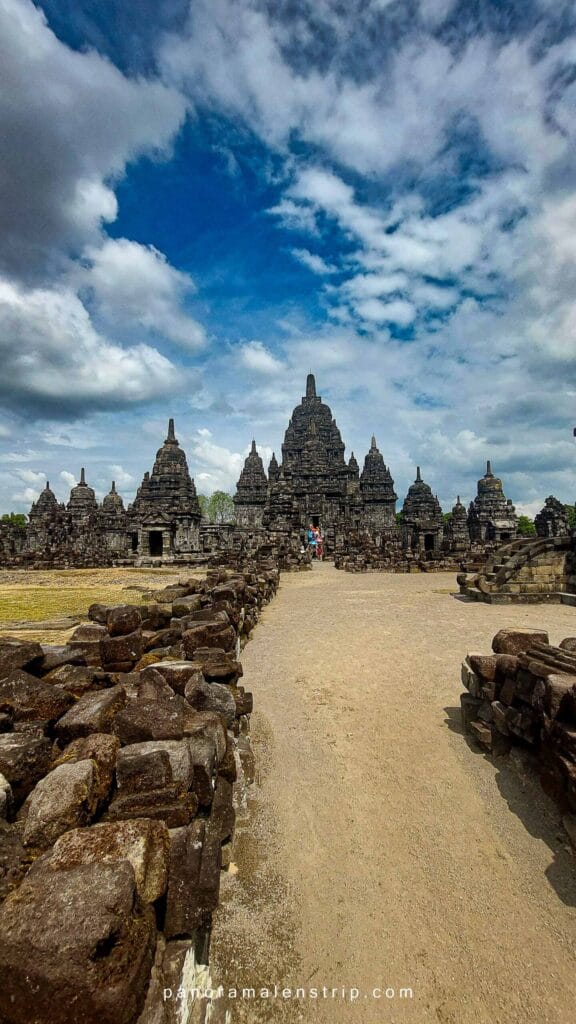
What Visitors Learn from the History of Prambanan Temple
Visitors to Prambanan gain more than a visual experience. They learn how ancient societies used architecture to express faith, authority, and cosmic order. The reliefs reveal moral teachings through storytelling, while the layout demonstrates sophisticated engineering and sacred geometry. Travelers also discover a history of resilience—how the temple was abandoned, rediscovered, and restored through international cooperation. Most importantly, visitors understand that heritage is not static. Prambanan’s past continues to shape art, education, and identity today, offering lessons about cultural continuity, religious tolerance, and the enduring power of human creativity.
Travel Tips for Exploring Prambanan Temple
Best Time to Visit
Visit early in the morning or late in the afternoon to avoid heat and crowds. The dry season, from May to September, offers clearer skies and better light for photography.
Dress Code and Etiquette
Dress modestly by covering shoulders and knees. Remain within designated paths, avoid climbing on structures, and respect areas reserved for conservation. Remember that Prambanan is a sacred site, not only a tourist attraction.
Accessibility and Facilities
Prambanan is easily reached from Yogyakarta by car, train, or tour bus. On-site facilities include guided tours, a visitor center, museums, rest areas, and dining options. Clear signage and pathways make the complex accessible for most visitors, ensuring a comfortable and enriching experience.
Also Read about: Complete Guide to Trip Yogyakarta
Conclusion: Why Prambanan’s History Still Inspires
The history of Prambanan Temple is a story of devotion, design, and resilience. From its 9th-century origins to centuries of silence and a careful modern revival, Prambanan shows how faith and artistry can outlast time. Its spires, reliefs, and legends continue to educate, unite, and inspire visitors from around the world. If you seek meaning in travel, Prambanan offers more than a view—it offers a living connection to humanity’s shared past.
FAQs About the History of Prambanan Temple
1. When was Prambanan Temple built?
It was constructed in the 9th century during the Mataram Kingdom.
2. Why is Prambanan historically important?
It is Southeast Asia’s largest Hindu temple complex and a UNESCO World Heritage Site.
3. Who founded Prambanan Temple?
Inscriptions link its construction to King Rakai Pikatan and the Sanjaya dynasty.
4. What is the legend of Roro Jonggrang?
Folklore says a princess was turned into stone after demanding a thousand temples be built in one night.
5. Why was Prambanan abandoned?
Political shifts, earthquakes, and volcanic activity led to its gradual decline.



[…] Also read: History of Prambanan Temple: Origins, Myths & Legacy […]
[…] Drone restrictions exist to protect structural integrity, visitor safety, and UNESCO World Heritage … The temple complex features ancient volcanic stone towers vulnerable to vibration and physical impact. High visitor density further elevates safety concerns. […]