TL;DR Summary
- A Tanjung Puting orangutan tour is a private river expedition inside Tanjung Puting National Park to observe wild and semi-wild orangutans at managed feeding stations.
- Most journeys last 3 days and 2 nights aboard a traditional klotok boat.
- Wildlife access follows a conservation-led platform system at Camp Leakey, Pondok Tanggui, and Tanjung Harapan.
- Luxury charters include private cabins, curated dining, and dedicated guides.
- The dry season offers optimal river light and stable trekking conditions.
- Premium planning ensures privacy, timing control, and stronger photographic outcomes.
A Tanjung Puting orangutan tour operates as a private river expedition through protected rainforest in Indonesian Borneo. Guests fly into Pangkalan Bun, transfer to Kumai port, and board a klotok boat that cruises along the Sekonyer River toward Camp Leakey and regulated feeding stations. We have tested this route repeatedly with Panorama Lens Trip to refine wildlife timing, comfort standards, and photography positioning. High-net-worth travelers and serious photographers choose this experience for ethical orangutan encounters, curated jungle access, and uninterrupted river landscapes that reward patience and precision.
How Does a Tanjung Puting Orangutan Tour Work?
A Tanjung Puting orangutan tour begins with arrival in Pangkalan Bun, followed by a land transfer to Kumai harbor. Guests board a private klotok and cruise the Sekonyer River deep into Tanjung Puting National Park. Guided visits rotate between Tanjung Harapan, Pondok Tanggui, and Camp Leakey, where regulated feeding sessions allow structured wildlife observation within conservation guidelines.
What Happens on Day One? (Arrival & River Embarkation)
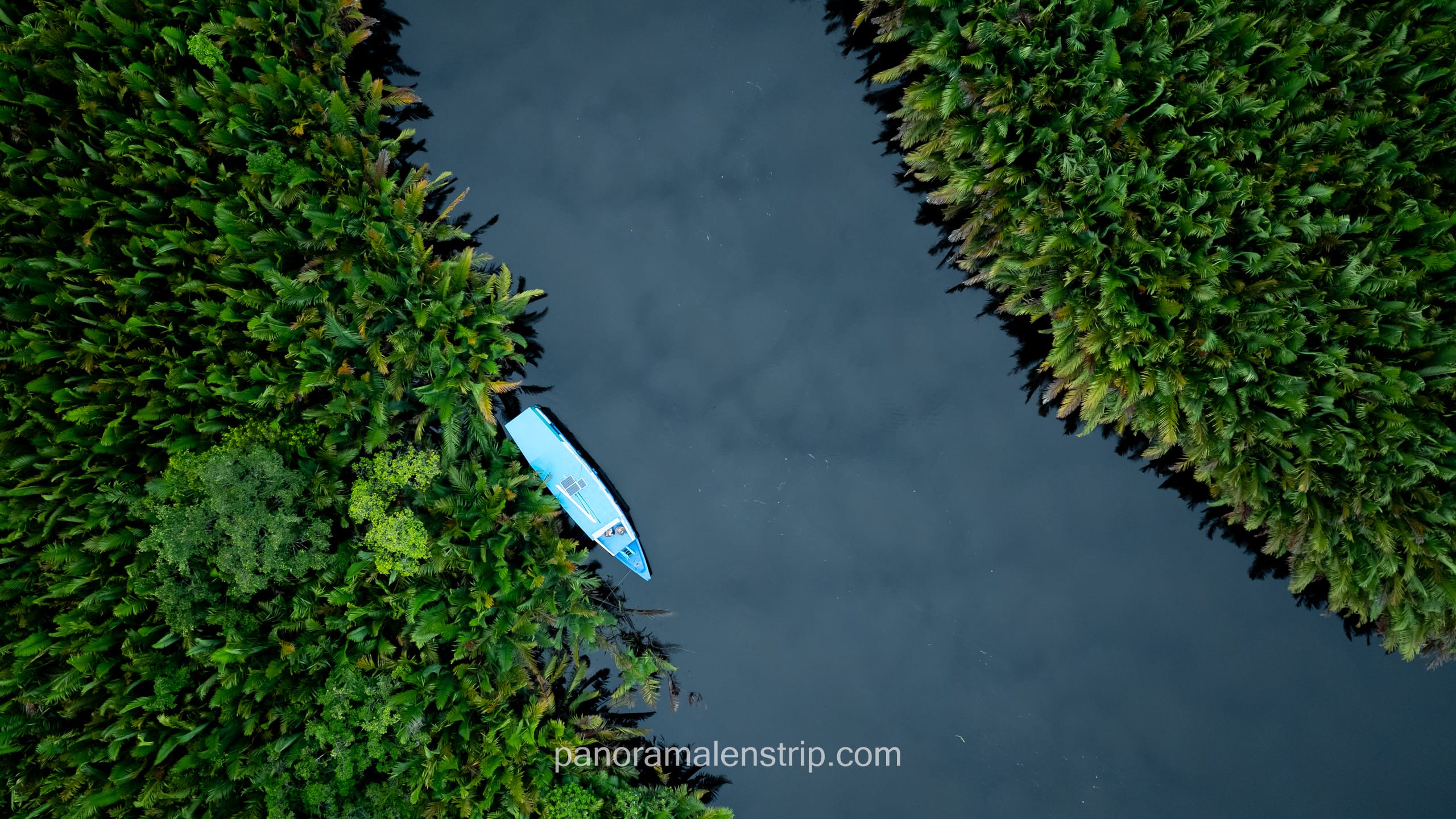
Day one focuses on transition from airport to rainforest immersion. After landing in Pangkalan Bun, guests transfer to Kumai and embark on their klotok. The boat glides along the Sekonyer River, passing nipa palms and proboscis monkeys. Lunch is served onboard while the jungle canopy gradually closes in. Afternoon visits often begin at Tanjung Harapan.
What Happens During Jungle Feeding Sessions?
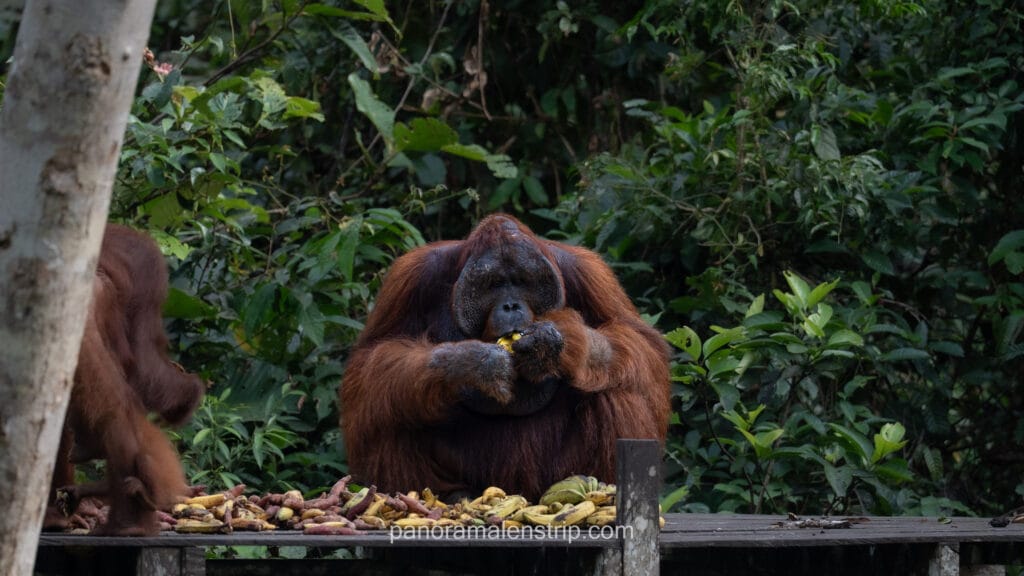
Feeding sessions occur on raised wooden platforms inside protected forest zones. Rangers place fruit to supplement natural diets without creating dependency. Orangutans descend from the canopy unpredictably, which preserves wild behavior patterns. Visitors maintain strict distance rules and follow guide instructions at all times.
This ecological management model balances tourism revenue with habitat protection. Conservation partnerships support long-term rehabilitation and forest monitoring programs. Ethical distance practices prevent disease transmission and reduce behavioral stress on primates.
Step directly into the rainforest atmosphere and visualize the mist, river reflections, and canopy movement by watching our latest field expedition video from Central Kalimantan.
What Is a Klotok Boat and Why Does It Matter?
A klotok is a traditional Indonesian wooden riverboat adapted for multi-day expeditions. Private charters include sleeping cabins, shaded viewing decks, and onboard chefs. The open upper deck offers stable shooting angles for telephoto wildlife photography. Slow river navigation also reduces noise pollution and wildlife disturbance.
Where Exactly Is Tanjung Puting and Why Is It Unique?
Tanjung Puting lies in Central Kalimantan on the island of Borneo in Indonesia. The region forms part of Tanjung Puting National Park, a protected rainforest reserve covering peat swamp, lowland forest, and river ecosystems. Its legal protection status safeguards one of the world’s most important orangutan habitats.
How Does the Sekonyer River Shape the Experience?
The Sekonyer River functions as the park’s primary access corridor. Boats replace roads, which preserves forest integrity and limits mass tourism. Morning mist creates soft, diffused light ideal for wildlife photography. Tidal patterns also influence boat positioning and trekking schedules.
Why Is Camp Leakey Globally Significant?
Camp Leakey serves as a long-standing orangutan research and rehabilitation center founded in 1971. Researchers have supported reintroduction programs that contributed to measurable population stabilization in protected zones. Some conservation reports estimate localized recovery improvements exceeding 10 percent over monitored decades. This scientific legacy strengthens the park’s global credibility and reinforces its role in responsible wildlife tourism.
When Is the Best Time for a Tanjung Puting Orangutan Tour?
The best time for a Tanjung Puting orangutan tour is the dry season between June and September. River levels remain stable, humidity feels lower, and trekking trails stay firm. Photographers benefit from clearer skies, softer morning mist, and more predictable light along the Sekonyer River.
During these months, rainfall averages drop below 150 mm per month, compared to peaks exceeding 300 mm in the rainy season. Lower precipitation improves boat navigation and reduces schedule disruptions. Wildlife visibility also improves because orangutans move more frequently between feeding platforms and forest edges.
Dry Season vs Rainy Season Comparison
Dry months offer smoother river cruising and longer golden hour windows. Rainy months bring lush foliage but heavier downpours and variable river currents. Higher water levels can speed navigation but may reduce stable docking conditions.
| Season | Wildlife Activity | River Conditions | Photography Quality | Luxury Comfort Factor |
|---|---|---|---|---|
| Dry Season (Jun–Sep) | Predictable feeding visits | Stable depth, easier docking | Clearer skies, soft mist | Higher comfort, fewer delays |
| Rainy Season (Oct–May) | Active but dispersed | Higher rainfall, shifting currents | Dramatic clouds, lower consistency | Humid, occasional disruptions |

What Level of Luxury Can You Expect on a Private Orangutan Tour?
A private orangutan tour delivers exclusive klotok charters with air-conditioned cabins, curated dining, and dedicated wildlife guides. Guests enjoy flexible schedules, private upper decks, and personalized service layers. The experience prioritizes privacy, comfort, and refined access inside Tanjung Puting National Park.
What Separates Standard Tours from Premium Expeditions?
Standard tours operate on shared departures with fixed feeding times and limited cabin space. Premium expeditions adjust schedules to avoid crowd overlap and optimize wildlife light. Private chefs prepare tailored menus, while naturalists interpret primate behavior in depth.
Industry surveys suggest that 68% of luxury wildlife travelers prefer private charters over group departures. Privacy allows uninterrupted telephoto positioning and cleaner sight lines at feeding platforms.
How Does Panorama Lens Trip Curate High-End Experiences?
Panorama Lens Trip layers service strategically. Each expedition may include a private chef, a senior naturalist, and a photography advisor. The advisor guides clients through exposure triangle adjustments, focal length strategy, and shutter priority settings under canopy light diffusion.
Map out a seamless Indonesian wildlife journey with expert route planning and timing precision designed entirely around your comfort and photographic goals. Contact us here!
How Close Do You Get to Wild Orangutans? (Ethics & Reality Check)
Visitors observe orangutans at regulated feeding platforms that maintain safe conservation distances. Rangers enforce buffer zones to prevent disease transmission and behavioral disruption. Guests typically stand 10 to 20 meters away, depending on terrain and ranger instructions.
Is It a Safari or a Conservation Visit?
This experience prioritizes conservation over spectacle. Feeding stations supplement natural diets while encouraging forest foraging. Rangers monitor health indicators and population dynamics continuously.
Yes, sightings are frequent, but they are not guaranteed on demand. Orangutans remain semi-wild primates with unpredictable movement patterns. This unpredictability strengthens authenticity and preserves ecological integrity.
What Are the Ethical Boundaries?
Guests must avoid flash photography and sudden movement. Guides restrict physical proximity and prohibit direct interaction. Ethical distance enhances animal welfare and protects long-term rehabilitation success.
How Should Photographers Prepare for a Tanjung Puting Orangutan Tour?
Photographers should carry a 70–200mm or 100–400mm lens for flexible wildlife framing. A fast aperture, strong high ISO tolerance, and image stabilization improve sharpness under canopy shade. River-based shooting demands steady posture and adaptive shutter speeds.
Recommended Focal Length and Aperture Settings
A 200mm to 400mm focal range isolates subjects without intrusion. Aperture settings between f/4 and f/5.6 balance depth of field and light intake. Shutter priority mode helps freeze branch movement during active feeding sessions.
Understanding the exposure triangle remains critical. Canopy light diffusion often lowers contrast, requiring ISO adjustments and careful histogram monitoring.
Shooting from a Moving Klotok Boat
Boat movement introduces micro-vibrations that affect sharpness. Photographers should brace elbows and use higher shutter speeds above 1/800 second. Early morning river mist creates soft atmospheric layering across the Sekonyer River.
Jungle Humidity and Gear Protection
Humidity levels often exceed 80 percent. Silica packs and weather-sealed bodies reduce condensation risk. Quick lens changes minimize moisture exposure.
See how golden hour reflections shimmer across the Sekonyer River and how real clients frame their canopy portraits by exploring our latest visual galleries.
How Long Should a Tanjung Puting Orangutan Tour Last?
Three days and two nights represent the standard structure for most private expeditions. This timeframe covers key feeding stations and balanced river cruising. Four days allows deeper penetration into quieter tributaries and more flexible timing windows.
2D1N vs 3D2N vs 4D3N Comparison
- 2D1N: Brief overview, limited feeding stations, tight schedule.
- 3D2N: Balanced itinerary, multiple platforms, optimal pacing.
- 4D3N: Extended river access, fewer boats nearby, improved photography control.
Longer itineraries increase wildlife variation and reduce time pressure. Luxury travelers often prefer four days for privacy and creative freedom.
What Does a Private Tanjung Puting Orangutan Tour Cost?
A private Tanjung Puting orangutan tour typically ranges from USD 350 per person for shared boats to USD 1,500 or more per person for private luxury charters. Pricing reflects boat class, guide expertise, seasonal demand, and customization level inside Tanjung Puting National Park.
Shared departures lower costs by distributing operational expenses across multiple guests. Private charters allocate the entire vessel, crew, and schedule to one party. Premium travelers invest in timing flexibility, superior cabin comfort, and enhanced wildlife positioning.
Peak dry season months often increase rates due to limited boat availability and optimal photography conditions. Extended four-day itineraries also raise total investment but deliver stronger wildlife variation and fewer crowd overlaps.
What Drives Pricing Differences?
Boat class influences comfort, cabin ventilation, and deck space. Guide expertise determines depth of conservation insight and behavioral interpretation. Seasonal demand shapes availability and negotiation flexibility. Custom photography support adds professional advisory input on focal length selection, canopy exposure control, and river-based stabilization techniques.
Why Do High-Net-Worth Travelers Choose Private Over Group Tours?
High-net-worth travelers select private tours for privacy, flexible scheduling, and uninterrupted wildlife photography. Private charters eliminate fixed group timetables and allow strategic arrival at feeding platforms. Guests control pacing and avoid crowd compression during peak viewing windows.
Luxury travel behavior studies suggest affluent explorers prioritize exclusivity and experiential depth over price sensitivity. Reduced crowd interference improves sight lines and lowers ambient noise at feeding stations. This controlled environment enhances emotional immersion and compositional precision.
Private dining, personalized briefings, and curated service layers elevate comfort standards. Furthermore, flexible departures allow alignment with preferred golden hour conditions and tide cycles along the Sekonyer River. The result is a refined expedition rather than a shared excursion.
Frequently Asked Questions About Tanjung Puting Orangutan Tours
Are Orangutan Sightings Guaranteed?
Orangutan sightings occur frequently at regulated feeding platforms, but no operator can guarantee wild animal appearances. Rangers follow scheduled supplementation routines, yet primates move freely within the forest. Weather, fruiting cycles, and natural behavior patterns influence visibility on any given day.
Is the Tour Suitable for Families?
The tour suits families with children who can handle short jungle walks and boat-based travel. Trails remain relatively flat, and trekking durations stay moderate. Parents must supervise children carefully and respect conservation distance rules at all feeding stations.
Is WiFi Available on Klotok Boats?
Most klotok boats offer limited or no reliable WiFi due to remote river conditions. Mobile signals fluctuate and often disappear deeper inside the park. Travelers should prepare for a digital detox and prioritize immersive wildlife engagement instead of constant connectivity.
How Physically Demanding Is the Trekking?
Trekking involves short walks on wooden boardwalks and forest paths. Terrain remains mostly flat but can become muddy after rainfall. Guests need moderate mobility and stable footwear. The overall physical demand stays manageable for most healthy adults.
Can This Tour Be Combined With Komodo or Bali?
Many travelers combine this expedition with destinations like Komodo National Park or Bali. This pairing blends rainforest primates, marine biodiversity, and cultural landscapes into one cohesive Indonesian journey.
Final Perspective: Is a Tanjung Puting Orangutan Tour Worth It?
A Tanjung Puting orangutan tour delivers more than wildlife sightings. It supports conservation funding, protects rainforest ecosystems, and strengthens responsible tourism models in Indonesian Borneo. The experience combines ethical primate encounters with serene river landscapes and serious photographic potential.
Indonesia stands as one of the planet’s richest biodiversity strongholds. This expedition places travelers inside that living ecosystem with purpose and perspective. Design a seamless Indonesian wildlife journey that balances luxury, conservation integrity, and photographic excellence through expert, personalized curation.