TL;DR
- Ijen Crater Temperature: Nighttime conditions can approach 0°C during the dry-season cold spell, especially before sunrise.
- Clothing and protection: Wear adjustable layers, wind-resistant outerwear, sturdy footwear, and suitable respiratory protection near sulfur gas.
- Trek conditions: Wind, exposed terrain, and changing volcanic activity can make the crater feel colder and affect access.
Kawah Ijen can feel close to freezing at night, with temperatures sometimes approaching 0°C during the dry-season months of June through August. The summit’s exposed terrain and wind can intensify the chill, particularly before sunrise. Prepare for cold conditions, but choose layers you can adjust while hiking.
The Ijen Crater Temperature varies with season, weather, and exposure, so a single forecast cannot describe every trek. Physical activity may warm you on the ascent, while pauses at viewpoints can quickly feel cold. A wind-resistant jacket, warm hat, gloves, and comfortable base layers help manage these changes. Near sulfur emissions, follow local guidance and use appropriate respiratory and eye protection; ordinary cold-weather clothing does not protect against volcanic gas. For route, safety, and photography details, read our Ijen Crater Travel Guide: Blue Fire, Hiking & Photography. Panorama Lens Trip can help travelers plan a more comfortable long-day itinerary, with timing and practical arrangements shaped around changing conditions.
How cold is Kawah Ijen at night?
Ijen Crater Temperature varies with weather, wind, and location, so no single reading can predict conditions for every visit. Before sunrise, the uphill trail and exposed crater rim can feel close to freezing, particularly during the dry season. Local reports describe readings near 0°C during cold spells, but this is not a guaranteed forecast.
Our local guides recommend preparing for cold, changing conditions rather than relying on one temperature estimate. The trek involves sustained uphill walking, which can warm the body, while pauses and waiting before sunrise allow heat to escape. Wind on the rim can make the air feel much colder than it did on the sheltered trail.
Layered clothing offers more control than one heavy garment. A moisture-wicking base layer, insulating mid-layer, and wind-resistant outer layer let travelers adjust as effort and exposure change. Gloves, warm socks, and a hat also help during long waits. Protective clothing matters in the crater environment, where volcanic fumes require separate safety precautions.
Cold is only part of the challenge. Travelers may encounter uneven terrain, limited shelter, and changing visibility near the crater. Pack warm layers where they remain easy to reach, and avoid dressing so heavily that uphill movement becomes uncomfortable. Plan for both active climbing and still, exposed time before dawn.
Why does Kawah Ijen feel colder before sunrise?
Ijen Crater Temperature can feel much lower before sunrise because elevation, exposed terrain, wind, and clear skies combine to increase heat loss. Air temperature describes the surrounding air; wind chill describes how moving air can make exposed skin feel colder. It does not mean the air itself has become colder.
Kawah Ijen’s crater rim has little vegetation to interrupt the wind. During the climb, physical exertion may warm your body, but that comfort can fade quickly when you stop to photograph or wait for sunrise. Our local guides recommend keeping a warm layer accessible rather than packed away.
Dry-season skies can improve visibility and create clearer views across the crater. However, clear skies also allow the ground to lose heat overnight, which can intensify the pre-dawn chill. Cold conditions and occasional frost are reported from June through August, but neither frost nor any specific temperature is guaranteed.
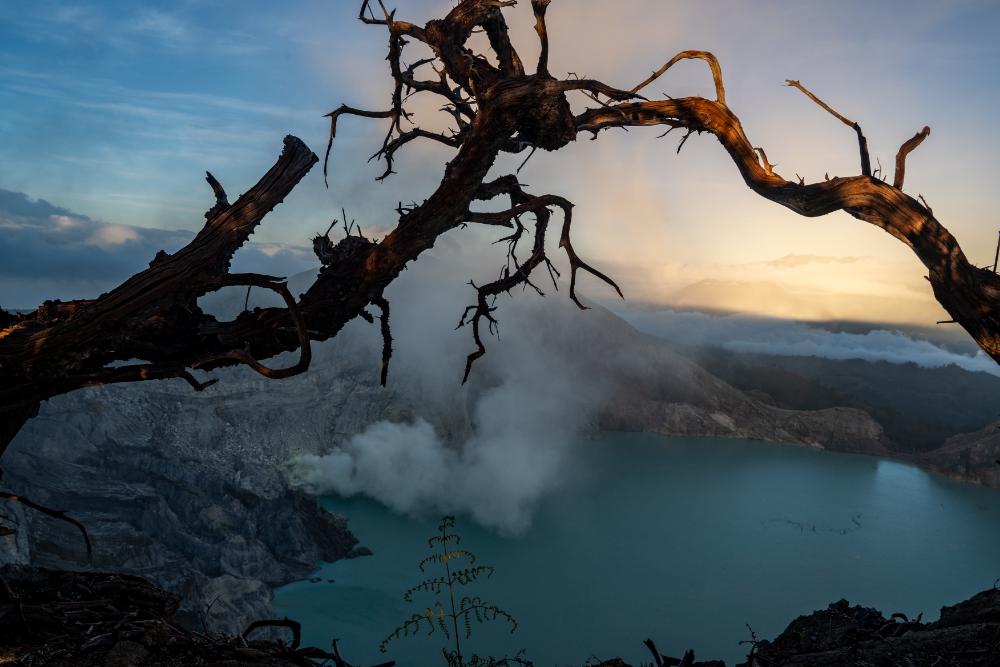
A twisted tree can frame the acidic crater lake beautifully, but standing still for a composition can leave you feeling cold. Review these Ijen Crater Photography Tips for Sunrise & Blue Fire to prepare for long waits and changing light. Travelers planning a comfortable approach can also read How to Get to Ijen Crater: Luxury Travel From Bali & Surabaya.
What should travelers wear for the Ijen night trek?
The right clothing system for the Ijen night trek uses adjustable layers: a moisture-wicking base, insulating mid-layer, and wind-resistant shell. The Ijen Crater Temperature can feel especially cold before sunrise, but climbing generates body heat. Travelers should wear long trousers, warm socks, gloves, and a hat or hood, then adjust layers as effort and exposure change.
| Clothing layer | Purpose | When to adjust |
|---|---|---|
| Moisture-wicking base | Moves sweat away from skin | Keep it on; change if damp |
| Insulating mid-layer | Retains warmth during slower walking and stops | Remove during strenuous climbing if overheating |
| Wind-resistant shell | Limits heat loss in exposed conditions | Wear in strong wind and during rest stops |
| Long trousers, socks, gloves, hat | Protects exposed areas and keeps extremities warm | Keep available throughout the trek |
Pack spare dry layers in a waterproof bag to protect them from sweat or rain. For route-specific preparation and health guidance, read Ijen Crater Hike Difficulty: Health & Gas Mask Safety. For a more comfortable, expertly planned day across Indonesia, shape a private long-day itinerary around your interests and pace.
How can travelers protect their lungs and eyes from volcanic gas?
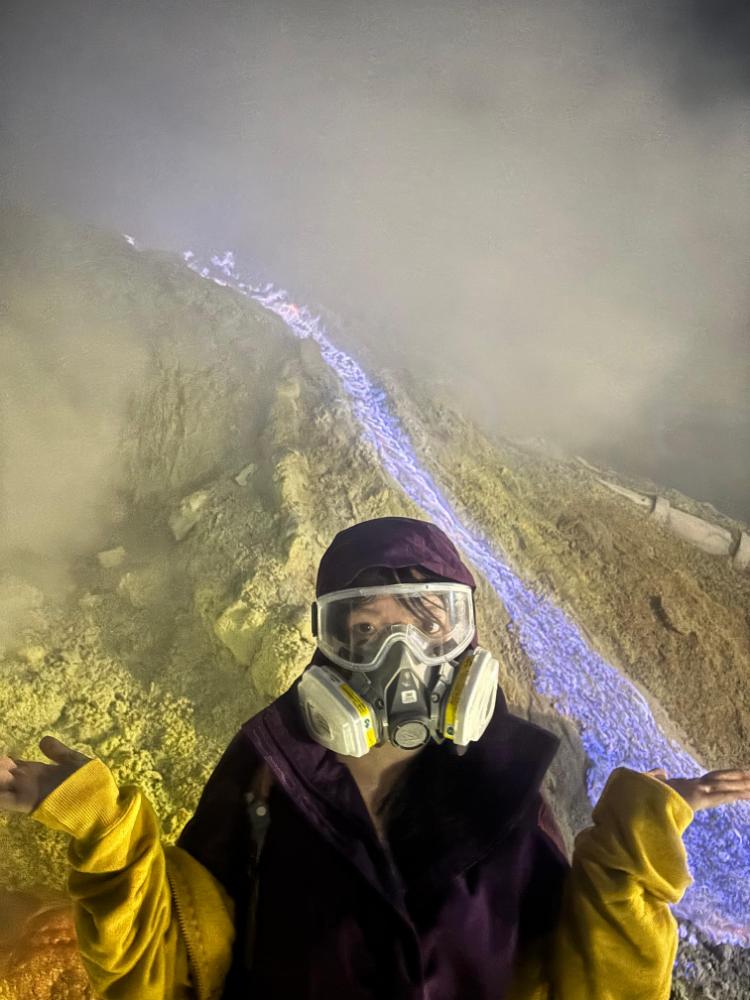
Sulfur dioxide and other volcanic emissions at Kawah Ijen can irritate the eyes and respiratory system. Risk can increase near the crater or when winds shift. The Ijen Crater Temperature may feel severe, but warm clothing does not protect against gas exposure.
Follow ranger and guide instructions, respect restricted areas, and leave the plume zone immediately if directed. An ordinary cloth mask or standard dust mask does not protect against sulfur dioxide. Any respirator must be suitable for the specific gas and correctly fitted. Confirm equipment requirements with local authorities and your tour operator before departure.
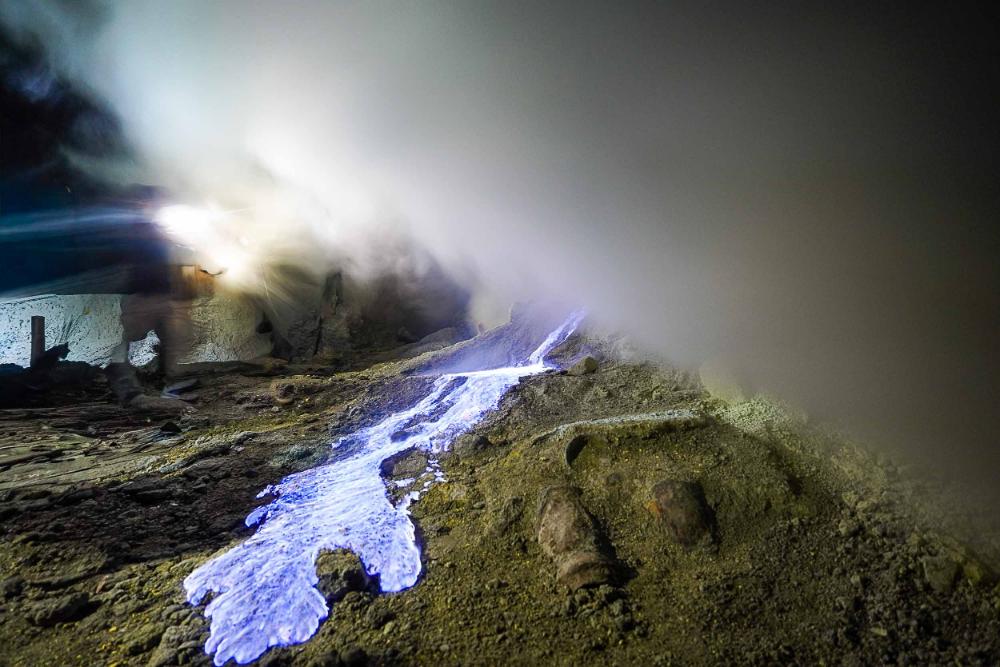
The blue fire signals sulfur emissions, not a safe place to approach. Keep distance from flames and fumes, wear protective eye protection, and identify a clear route away from the plume. If irritation or breathing discomfort begins, move away promptly and seek guidance from your guide.
Blue sulfur flames and dense emissions at Kawah Ijen.
For detailed preparation, read our Ijen Crater Travel Guide: Blue Fire, Hiking & Photography. A well-planned long-day itinerary can also reduce uncertainty across Indonesia’s changing conditions. Plan a more comfortable, expertly paced photography journey.
What trekking and photography gear is useful at Kawah Ijen?
For a night ascent at Kawah Ijen, prioritize secure footing, hands-free lighting, and accessible camera protection. The Ijen Crater Temperature can feel especially cold before sunrise, so keep essential gear easy to reach without overloading your pack.
- Wear sturdy hiking footwear with reliable grip for the uneven, rocky trail.
- Carry a headlamp or torch, plus spare batteries kept warm and dry.
- Use trekking poles if they improve your balance on the climb or descent.
- Pack a wide-angle lens for the crater landscape and a stable camera setup for low light.
A tripod can help with sunrise exposures, but it may slow movement on narrow or crowded sections. Choose a compact setup you can carry securely, and keep your camera accessible without leaving it exposed between shots. Spare batteries are useful because cold conditions can reduce battery performance.
Sulfur residue and moisture can affect equipment. Use a weather-resistant bag or cover, keep a clean lens cloth handy, and avoid changing lenses in exposed areas. Temperature changes can also cause condensation: place cold equipment in a sealed bag before entering a warmer space, then let it acclimatize gradually.
Blue-fire photography must never outweigh gas warnings, guide instructions, or safe positioning. Follow local guidance, maintain a safe distance, and put the camera away whenever conditions require your full attention.
When is Kawah Ijen coldest, and how do conditions change by season?
Clear, dry-season nights can cool quickly at Kawah Ijen, and frost has sometimes been reported. However, the Ijen Crater Temperature varies with cloud, rain, and wind, so calendar dates cannot guarantee comfort or visibility. Check a current forecast and local access guidance before departure.
| Season pattern | Likely conditions | Clothing considerations | Planning cautions |
|---|---|---|---|
| Clear, drier nights | Stronger radiative cooling; occasional frost reports | Insulating layers, gloves, and a wind-resistant outer layer | Cold can intensify before sunrise; verify current access |
| Cloudier or wetter periods | Rain, damp air, and shifting visibility | Waterproof shell and quick-drying layers | Clouds may obscure views; trails can be wet |
| Changeable periods | Conditions may shift during the trek | Adjustable layers and rain protection | Forecasts may change; confirm local updates |
Image 2: Kawah Ijen’s turquoise acidic crater lake framed by a twisted dead tree at sunrise, with volcanic steam rising above the water.
For route details and photography considerations, read the Ijen Crater Travel Guide: Blue Fire, Hiking & Photography. A nearby stay can support an earlier start; compare options in Best Hotels Near Ijen Crater: Luxury Resorts & Boutique Villas.
Forecasts are more useful than seasonal assumptions, and local access rules can change. Plan a comfortable, expertly tailored Indonesia photography itinerary.
How can a long-day Ijen tour make the trek more comfortable?
A well-planned long-day Ijen tour can reduce avoidable stress by coordinating transport, departure timing, rest stops, and local guidance. It also allows time for clothing checks before the climb and photography windows when conditions permit. Since Ijen Crater Temperature can feel especially cold before sunrise, suitable layers matter throughout the trek.
Comfort depends on steady pacing, regular hydration, and adjusting layers as wind and activity change. Build flexibility into the itinerary because weather, volcanic gas, or operational decisions can affect timing and access. A comfortable plan prioritizes safety over reaching a specific viewpoint or keeping a rigid schedule.
Local guidance helps travelers understand route conditions and respond to changing instructions. Share relevant health concerns, mobility needs, and equipment requirements with the operator before departure. Discuss camera gear, spare batteries, and preferred photography priorities early, so the guide can help plan realistic shooting windows.
Panorama Lens Trip provides specialized photography tours and premium long-day tours around Indonesia. Tour planning can coordinate practical details while respecting local guidance and access restrictions. Blue fire sightings and access to particular areas cannot be guaranteed.
For a more considered pace, clear logistics, and photography time that fits your priorities, plan a smoother Indonesia photography itinerary with expert guidance.
What should travelers know before setting out for Kawah Ijen?
Ijen Crater Temperature can approach 0°C before sunrise, especially with wind and damp clothing. Conditions change, and volcanic gases can irritate the lungs and eyes. Check current entry conditions, local guidance, transport timing, and volcanic advisories before departure.
Can Kawah Ijen reach 0°C?
Yes. Temperatures near freezing are possible, but readings vary by season, elevation, and weather. Wind can make the trek feel colder.
What jacket should travelers bring?
Wear warm layers beneath a windproof, water-resistant outer shell. Bring gloves and a warm hat, and adjust layers as conditions change.
Is a regular mask enough for volcanic gas?
No. Cloth and surgical masks do not protect against sulfur dioxide. Follow local safety instructions, keep away from gas, and leave the area if directed.
Is the blue fire guaranteed?
No. Visibility depends on conditions, access rules, and volcanic activity. Never approach gas or restricted areas for a photograph.
Prepare for near-freezing air, strong wind, and potentially irritating volcanic gases. Choose clothing that layers well, protects exposed skin, and stays comfortable during a long trek. A warm jacket helps, but it cannot replace current safety information or suitable guidance.
Before setting out, confirm opening hours, access restrictions, transport arrangements, and the latest volcanic advisories. Local instructions may change with weather or gas conditions, so follow them throughout the visit. Blue fire is a natural event, not a guaranteed feature of every trip.
Thoughtful planning can make the experience more comfortable and leave more attention for the landscape and photography. Shape a comfortable, photography-led Indonesia journey around your priorities.
Conclusion
Ijen Crater Temperature can feel sharply cold before sunrise, especially when wind moves across the exposed rim. Wear a warm base layer, an insulating mid-layer, and a wind-resistant outer shell. Gloves, a hat, and sturdy shoes help you stay comfortable during the climb and sunrise wait.
Clothing alone cannot protect you from sulfur gases. Follow local guidance, carry suitable respiratory protection when required, and leave exposed areas if conditions change. A cloth face covering does not filter hazardous gases. Check access updates with your guide before setting out, since volcanic conditions can affect routes and viewing points.
Choose practical layers you can adjust as the hike warms you. Keep camera batteries close to your body, and protect lenses and electronics from moisture, dust, and sulfur residue. For a fuller overview of conditions, timing, hiking preparation, and photography, read the Ijen Crater Travel Guide: Blue Fire, Hiking & Photography.
The best preparation balances warmth, mobility, and caution rather than relying on heavy clothing alone. Conditions vary, so build flexibility into your plans and follow your local guide’s instructions throughout the visit. Thoughtful preparation lets you focus on the crater’s changing light while making safer choices in an unpredictable volcanic environment. Plan a comfortable, expertly paced photography journey across Indonesia.