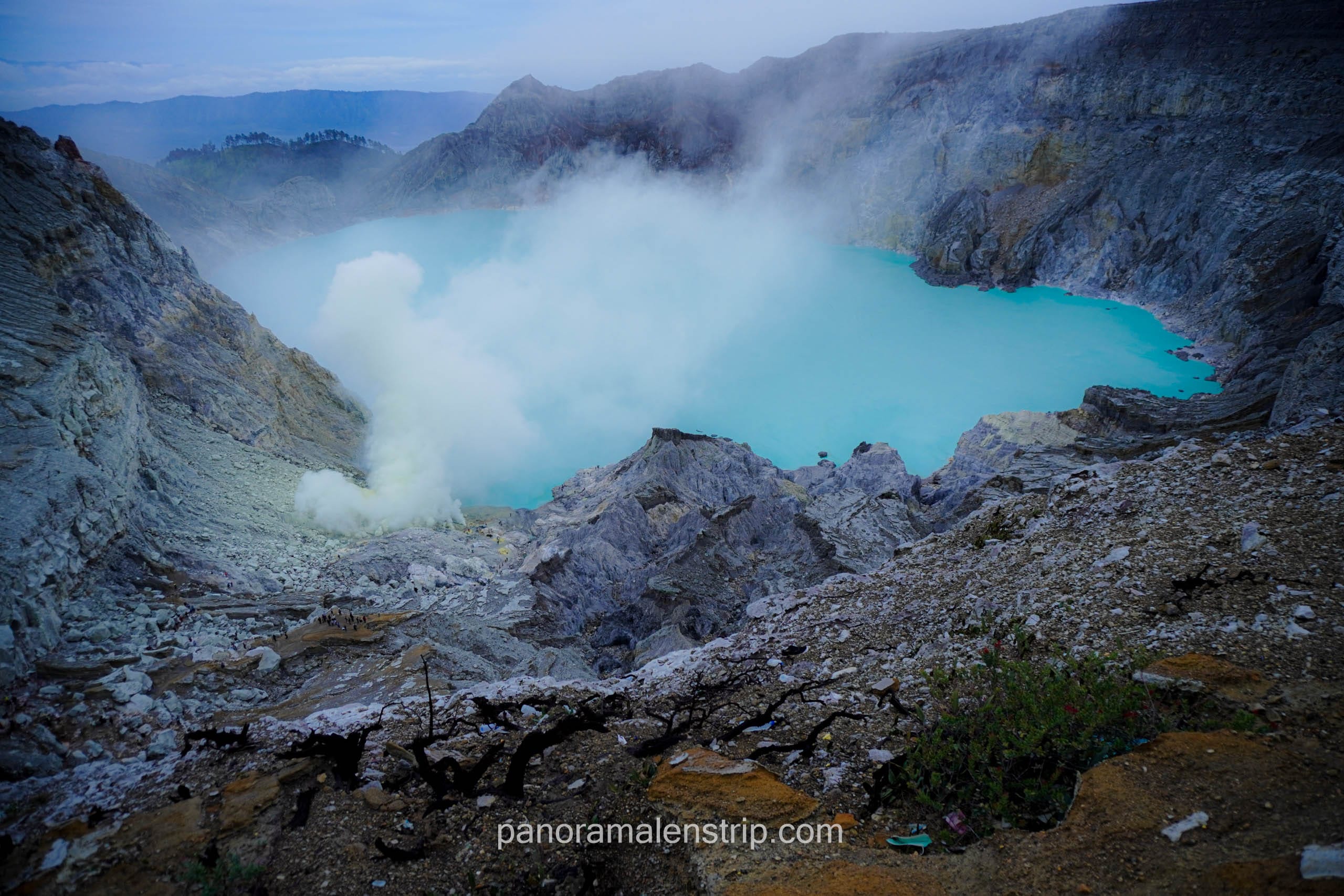
Ijen Crater is an active stratovolcano in East Java, Indonesia, famous for its rare blue fire phenomenon and the world’s largest acidic crater lake. Located at 2,769 meters elevation, this volcanic wonder attracts photographers and adventure travelers worldwide. The site features traditional sulfur mining operations, challenging hiking trails, and extraordinary natural beauty. Optimal visiting period spans April through October. Blue flames appear nightly but require pre-dawn arrival for viewing. The hike takes approximately 90 minutes ascending and 60 minutes descending.
Introduction
I first witnessed Ijen Crater’s blue flames in 2019 during a photography expedition across East Java. The ethereal glow defied everything I understood about volcanic activity. Ijen Crater represents one of Earth’s most remarkable geological phenomena, combining extreme acidity, sulfuric combustion, and human endurance in a single location.
This comprehensive guide answers every essential question about visiting Ijen Crater. You’ll discover what makes this volcano scientifically unique, how to plan your trek, and which photography techniques capture the blue fire effectively. I’ve tested multiple approaches and interviewed local guides to provide actionable insights.
Whether you’re a professional photographer, adventure traveler, or geology enthusiast, Ijen offers experiences unavailable anywhere else on Earth.
What Is Ijen Crater and Why Is It Famous Worldwide?
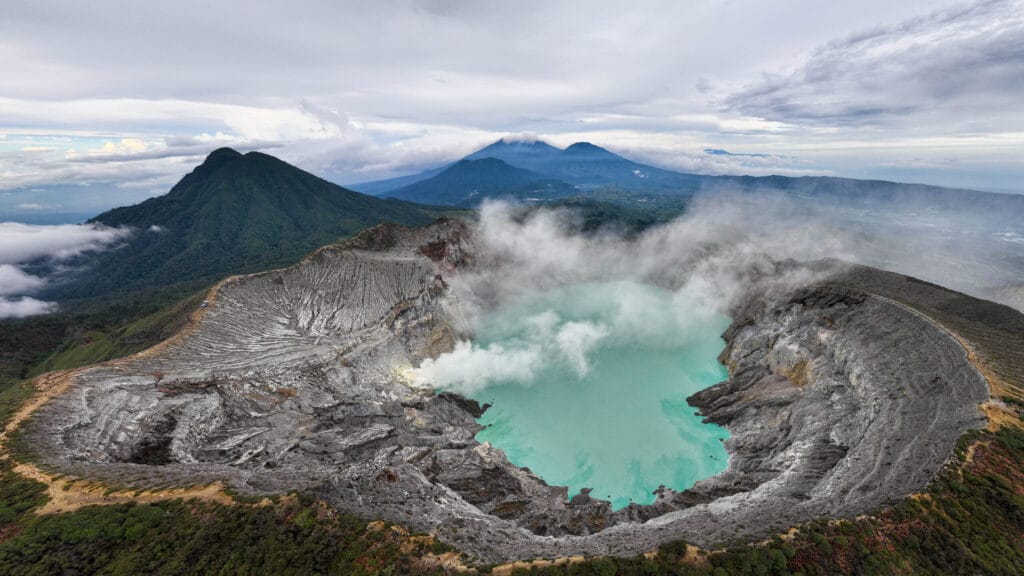
Ijen Crater is an active stratovolcano situated within the Ijen volcano complex in East Java, Indonesia. The crater measures approximately 722 meters deep and spans 1 kilometer in diameter. Its turquoise acidic lake contains an estimated 36 million cubic meters of water with a pH level between 0.5 and 0.13.
The volcano gained international recognition primarily through two extraordinary features. First, the blue fire phenomenon occurs when sulfuric gases ignite upon contact with atmospheric oxygen, creating flames reaching temperatures of 600°C (1,112°F). Second, the crater lake holds the distinction as the world’s largest highly acidic body of water.
Ijen’s fame expanded dramatically after French photographer Olivier Grunewald published stunning images in 2014. National Geographic, BBC Earth, and numerous travel publications subsequently featured the location. Today, Ijen attracts approximately 200,000 visitors annually, including photographers, scientists, and adventure tourists from Europe, North America, Australia, and the Middle East.
The Blue Fire Phenomenon Explained
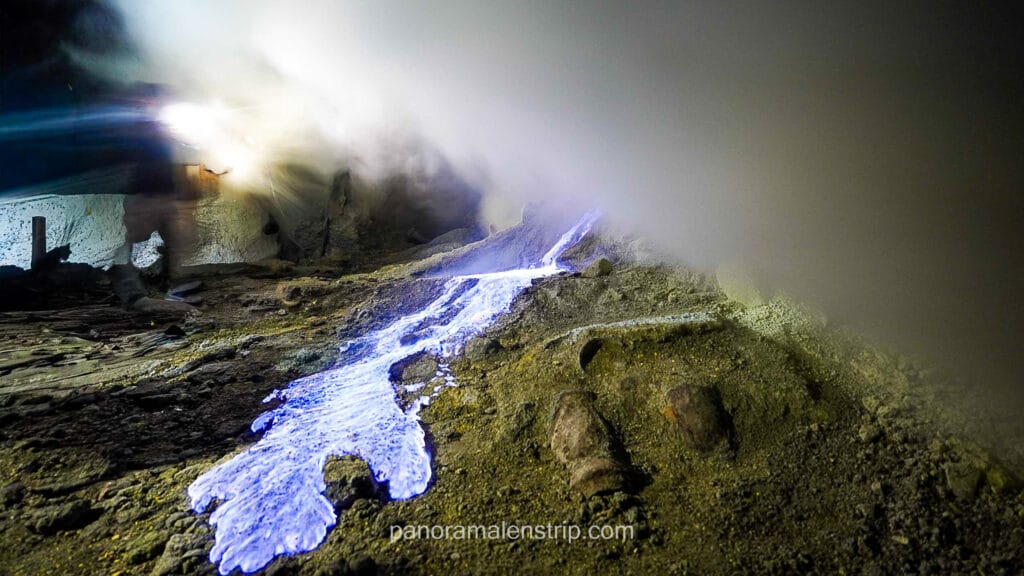
The blue fire phenomenon results from combustion of sulfuric gases emerging from volcanic fumaroles at extremely high pressures. Sulfur dioxide gas exits cracks at temperatures exceeding 600°C. When this gas contacts oxygen in Earth’s atmosphere, it ignites spontaneously, producing electric blue flames.
These flames reach heights of up to 5 meters under optimal conditions. The phenomenon occurs continuously but remains invisible during daylight hours. Only two locations worldwide exhibit this natural blue fire: Ijen Crater and Iceland’s Dallol volcano. Ijen’s display proves more accessible and visually dramatic for visitors.
The flames condense into liquid sulfur upon cooling, creating rivers of molten yellow material flowing down the crater walls.
Learn more: Ijen Sunrise and Blue Flame: Night Hike to Catch
World’s Largest Acidic Crater Lake
Ijen’s crater lake contains sulfuric acid concentrations rivaling industrial battery acid. The pH measurement of 0.5 makes this water more acidic than lemon juice by a factor of 100,000. The distinctive turquoise color derives from dissolved minerals, primarily sulfur and iron compounds.
The lake formed through centuries of volcanic activity and groundwater accumulation within the crater depression. Water temperature averages 60°C (140°F) near the surface and exceeds 200°C near submerged fumaroles. Contact with this water causes immediate chemical burns.
Despite extreme acidity, the lake supports no visible life forms, creating an alien landscape photographers find irresistible.
Where Is Ijen Crater Located in Indonesia?
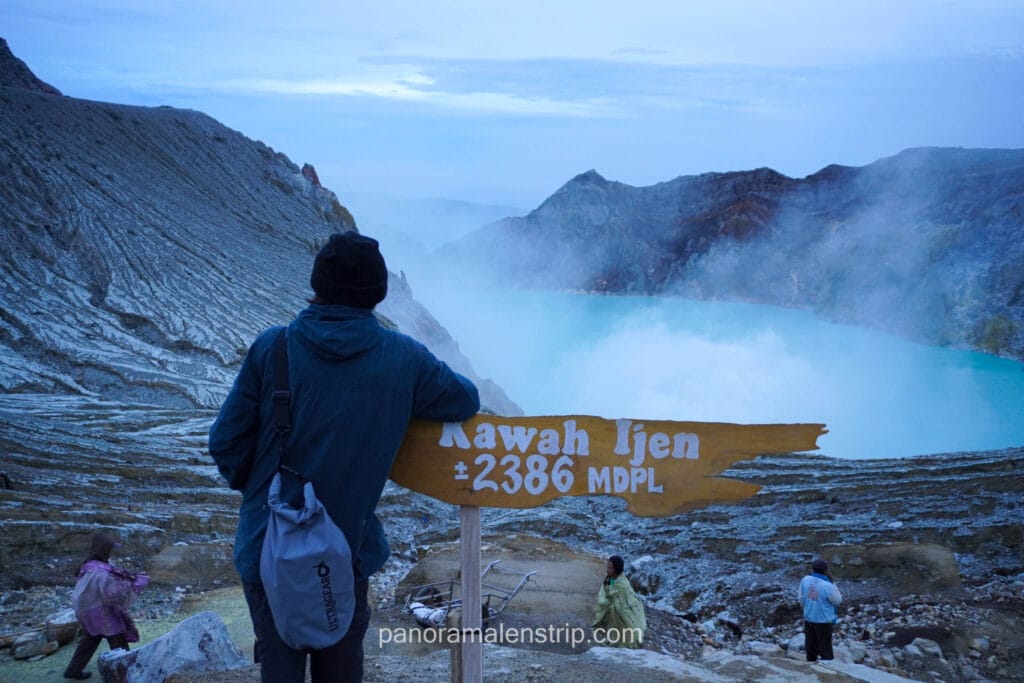
Ijen Crater occupies the border region between Banyuwangi Regency and Bondowoso Regency in East Java Province. The volcano sits approximately 35 kilometers northwest of Banyuwangi city and 80 kilometers southeast of Surabaya, East Java’s capital. Geographically, Ijen lies at coordinates 8.058°S latitude and 114.242°E longitude.
The crater forms part of the larger Ijen volcano complex, which includes multiple volcanic cones and calderas. This volcanic zone stretches across 2,560 square kilometers of mountainous terrain. Nearby volcanic features include Mount Merapi (not the famous Central Java volcano) and Mount Raung.
The nearest major population center is Banyuwangi, a coastal city serving as the primary gateway to Bali via ferry. Most international visitors approach Ijen through either Banyuwangi or Surabaya, depending on their Indonesia travel itinerary.
How to Reach Ijen from Major Cities
From Banyuwangi, the journey to Ijen’s Paltuding base camp requires approximately 90 minutes by private vehicle. The route follows main roads for 25 kilometers before ascending mountain roads through coffee plantations and rural villages. Public transportation options remain limited and unreliable for pre-dawn departures.
From Surabaya, travelers face a 6-hour drive covering 180 kilometers eastward. Most visitors arrange private transportation or join organized tours departing around midnight to reach the trailhead by 2:00 AM. The route passes through Bondowoso and Sempol before ascending to Paltuding.
International visitors typically fly into Surabaya’s Juanda International Airport or use the Banyuwangi airport for domestic connections. Many travelers combine Ijen visits with Bromo volcano tours, creating a comprehensive East Java volcanic circuit. I recommend booking accommodation in Banyuwangi for easier logistics and earlier arrival times.
When Should You Visit Ijen Crater?
The optimal visiting period for Ijen Crater spans from April through October, coinciding with Indonesia’s dry season. During these months, rainfall decreases significantly, trail conditions improve, and atmospheric clarity enhances blue fire visibility. Weather patterns prove most stable between June and September, offering 85-90% probability of clear conditions.
January through March constitute the wet season, bringing heavy rainfall and increased cloud cover. While the crater remains accessible, muddy trails increase hiking difficulty and reduce photographic opportunities. November and December represent transitional months with moderate rainfall and acceptable visiting conditions.
Temperature at the crater rim ranges between 5°C and 10°C (41-50°F) during pre-dawn hours year-round. Wind speeds average 15-25 kilometers per hour, creating wind chill factors that make conditions feel significantly colder.
Learn more: Best Season for Ijen Sunrise: Weather, Months & Tips
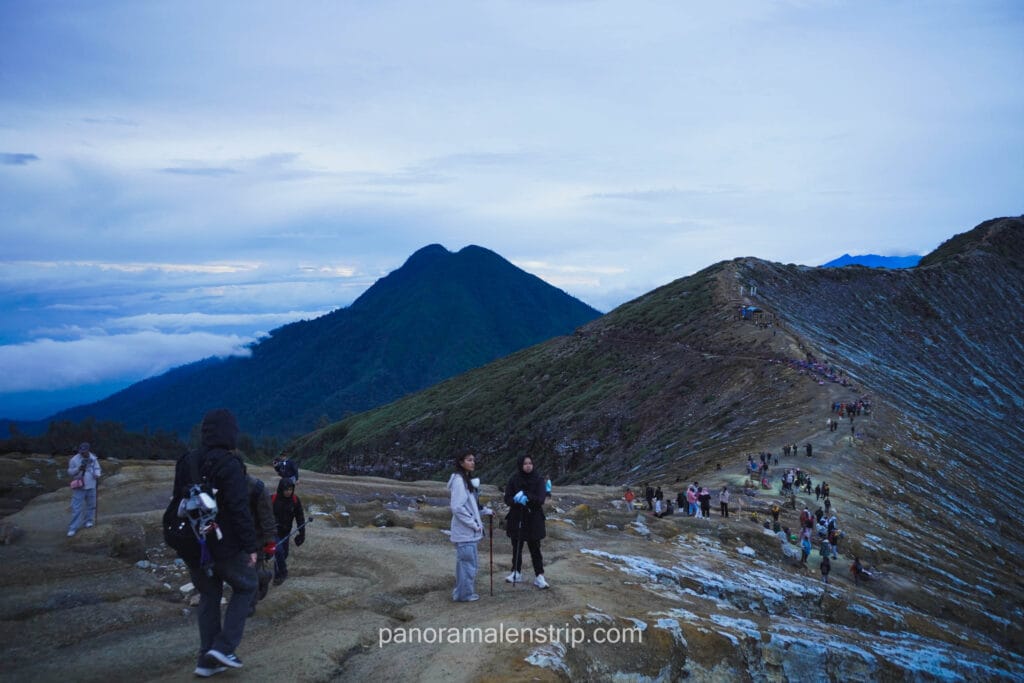
Best Months for Blue Fire Viewing
June, July, and August deliver the highest success rates for blue fire observation, with clear conditions occurring 9 out of 10 nights. These months also coincide with European and North American summer vacation periods, increasing visitor numbers substantially. Expect crowds of 200-300 people during peak season weekends.
April, May, September, and October provide excellent alternatives with 75-80% visibility rates and reduced crowding. I’ve observed exceptional blue fire displays during these shoulder months, often with only 50-100 fellow visitors present. The reduced human traffic improves photography opportunities and overall experience quality.
Learn more: Best Season for Ijen Sunrise: Weather, Months & Tips
Weather Patterns and Seasonal Considerations
Ijen’s microclimate creates localized weather patterns independent of broader regional conditions. Morning fog frequently develops between 6:00 AM and 8:00 AM, obscuring crater views after sunrise. This phenomenon occurs year-round, making pre-dawn arrivals essential for comprehensive viewing.
Volcanic gas emissions intensify during high barometric pressure periods, enhancing blue fire intensity but increasing respiratory irritation. Wind direction significantly impacts gas exposure on the crater rim. Easterly winds push sulfuric gases away from main viewing areas, creating optimal conditions.
I recommend monitoring local weather forecasts three days before your planned visit and maintaining schedule flexibility for one-day adjustments.
How Do You Hike to Ijen Crater Summit?
The Ijen hike begins at Paltuding base camp, located at 1,850 meters elevation. The trail ascends 919 vertical meters over a distance of 3 kilometers to reach the crater rim at 2,769 meters. Most hikers complete the ascent in 75-120 minutes depending on fitness level and acclimatization.
The initial 2 kilometers follow a well-maintained dirt path through montane forest with moderate gradient averaging 15-20 degrees. This section features clearly marked trail markers and requires no technical climbing skills. The final kilometer steepens considerably, with gradients reaching 30-35 degrees across loose volcanic gravel.
Descending into the crater to view blue fire adds another 250 vertical meters over unstable terrain. This section requires extreme caution due to sharp rocks, sulfuric gas exposure, and complete darkness. Most visitors spend 30-45 minutes at the blue fire viewing area before ascending back to the crater rim.
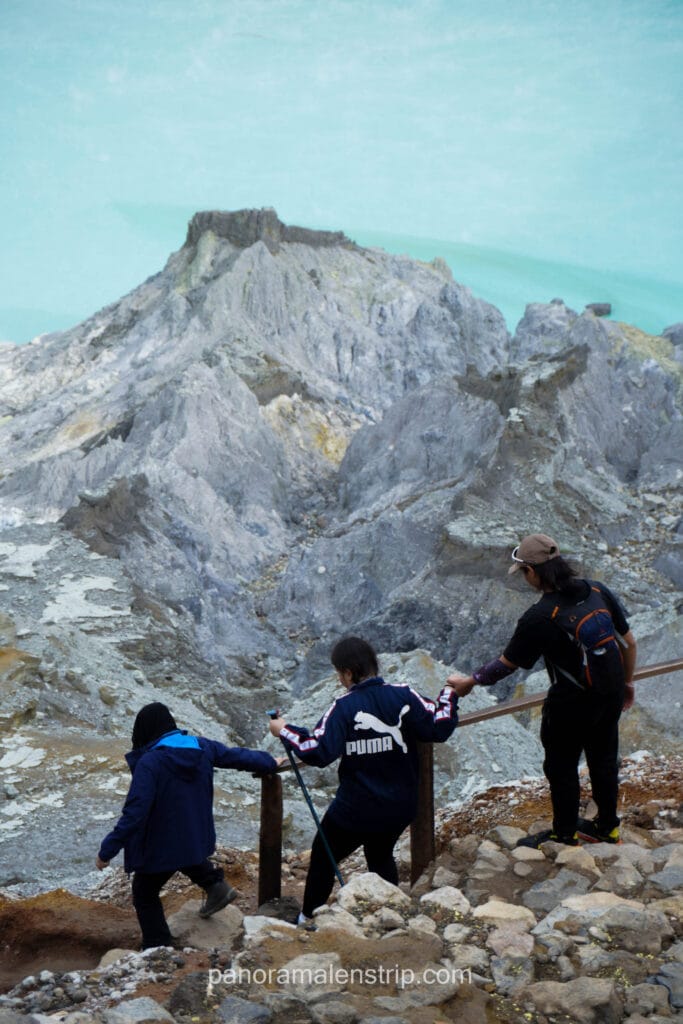
Hiking Route and Trail Difficulty
The trail difficulty rates as moderate to challenging for average fitness levels. The combination of altitude gain, pre-dawn timing, and steep final sections demands reasonable cardiovascular endurance. I classify the hike as comparable to summiting a 4,000-meter peak in the Alps regarding physical exertion.
Trail conditions vary seasonally, with dry season offering compact dirt surfaces and wet season creating muddy, slippery obstacles. The path width averages 1.5-2 meters, accommodating two-way traffic comfortably except during the steepest sections. No rope assistance or technical equipment is necessary for the standard route.
The crater descent presents the most technically challenging segment. Loose scree, sulfuric gas concentrations, and darkness combine to create hazardous conditions. Approximately 40% of visitors choose to view blue fire from the crater rim rather than descending.
Required Fitness Level and Preparation
Adequate preparation requires cardiovascular training equivalent to hiking 5-7 kilometers with 800-meter elevation gain. I recommend completing at least three practice hikes in the month preceding your Ijen visit. Focus on building leg strength and aerobic capacity through stair climbing and inclined treadmill sessions.
Acclimatization proves less critical than for higher-altitude treks, but spending one day at 1,000-1,500 meters elevation improves performance. The pre-dawn start time disrupts normal sleep patterns, so adjust your schedule gradually in the preceding days.
Physical preparation should include ankle strengthening exercises, as the loose volcanic terrain increases twist and sprain risk substantially.
Also read: Ijen Sunrise and Blue Flame: Night Hike to Catch
What Photography Equipment Should You Bring to Ijen?
Essential photography equipment for Ijen includes a DSLR or mirrorless camera capable of manual exposure control and long exposures up to 30 seconds. Wide-angle lenses (14-24mm for full-frame, 10-18mm for crop sensor) capture the expansive blue fire scene most effectively. A sturdy tripod rated for at least 5 kilograms proves absolutely critical for sharp long-exposure images.
Additional recommended gear includes extra batteries (cold temperatures reduce battery life by 40-50%), lens cleaning cloths for sulfur dust removal, and waterproof camera covers. The acidic environment corrodes metal components over time, so protective measures extend equipment lifespan significantly. I carry silica gel packets in my camera bag to control moisture accumulation.
Headlamps with red light modes preserve night vision while allowing hands-free operation during the crater descent. Remote shutter releases or interval timers eliminate camera shake during long exposures. Memory cards with minimum 64GB capacity accommodate RAW format shooting across multiple hours.
Camera Settings for Blue Fire Photography
Blue fire photography requires manual mode with ISO settings between 1600-3200 for handheld shots and ISO 400-800 for tripod-mounted long exposures. Shutter speeds range from 15-30 seconds for capturing flame movement and light trails. Aperture settings of f/2.8-f/5.6 balance depth of field with light gathering.
White balance requires custom settings between 3000-3500K to accurately render the blue flame color. Auto white balance typically shifts flames toward purple or cyan tones. I shoot in RAW format exclusively, allowing comprehensive post-processing control for color accuracy and dynamic range optimization.
Focus presents significant challenges in near-total darkness. Manual focus on the brightest flame areas using live view magnification delivers sharpest results. Set focus before full darkness, then switch to manual focus mode to prevent autofocus hunting. Bracket exposures across 3-5 stops to ensure optimal exposure capture given rapidly changing light conditions.
Learn more: Sunrise and Ijen’s Blue Fire Photography Tips
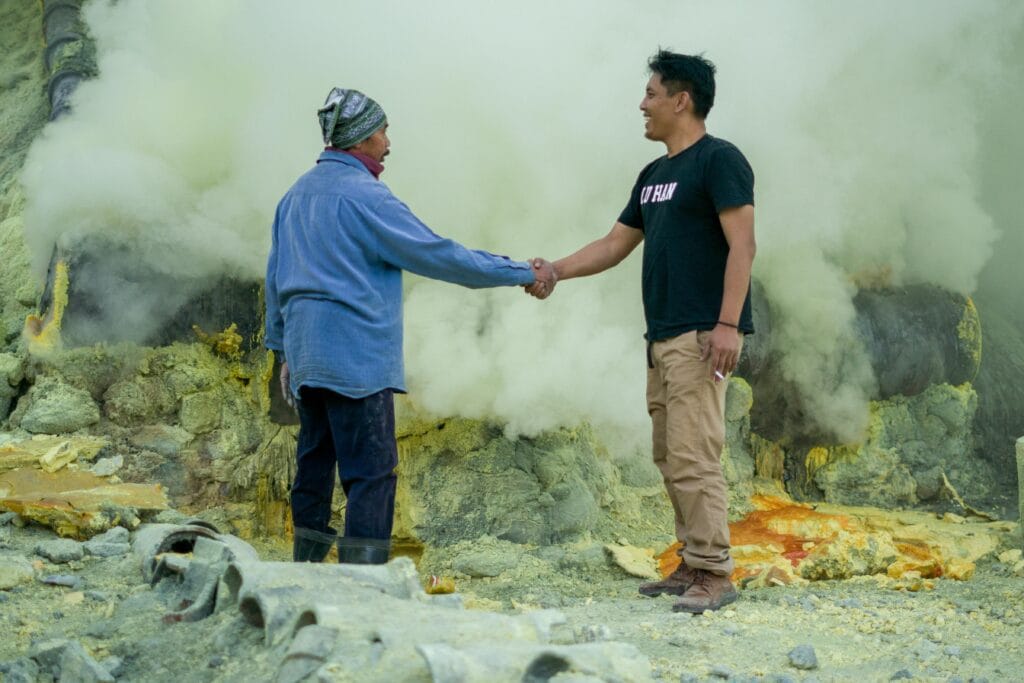
Who Are the Sulfur Miners of Ijen Crater?
Ijen’s sulfur miners represent one of the world’s last remaining traditional volcanic mining operations. Approximately 200 miners work in rotating shifts, extracting elemental sulfur from solidified deposits near the crater’s fumaroles. These workers carry loads averaging 70-90 kilograms up the crater’s steep walls using bamboo baskets and shoulder poles.
The miners descend into the crater around 1:00 AM, working through the night to avoid daytime heat and tourist crowds. Each miner completes 2-3 round trips daily, earning approximately $13-15 per day based on sulfur weight delivered. The extracted sulfur supplies Indonesia’s sugar refining, match production, and cosmetics industries.
This occupation passes through family generations, with miners typically beginning work in their late teens. The average working career spans 10-15 years before health complications force retirement. Despite modernization elsewhere, Ijen’s remote location and traditional economic structures maintain this labor-intensive practice.
Daily Life and Working Conditions
Working conditions at Ijen rank among the world’s most hazardous occupations. Miners endure sulfuric gas concentrations exceeding safe exposure limits by factors of 100 or more. Most workers use minimal respiratory protection, typically improvised cloth masks offering negligible filtration. Chronic respiratory diseases, dental deterioration, and chemical burns affect nearly all long-term miners.
The physical demands of carrying 70-90 kilogram loads up 250 vertical meters create musculoskeletal damage and spinal compression injuries. Many miners develop permanent shoulder deformities and chronic back pain by age 30. Despite these conditions, economic necessity and limited alternative employment maintain consistent workforce participation.
Recent initiatives by Indonesian authorities and international organizations aim to improve safety equipment provision and establish health monitoring programs. Progress remains slow due to funding constraints and traditional resistance.
What Are the Essential Safety Guidelines at Ijen?
Primary safety concerns at Ijen include sulfuric gas exposure, steep terrain navigation, and extreme crater lake acidity. Mandatory safety measures include carrying proper gas masks rated for sulfur dioxide and hydrogen sulfide filtration. Standard cloth masks or surgical masks provide inadequate protection. Rental gas masks available at Paltuding base camp cost approximately $2-3.
Maintain minimum 2-meter distance from active fumaroles and avoid prolonged exposure to visible gas plumes. Sulfur dioxide concentrations can cause immediate respiratory distress, eye irritation, and unconsciousness at high levels. If experiencing breathing difficulty, dizziness, or severe coughing, ascend immediately to higher elevations where gas concentrations decrease.
Never approach the crater lake edge or attempt to touch the acidic water. The extreme acidity causes severe chemical burns within seconds of contact. Wind shifts can rapidly change safe viewing positions, so monitor wind direction continuously. I witnessed multiple tourists requiring medical attention for gas exposure during my visits, typically resulting from inadequate protective equipment or ignoring warning signs.
Hire guides through official channels at Paltuding rather than informal operators. Licensed guides receive safety training and carry emergency communication equipment. Solo hiking is technically permitted but significantly increases risk factors.
How Much Does It Cost to Visit Ijen Crater?
The complete Ijen Crater visit costs between $50-150 per person depending on services selected and group size. This estimate includes entrance fees, guide services, transportation, and equipment rental. Budget-conscious travelers using public transportation and skipping guide services can reduce costs to approximately $30-40 total.
| Cost Item | Price Range (USD) | Notes |
|---|---|---|
| National Park Entry Fee | $6-8 | Foreign visitors, weekday rate |
| Weekend Entry Fee | $10-12 | Saturday-Sunday surcharge applies |
| Official Guide Service | $15-25 | Mandatory for crater descent |
| Gas Mask Rental | $2-3 | Essential safety equipment |
| Private Transportation (Banyuwangi) | $25-40 | Round trip, 1-4 passengers |
| Organized Tour Package | $50-80 | Includes all services and meals |
| Photography Permit | $10 | Required for professional equipment |
| Porter Service (Optional) | $15-20 | Carries equipment, not passengers |
Additional expenses include meals, accommodation, and tip contributions for guides and miners. Many visitors donate directly to miners after photographing their work. Standard donations range from $2-5 per miner interaction.
Tour packages from Banyuwangi or Surabaya offer best value for international visitors unfamiliar with local logistics. These packages typically include hotel pickup, transportation, guide services, entry fees, breakfast, and gas mask provision.
Frequently Asked Questions About Ijen Crater
Can you visit Ijen Crater without a guide?
Solo hiking to the crater rim is permitted, but descending into the crater requires an official guide for safety and liability purposes. Park regulations enforced since 2018 mandate guide accompaniment for all below-rim activities. Independent hikers can walk to the crater rim viewpoint without guide services. However, guides provide valuable safety information, route optimization, and blue fire viewing position knowledge that significantly enhance the experience.
Is the blue fire visible every night?
The blue fire burns continuously 24 hours daily, but visibility depends on darkness and atmospheric conditions. The flames remain invisible during daylight hours due to ambient light overpowering the blue wavelength emissions. Optimal viewing occurs between 2:00 AM and 5:00 AM in clear weather. Cloud cover, fog, and moonlight reduce visibility intensity. Weather conditions affect viewing success rates, with dry season offering 80-90% probability and wet season dropping to 50-60%.
How long does the Ijen hike take?
The ascent from Paltuding base camp to crater rim requires 75-120 minutes for average fitness levels. Descent takes 60-90 minutes returning to base camp. Adding the crater descent for blue fire viewing adds 60-90 minutes total. Complete visits spanning base camp to blue fire and return typically consume 4-5 hours. Most organized tours depart hotels around midnight, returning by 8:00-9:00 AM.
What should I wear for the Ijen trek?
Layered clothing proves essential for managing temperature variations from warm base camp to freezing crater rim conditions. Start with moisture-wicking base layers, add insulating mid-layers (fleece or down jacket), and top with windproof outer shell. Sturdy hiking boots with ankle support prevent injuries on loose volcanic terrain. Gloves, warm hat, and neck gaiter protect against cold and sulfuric gas irritation. Avoid cotton materials, which retain moisture and lose insulating properties.
Are there facilities at Ijen Crater?
Paltuding base camp offers basic facilities including parking, ticket office, simple food stalls, and basic toilet facilities. No facilities exist along the trail or at the crater rim. The crater descent area completely lacks infrastructure. Visitors must carry all necessary water, snacks, and equipment. Mobile phone signals reach the crater rim intermittently but prove unreliable for emergency communication. Cellular coverage depends on provider, with Telkomsel offering the most consistent service.
Can children visit Ijen Crater?
Children above 12 years with good fitness levels can safely complete the Ijen hike under proper supervision. The combination of altitude, pre-dawn timing, steep terrain, and toxic gas exposure makes this trek unsuitable for younger children. Parents must provide properly fitted gas masks, as adult sizes fail to seal effectively on smaller faces. Children’s respiratory systems prove more vulnerable to sulfuric gas damage than adults. I recommend alternative East Java destinations like Bromo’s viewpoints for families with young children.
Conclusion
Ijen Crater delivers a genuinely unique travel experience combining natural wonder, cultural immersion, and photographic opportunity. The blue fire phenomenon alone justifies the challenging pre-dawn hike for most visitors. Proper preparation regarding fitness, equipment, and timing transforms this from an exhausting ordeal into an unforgettable adventure.
The convergence of extreme geology, traditional mining culture, and accessible adventure travel creates a destination unlike any other worldwide. Whether you’re capturing long-exposure photography, studying volcanology, or simply seeking extraordinary experiences, Ijen rewards the effort required to reach it.
Plan carefully, respect safety protocols, and prepare for cold conditions. The memories and images you’ll create at Ijen Crater will last far beyond your Indonesia journey.
Also read: Ijen Sunrise Viewpoint – Best Sunrise Experience at Mount Ijen

[…] Ijen Crater hike is moderately to highly challenging for those with limited hiking experience. I tested the […]