Introduction: Why Tumpak Sewu Is Hard to Photograph
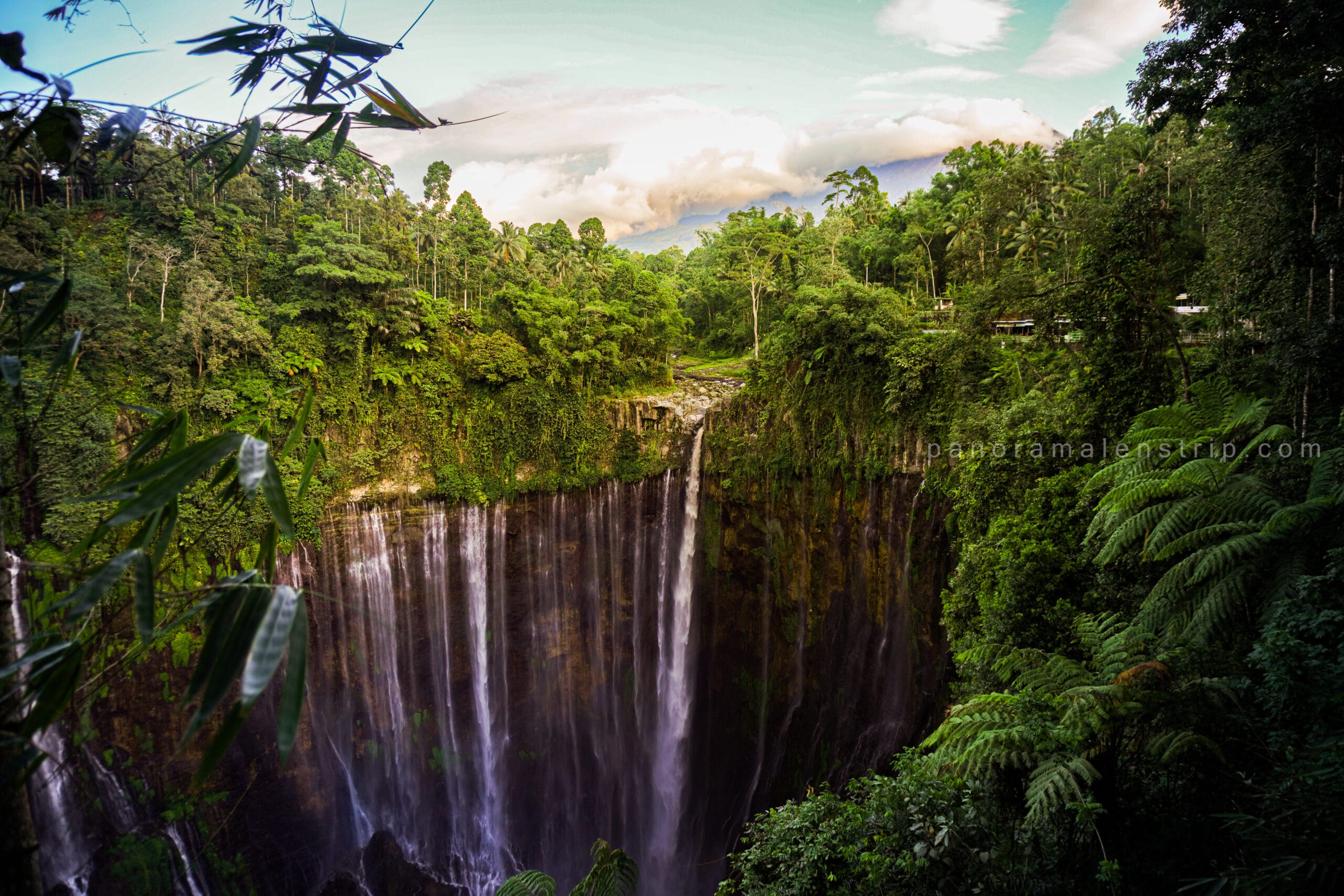
Photographers struggle to capture Tumpak Sewu because its scale overwhelms cameras faster than human vision. I tested multiple viewpoints and lenses on location in East Java. The waterfall spans a curved cliff with extreme height and constant mist. Cameras compress this scale, which makes the scene feel smaller than reality.
What makes Tumpak Sewu photography uniquely challenging?
Tumpak Sewu photography feels difficult because the waterfall combines multi-fall curvature, extreme vertical drop, and human scale distortion. The semicircular cliff stretches wider than most wide-angle frames. The height exceeds visual reference points. These factors confuse depth perception and reduce perceived scale in images.
Specifically, camera sensors compress distance and flatten vertical space. This visual compression makes the falls appear shorter and less dramatic. Furthermore, dense atmospheric mist softens contrast across the frame. Light scatters inside the tropical gorge, which reduces edge clarity and tonal separation. These optical conditions demand deliberate composition and precise timing.
Where are the best viewpoints to capture the full scale?
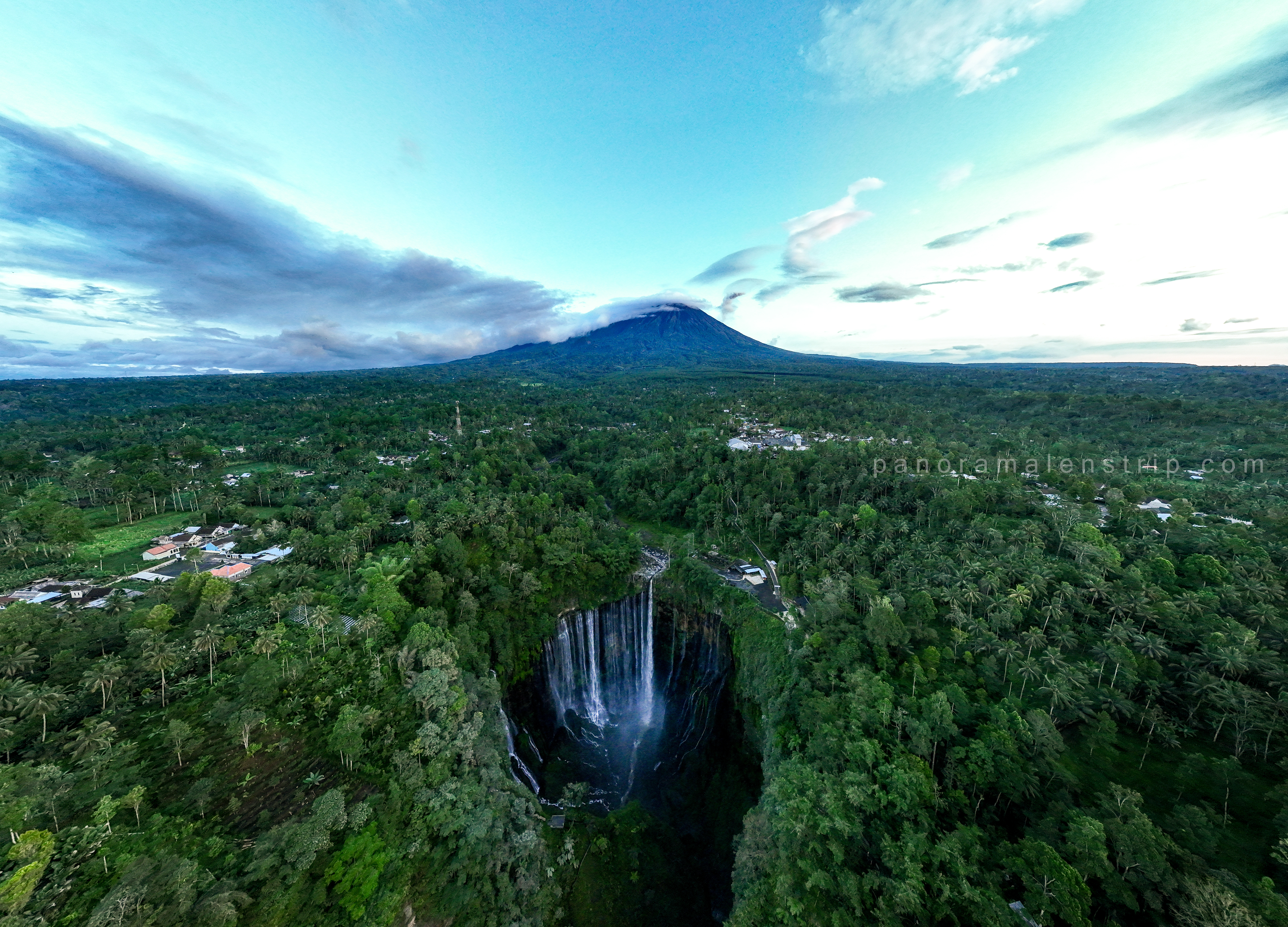
The best viewpoints for Tumpak Sewu photography balance width, height, and depth in one frame. Photographers must choose positions that reveal curvature without sacrificing vertical impact. Viewpoints fall into two main categories: upper cliff edges and lower river-level platforms. Each location changes scale perception and safety requirements.
Upper viewpoints show the full arc of the waterfall wall. Lower viewpoints exaggerate height and immersion. However, both angles introduce different risks and compositional limits. Successful photographers plan shots before descending. They also consider crowd flow, weather, and light direction.
Which upper viewpoints show the waterfall’s full arc?
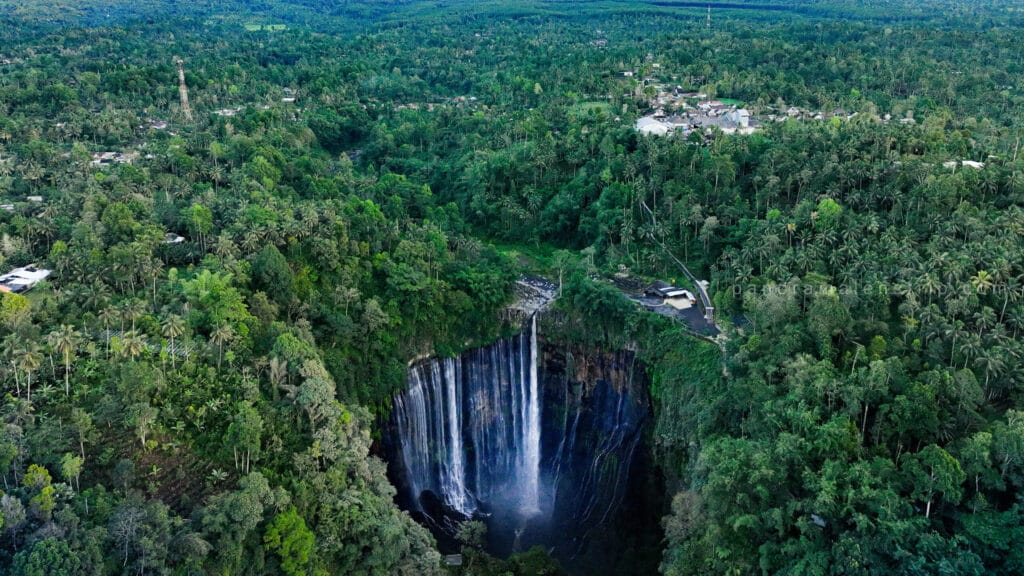
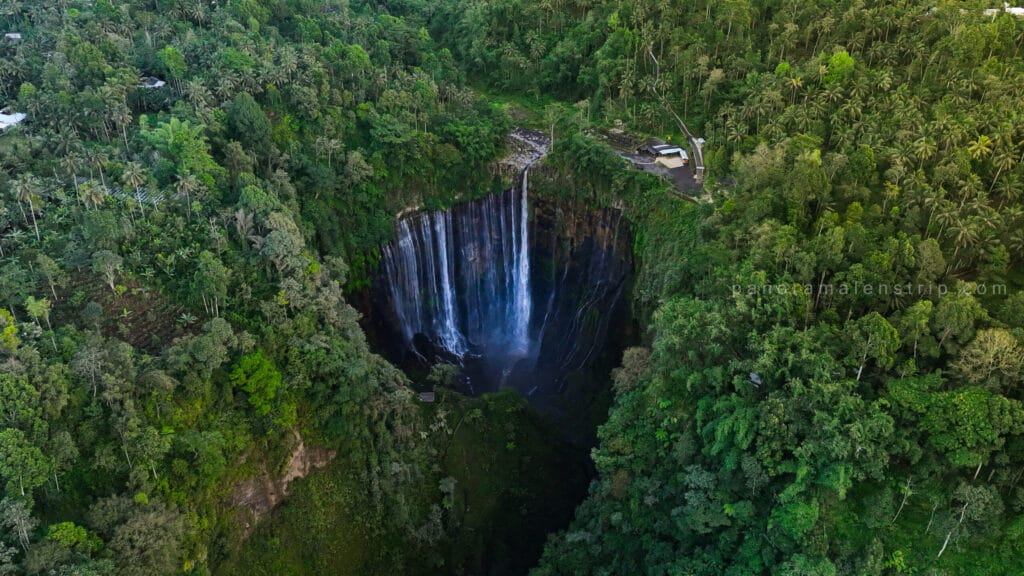
Upper viewpoints capture the entire semicircle of Tumpak Sewu from above the gorge. This angle reveals how dozens of waterfalls converge into one basin. Wide cliff-edge perspectives preserve lateral scale and waterfall symmetry. They also reduce mist interference during early morning hours.
However, these locations compress vertical depth. The waterfall may appear shorter without foreground anchors. Photographers often include trees or people for scale reference. Safety barriers remain minimal, so careful footing becomes essential near wet edges.
Which lower viewpoints emphasize height and depth?
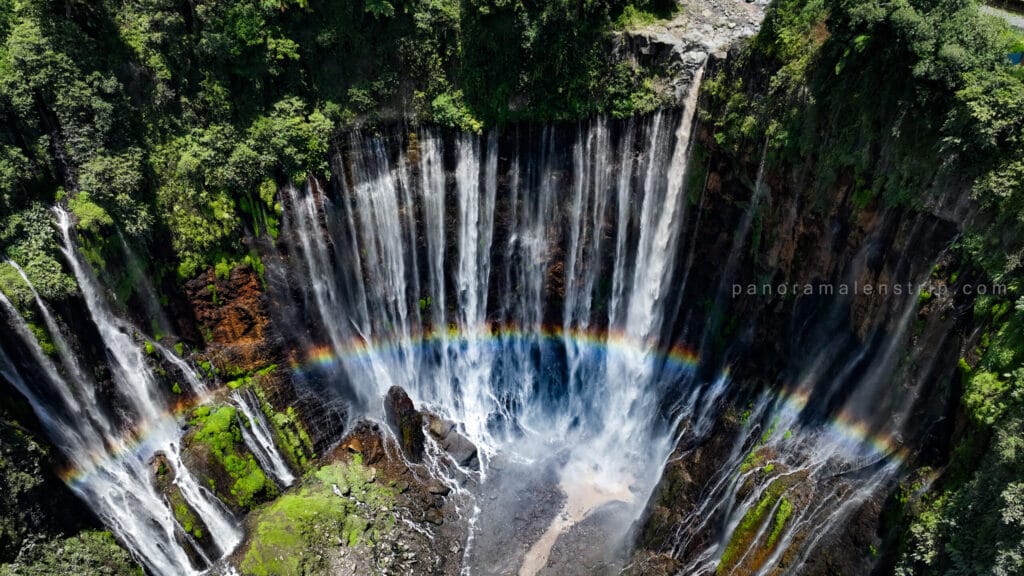
Lower viewpoints emphasize the extreme vertical drop of Tumpak Sewu. Shooting from river level creates strong upward lines and immersive depth. Waterfall walls tower overhead, which restores lost scale. Mist adds drama and motion when controlled properly.
This angle increases physical risk and lens exposure. Slippery rocks and strong spray limit movement. River-level distortion exaggerates height but narrows the visible arc. Photographers must balance immersion with composition clarity and personal safety.
What lenses do professionals use for Tumpak Sewu photography?
Professionals rely on wide-angle lenses because Tumpak Sewu exceeds normal field of view limits. Wide lenses preserve spatial relationships between waterfalls and cliffs. They also allow foreground inclusion without stepping dangerously close to edges. However, lens choice directly affects scale perception and distortion.
Full-frame sensors dominate professional setups at Tumpak Sewu. These sensors retain edge detail and dynamic range in misty conditions. Photographers manage focal length trade-offs carefully. Ultra-wide lenses exaggerate perspective, while moderate wides preserve realism. Understanding field of view and focal compression remains critical for accurate scale.
When is the best time to photograph Tumpak Sewu?
The best time for Tumpak Sewu photography depends on seasonal water volume, sun angle, and mist density control. Dry season mornings offer clearer air and defined edges. Rainy season afternoons deliver dramatic volume but heavy spray. Timing directly shapes scale accuracy and image sharpness.
Specifically, the dry season from May to September provides the highest visibility. Local guides report clear sightlines on roughly 75–80% of mornings. Sunlight enters the gorge at a lower angle before 9 a.m., which preserves texture. Mist remains lighter and more predictable.
In contrast, the rainy season increases spray intensity by nearly double. Water volume peaks, but mist often obscures the cliff wall. Photographers trade clarity for drama. Overcast skies reduce harsh contrast but limit shadow definition.
How do photographers compose scale at Tumpak Sewu?
Photographers compose scale at Tumpak Sewu using foreground anchoring, human reference placement, and layered depth. These elements restore size perception lost through lens compression. Composition decisions matter more than camera resolution. Scale emerges from visual context, not megapixels.
Foreground anchoring stabilizes the frame and sets spatial distance. Rocks, trees, or river textures establish entry points. Human figures provide immediate size comparison. A single person can communicate waterfall height better than empty space.
Layered depth separates foreground, midground, and background visually. Leading lines from cliffs or water flow guide the eye upward. Frame stacking helps manage dynamic range across misty zones. Natural vignetting from gorge walls keeps attention centered on the falls.
Each technique reinforces spatial hierarchy. Together, they rebuild the true magnitude of Tumpak Sewu. Intentional composition turns chaos into readable scale.
How do weather and mist affect image clarity?
Weather and mist directly control clarity at Tumpak Sewu. Fine water particles cause contrast loss through light scattering. This process reduces edge definition across the frame. The effect intensifies near the basin and lower viewpoints.
Micro-droplet diffraction softens details even at fast shutter speeds. Lenses struggle to resolve texture through dense spray. Backlighting worsens the problem by amplifying haze. Photographers often wait for brief wind shifts to regain clarity.
Lens protection becomes essential in these conditions. Weather-sealed bodies resist moisture intrusion. Lens hoods reduce direct droplet impact. Frequent microfiber cleaning preserves contrast and prevents permanent coating damage.
What camera settings work best for Tumpak Sewu waterfalls?
Effective camera settings for Tumpak Sewu balance shutter speed, ISO noise, and aperture depth control. Water motion, mist movement, and low light compete simultaneously. No single setting works in every location. Photographers adjust continuously as conditions change.
Shutter speed controls water texture and mist behavior. Faster speeds freeze falling streams and reduce haze blur. Slower speeds create silky motion but amplify spray softness. Many professionals shoot between 1/5 and 1/2 second.
ISO remains as low as conditions allow to preserve tonal detail. Full-frame sensors handle ISO 400–800 with minimal noise. Apertures between f/8 and f/11 maintain depth across layered scenes. These settings maximize clarity while protecting scale integrity.
Viewpoint Comparison for Tumpak Sewu Photography
| Viewpoint | Best Lens | Scale Accuracy | Safety Level | Crowd Density |
|---|---|---|---|---|
| Upper Cliff Edge | 16–35mm | Medium | Moderate | High |
| Mid-Level Lookout | 24–70mm | High | Moderate | Medium |
| River-Level Basin | 24mm Prime | Very High | Low | Low |
Is a guided photography tour worth it at Tumpak Sewu?
A guided photography tour at Tumpak Sewu improves access optimization, timing control, and risk reduction. Guides manage entry windows and route flow. This support helps photographers focus on composition instead of logistics. The value increases for first-time visitors.
Professional guides know safe standing zones and light patterns. They time descents to avoid crowd congestion and harsh sun angles. Furthermore, guides monitor weather shifts inside the gorge. This awareness reduces exposure to flash floods and falling debris.
Indonesian landscape photographer Arif Wibowo explains, “Scale appears only when you stand in the correct place at the correct minute.” Guided tours create those moments consistently. Independent photographers often miss them due to timing errors.
What mistakes ruin scale in Tumpak Sewu photos?
Several common mistakes cause Tumpak Sewu photos to lose scale. These errors flatten depth and confuse spatial relationships. Avoiding them improves realism immediately.
- Over-compression from long focal lengths reduces perceived height.
- No reference objects remove size comparison cues.
- Midday shooting flattens contrast and erases texture.
- Ignoring foreground eliminates spatial anchoring.
Each mistake weakens depth cues. Correcting even one restores dramatic proportion.
Also read: Tumpak Sewu Waterfall Travel Guide
FAQ: Tumpak Sewu Photography
Is Tumpak Sewu safe for solo photographers?
Tumpak Sewu can be safe for solo photographers with preparation. Paths remain steep and slippery. Morning visits reduce crowd pressure. Inform local staff before descending.
Do drones help capture scale at Tumpak Sewu?
Drones can show scale but face legal and safety limits. Local regulations restrict flight near visitors. Wind turbulence inside the gorge complicates control. Many professionals avoid drones here.
What fitness level is required for photography access?
Moderate fitness supports safe access. Descents involve uneven stairs and river crossings. Photographers carry gear while balancing on wet surfaces. Regular breaks reduce fatigue.
Can beginners photograph Tumpak Sewu successfully?
Beginners can succeed with simple compositions. Wide lenses and clear reference objects help. Early morning light simplifies exposure control. Guided assistance improves confidence.
How crowded is Tumpak Sewu during peak season?
Peak season crowds increase between June and August. Upper viewpoints fill quickly after 9 a.m. Lower levels remain quieter. Early arrival preserves shooting freedom.