TL;DR: The 30-Second Summary
- Best Time: June–September (Dry Season) guarantees sightings; Dec–Feb is best for photographers seeking reflections.
- Top Activity: A 3-Day/2-Night Liveaboard Klotok Tour is the industry standard.
- Key Cost: Luxury private boats range from $800–$1,500 USD per tour; budget options start near $350 USD.
- Must-Have: A telephoto lens (100-400mm) and strong malaria prophylaxis (Malarone).
- Gateway: Fly into Pangkalan Bun (PKN) via Jakarta or Surabaya.
Introduction
I first tested the “Klotok” experience in late 2025, just as visitor numbers began surging past pre-pandemic levels. The humidity hits you the moment you step onto the wooden dock in Kumai, a distinct heaviness that promises rain and adventure. Navigating the Sekonyer River isn’t just a commute; it is the destination itself.
With over 79,000 visitors recorded recently, the park is entering a critical phase of sustainable tourism in 2026. Choosing the right operator now matters more than ever for both your comfort and the orangutans’ welfare. This guide breaks down exactly how to execute a high-value, low-impact expedition into the heart of Borneo.
What is the best way to visit Tanjung Puting National Park?
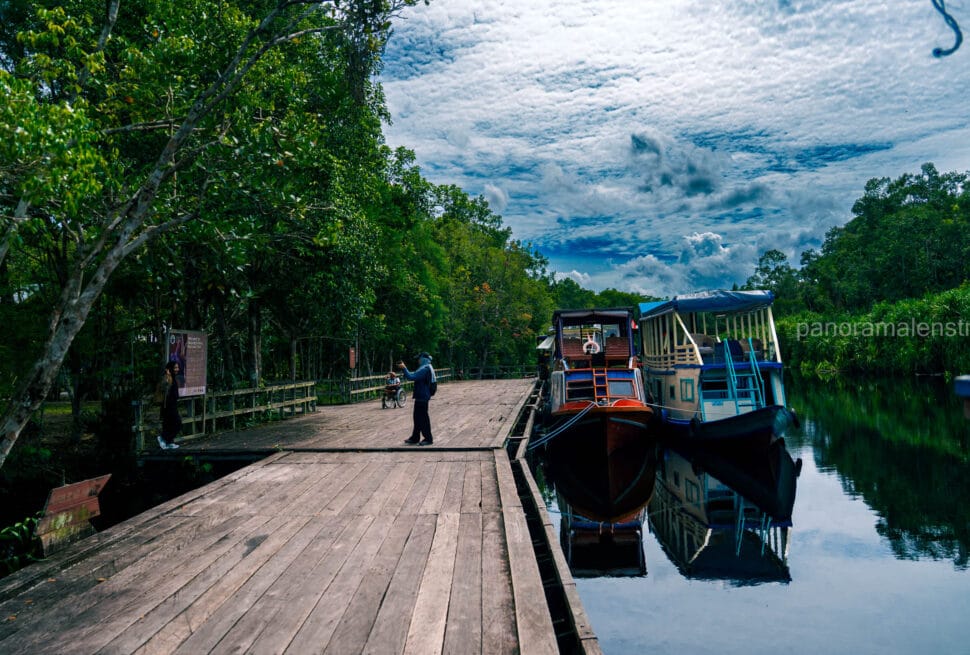
The optimal method is booking a multi-day “Klotok” liveaboard boat tour that navigates the Sekonyer River, serving as your floating hotel, restaurant, and observation deck.
Why choose a liveaboard Klotok boat?
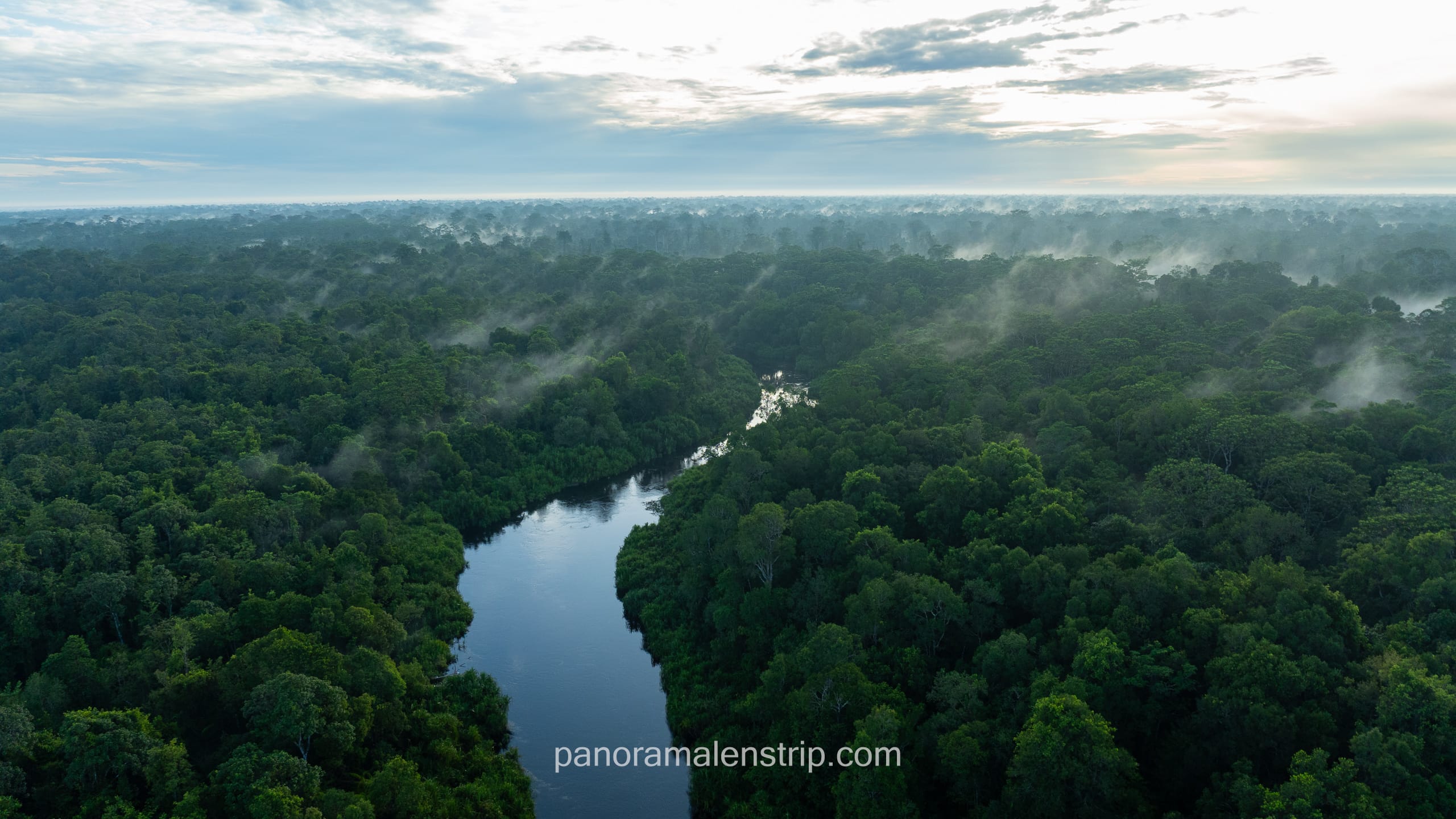
The geography of Tanjung Puting demands a river-based approach. The primary feeding stations, including the famous Camp Leakey, are located deep inland along the river system. Attempting day trips from the port town of Kumai is physically exhausting and logistically inefficient. You would spend hours in transit, missing the prime wildlife activity that occurs at dawn and dusk.
A liveaboard acts as a mobile basecamp. It allows you to wake up already inside the jungle, surrounded by the sounds of gibbons and hornbills. Wildlife, particularly proboscis monkeys, congregates on the riverbanks at sunset to sleep. A boat positions you directly in front of this spectacle, offering viewing angles that land-based lodges cannot provide.
Rimba Ecolodge offers a stationary alternative for those who refuse to sleep on the water. However, staying at a lodge often requires hiring a separate boat for daily excursions anyway. The immersion of the liveaboard experience—sleeping on the deck under a mosquito net or in a cabin—remains the superior choice for most travelers.
How much does a Tanjung Puting tour cost in 2026?
Costs vary significantly by boat class, ranging from $350 USD for shared budget options to over $1,500 USD for private luxury charters per person for a standard itinerary.
What is the difference between Luxury and Standard Klotok boats?
The distinction between “Standard” and “Luxury” has widened in 2026 as operators cater to higher-end demographics from Dubai and Europe. Standard boats offer a rustic, open-air experience that feels closer to camping. Luxury boats mimic boutique hotel rooms, providing essential respite from the intense tropical humidity.
For travelers unaccustomed to equatorial heat, the Air-Conditioned cabin is often the deciding factor. It ensures quality sleep, which is vital for enjoying the physically demanding treks the next day.

Are there hidden fees for international tourists?
Indonesian National Parks utilize a tiered fee structure that differentiates between domestic and international visitors. Foreigners can expect to pay between IDR 150,000 and IDR 250,000 per day, depending on whether it is a weekday or weekend/holiday.
It is important to note that recent news regarding US National Park fee hikes under the Trump administration does not apply here. This is an Indonesian jurisdiction. However, you should budget for a “camera tax,” which is a small fee often charged for bringing professional photography equipment into the park. Always clarify with your tour operator if these fees are included in your package price or payable in cash upon arrival.
When is the best time to visit for photography?
The dry season, spanning from June to September, offers the best trekking conditions and the highest probability of seeing orangutans at the feeding platforms.
How does the season affect wildlife sightings?
In the dry season, natural fruit sources in the deep jungle become scarce. This ecological pressure forces wild and semi-wild orangutans to visit the supplementary feeding stations at Camp Leakey and Tanjung Harapan to forage. This dynamic guarantees sightings for tourists, making it the peak window for general travel.
Conversely, the wet season (December to April) triggers a “fruit boom” in the forest. Orangutans prefer natural foraging and visit the stations less frequently. However, photographers often prefer this season. The river water levels are higher, creating pristine “blackwater” reflections, and the forest canopy is a vibrant, lush green.
Shoulder months like May or October offer a strategic compromise for middle-high economy travelers. You avoid the peak tourist crowds of July while dodging the heaviest monsoon rains.
What camera gear is essential for the rainforest?
Shooting in a rainforest presents unique optical challenges due to low light and high contrast. A telephoto zoom lens is non-negotiable; a range of 100-400mm is ideal for capturing orangutans high in the canopy without disturbing them.
Light is often limited under the dense canopy cover. Lenses with wide apertures (f/2.8 or f/4) are advantageous, as is a camera body capable of handling high ISO settings (up to 3200 or 6400) without excessive noise.
Humidity is the silent killer of electronics in Borneo. You must bring silica gel packs and airtight dry bags. Condensation can form inside lens elements if you move quickly from an air-conditioned cabin to the hot exterior, so acclimate your gear slowly.
Where do Tanjung Puting tours start?
All tours originate from the port town of Kumai, which is a 20-minute drive from Iskandar Airport (PKN) in Pangkalan Bun, Central Kalimantan.
Which flight routes are best for international travelers?
Most international travelers must connect through major Indonesian hubs like Jakarta (CGK) or Surabaya (SUB). Direct flights to Pangkalan Bun are operated by domestic carriers such as Nam Air, Citilink, and Batik Air.
Timing is critical. You should aim to arrive in Pangkalan Bun before 11:00 AM. This allows sufficient time to transfer to the harbor and begin the boat journey immediately. If your flight arrives later, you will likely need to stay one night in Pangkalan Bun (hotels like Arsela or Swiss-Belinn are common choices) before starting the tour the next morning.
Flight prices have stabilized in 2026. A one-way ticket from Surabaya to Pangkalan Bun typically costs around IDR 1.2 million (approx. $80 USD). Prices from Jakarta are slightly higher due to the longer distance.
What is the ideal itinerary duration?
A 3-Day/2-Night (3D2N) itinerary is the industry standard, providing enough time to visit all three major orangutan rehabilitation camps without rushing.
What happens on a standard 3D2N river cruise?
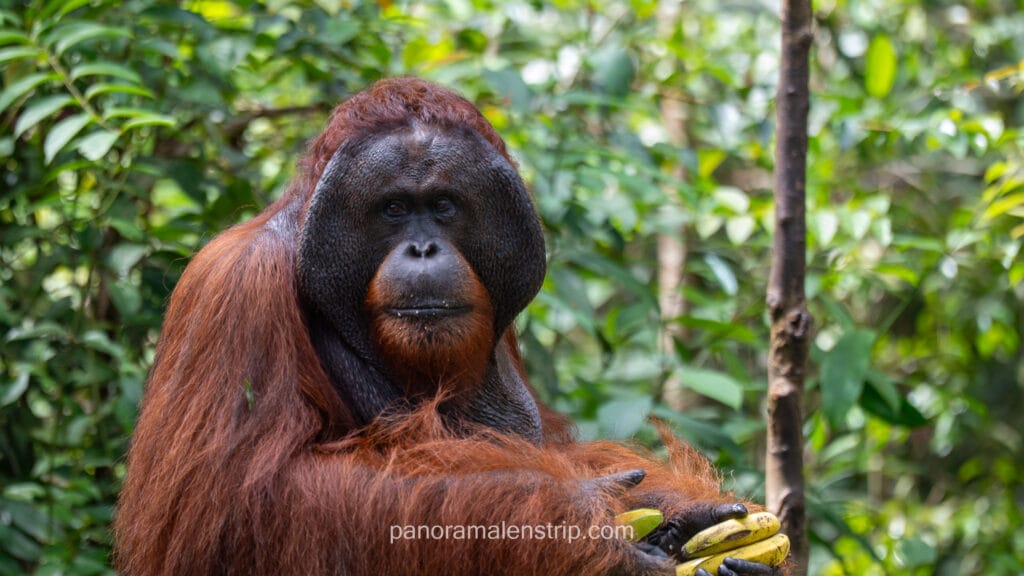
The first day typically involves a transfer from the airport to Kumai, followed by a cruise to the first post, Tanjung Harapan. Feeding time here is at 3:00 PM, offering your first encounter with the great apes. You will sleep on the boat, docked along the river edge.
Day two is the core of the expedition. You will visit Pondok Tanggui for the 9:00 AM feeding, then proceed upriver to the legendary Camp Leakey. The Camp Leakey feeding at 2:00 PM is the highlight, often featuring the dominant males and matriarchs. This day includes significant trekking through the peat swamp forest.
Day three is a winding down period. You enjoy breakfast on the river as the boat returns to Kumai. The return journey is excellent for spotting wild proboscis monkeys and crocodiles before transferring back to the airport.
Is a 4D3N or 5D4N “Slow Journey” worth it?
For photography enthusiasts or “Slow Travel” advocates, extending to four or five days is highly recommended. The standard 3D2N trip can feel rushed, especially if rain delays a feeding session.
A longer itinerary buys you redundancy. You can visit Camp Leakey twice or explore narrower side creeks that larger tour groups skip. These quiet backwaters are prime territory for Kingfishers, Hornbills, and False Gharials. The extra cost is marginal compared to the increased “Information Gain” and photographic opportunities.
Is Tanjung Puting safe for tourists?
Yes, the park is generally safe for tourists, but environmental hazards like malaria and dehydration require proactive preparation rather than reactive fear.
What are the health requirements?
Kalimantan is a known malaria zone. While the risk is often low in the dry season, it is not zero. Consult a travel medicine specialist about prophylaxis options like Malarone or Doxycycline before departure.
Insect protection is mandatory. Use a repellent with 98% DEET or Picaridin. The mosquitoes are most active at dawn and dusk, coinciding with the best wildlife viewing times. Wear long sleeves and pants treated with Permethrin for added defense.
Hydration is a constant battle in the tropics. Reputable boat crews provide gallons of bottled or purified water. Never drink tap water or river water, as it carries a high risk of bacterial contamination.
How do we practice ethical wildlife tourism?
The golden rule at Camp Leakey and other stations is maintaining distance. Experts recommend keeping a minimum of 7-10 meters (approx. 25-30 feet) between you and any orangutan.
Orangutans are genetically 97% similar to humans, making them highly susceptible to our respiratory diseases. A common cold for you can be lethal for them. Wearing a mask during trekking is strongly encouraged and sometimes enforced by rangers. Flash photography is strictly prohibited as it stresses the animals and can damage their sensitive eyes.
FAQ Section
Are there toilets on the Klotok boats?
Yes. Standard boats typically feature Western-style toilets but may require manual flushing with a bucket. Luxury and Deluxe boats are equipped with modern flush toilets and showers, often with hot water systems.
Can I charge my camera on the boat?
Yes. Luxury boats utilize solar panels and battery banks to provide 24-hour power. Standard boats generally run a generator in the evenings (approx. 6 PM to 10 PM). Always bring high-capacity power banks as a backup.
Is there internet signal in the jungle?
Signal is spotty. You will likely have 4G reception (Telkomsel is best) near Kumai and parts of Tanjung Harapan. However, once you travel upriver toward Camp Leakey, coverage drops to zero. Prepare to be offline.
Can children visit Tanjung Puting?
Yes, it is a family-friendly destination. The boat journey is gentle, and children often love the wildlife. However, the trekking can be hot and humid, so it is best suited for children who are comfortable walking for 30-60 minutes.
Conclusion
Tanjung Puting remains one of the few places on Earth where you can witness the orangutan in its natural theater. It is a destination that rewards planning; the logistics of boats, flights, and seasonal timing are complex but manageable.
For 2026, the shift toward luxury eco-tourism is evident. If you prioritize comfort and privacy, booking a private air-conditioned Klotok 3-6 months in advance is essential. Whether you choose a rugged deck or a luxury cabin, the silence of the Sekonyer River at night remains an unforgettable luxury in itself.


[…] travelers planning a polished river route, our complete Tanjung Puting river guide explains the route structure and viewing logic in more detail. If you want a fuller sense of the […]