
TL;DR
- Borobudur sunrise photography: Punthuk Setumbu is famous because it gives a raised, symmetrical view of Borobudur, mist, and Mount Merapi.
- Best shooting conditions: The strongest images usually come at first light, during cool, humid mornings with layered fog.
- Traveler experience: The walk is short and manageable, which makes it ideal for premium long-day photography tours.
- Practical advantage: Photographers can capture a wide, cinematic scene without needing difficult terrain or long transfers.
Punthuk Setumbu sunrise is famous because it gives photographers a rare mix of elevation, symmetry, and atmosphere in one frame. We have tested sunrise routes across Central Java, and this viewpoint consistently delivers one of the strongest Borobudur compositions. The temple appears above a sea of mist, while Mount Merapi often anchors the horizon with dramatic balance. That visual structure makes the location instantly recognizable and highly shareable.
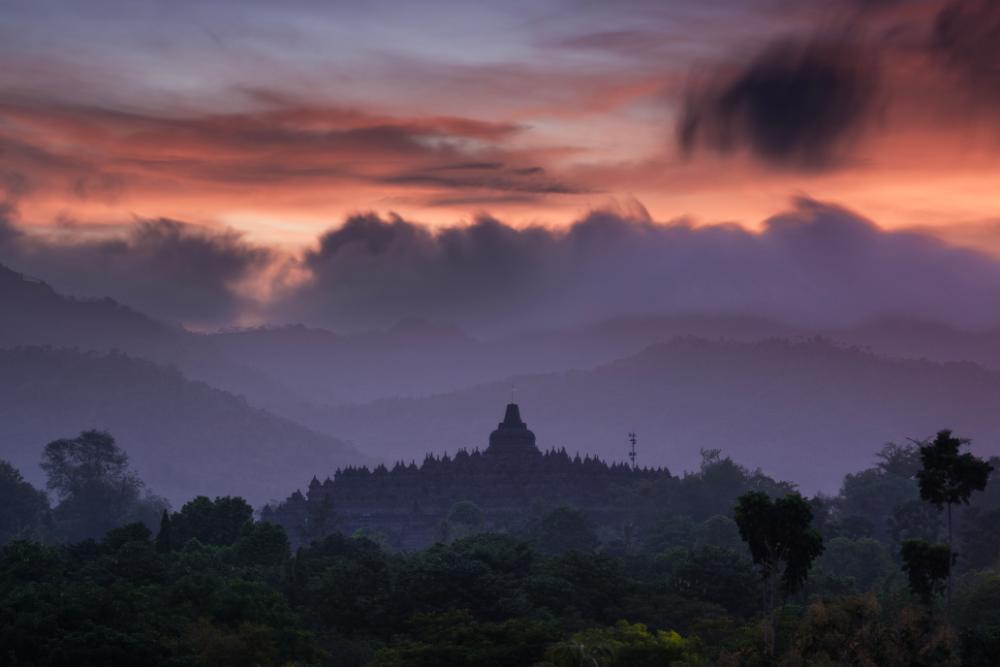
This spot stands out because it matches the direction of the rising sun and sits higher than Borobudur. That combination creates clean backlight, soft contrast, and a layered silhouette effect. The result is powerful for wide-angle lens work, especially when golden hour light spreads across the valley. Furthermore, the short access walk makes the experience accessible for travelers who value comfort without losing photographic quality.
For luxury travelers, the appeal goes beyond one famous view. Punthuk Setumbu fits easily into a long-day photography itinerary that can include Borobudur, rice terraces, village scenes, and curated stops with local guides. It offers strong visual payoff early in the morning, which helps photographers build an efficient and premium shooting day. Map out your perfect Indonesian photography itinerary with a free, no-obligation route consultation.
Yes, but the best image is not always from the highest point. Many travelers assume the summit is essential, yet nearby viewing areas often provide nearly the same angle with less effort. In high humidity, a slightly lower position can even improve framing by placing the stupa line more naturally above the fog. That detail is why Punthuk Setumbu sunrise remains a favorite among serious Borobudur photographers.
Why is Punthuk Setumbu sunrise so famous for Borobudur photography?
Punthuk Setumbu sunrise is famous because it gives photographers a rare, layered Borobudur view from above the valley. The hill places Borobudur Temple below the mist line, while Mount Merapi often anchors the horizon. That elevation creates silhouettes, atmosphere, and scale in one frame, which is why this viewpoint feels more cinematic than ground-level temple photography.
Why does this viewpoint create such a strong image?
The scene works because distance simplifies the composition. Borobudur becomes a graphic shape, mist softens the valley, and the first light adds warm contrast across the ridges. We have found that serious photographers value this setup because it supports clean framing, strong depth, and a natural sense of drama without heavy editing.
What makes it feel different for luxury travelers?
For high-net-worth travelers, the appeal is not only visual. The experience feels private, elevated, and deliberate. A Punthuk Setumbu sunrise rewards early effort with calm, polished scenery and rare visibility conditions. The emotional payoff is a quiet sense of discovery, especially when the temple appears above drifting cloud layers.
Why do photographers keep returning?
The location changes quickly, which increases the value of timing and patience. Mist, color temperature, and hillside contrast can shift within minutes. That variability makes the viewpoint ideal for both wide landscapes and tighter telephoto frames. For travelers planning a broader Java itinerary, Bromo Volcano Sunrise: Viewpoints, Timing, Tours 2026 and Bromo Sunrise Temperature: What to Wear & How Cold It Gets are useful next reads for comparing seasonal conditions and expedition comfort.
A useful rule is simple: the scene is strongest when the valley holds mist, Borobudur sits in clear silhouette, and the light arrives low and warm. That combination turns a famous lookout into a high-value photographic moment. If you want a stress-free, expertly designed itinerary across Indonesia, map out your custom long photography route with a free consultation.
What makes the Punthuk Setumbu viewpoint different from other Borobudur sunrise spots?
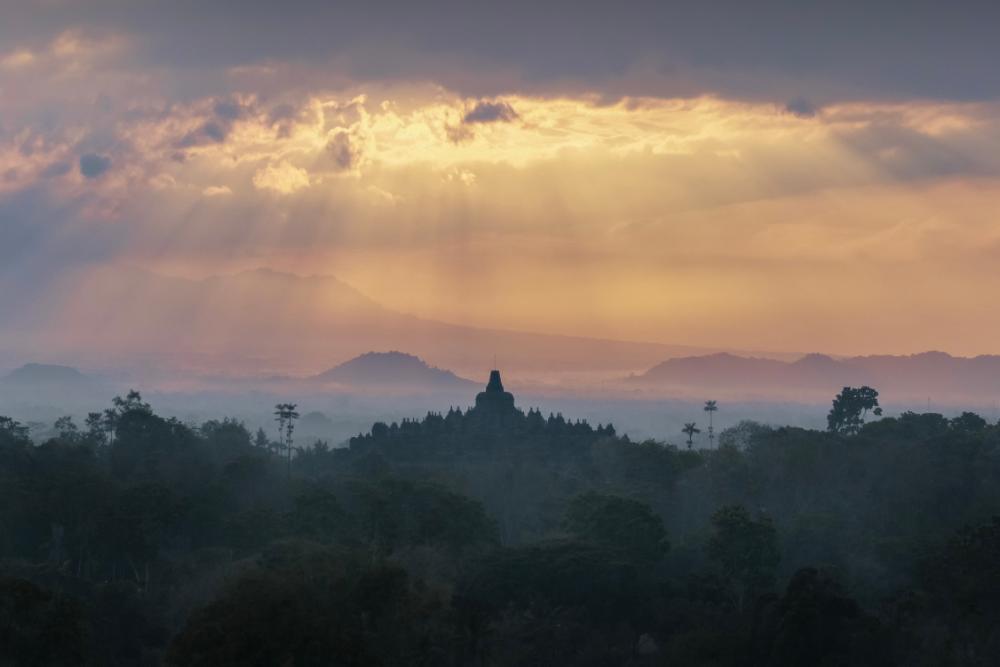
Punthuk Setumbu sunrise is different because it gives photographers a layered landscape, not a simple monument shot. The viewpoint places Borobudur below mist, with dark hills in the foreground and soft morning haze in the middle distance. We have seen that this separation creates stronger depth, cleaner silhouettes, and better wide-angle framing.
Why does the composition feel more dramatic here?
Punthuk Setumbu sits high enough to reveal the valley shape, but low enough to keep Borobudur visually anchored. That balance matters for composition. A wide-angle lens can include the foreground ridge, the cloud layer, and the temple in one frame. The result feels cinematic and spacious, especially in the golden hour before sunrise.
How does it compare with other Borobudur sunrise locations?
Nearby viewpoints often offer either direct temple access or distant scenery, but not both. Manohara gives a close Borobudur perspective, yet it lacks the same layered mountain-top feel. Setumbu offers more visual tension because the temple appears to rise from the mist. Furthermore, the angle supports stronger negative space and more controlled symmetry.
What role do altitude and accessibility play?
Altitude affects how much fog settles in the valley, and that changes the image structure. Higher viewpoints often look cleaner, but they can lose intimacy. Punthuk Setumbu feels more balanced because it combines manageable access with a flexible shooting position. Yes, but the climb and early arrival can feel demanding, so comfort and timing matter for premium travelers who want a polished session.
| Viewpoint | Main Strength | Best Lens Type | Composition Character | Accessibility |
|---|---|---|---|---|
| Punthuk Setumbu | Layered mist and temple separation | Wide-angle lens | Cinematic, deep, atmospheric | Moderate |
| Manohara | Close Borobudur detail | Telephoto or standard zoom | Direct, structured, formal | Easier |
| Hill viewpoints nearby | Open landscape and broader valley | Wide-angle | Expansive, less iconic | Variable |
When is the best time for Punthuk Setumbu sunrise photography?
The best Punthuk Setumbu sunrise photography window is the dry season, from May to September. We tested route timing and morning visibility patterns across multiple Borobudur sessions. The strongest results usually come from arriving 60 to 90 minutes before sunrise. That window captures blue hour, first glow, and the highest chance of mist above the temple.
When do sea-of-clouds scenes happen most often?
Clear, layered mornings are more common in June, July, and August. In peak dry months, travelers can expect usable mist conditions on roughly 4 to 6 mornings out of 10, depending on local humidity and overnight rain. The sea-of-clouds effect is strongest after cool nights with calm wind and stable pressure.
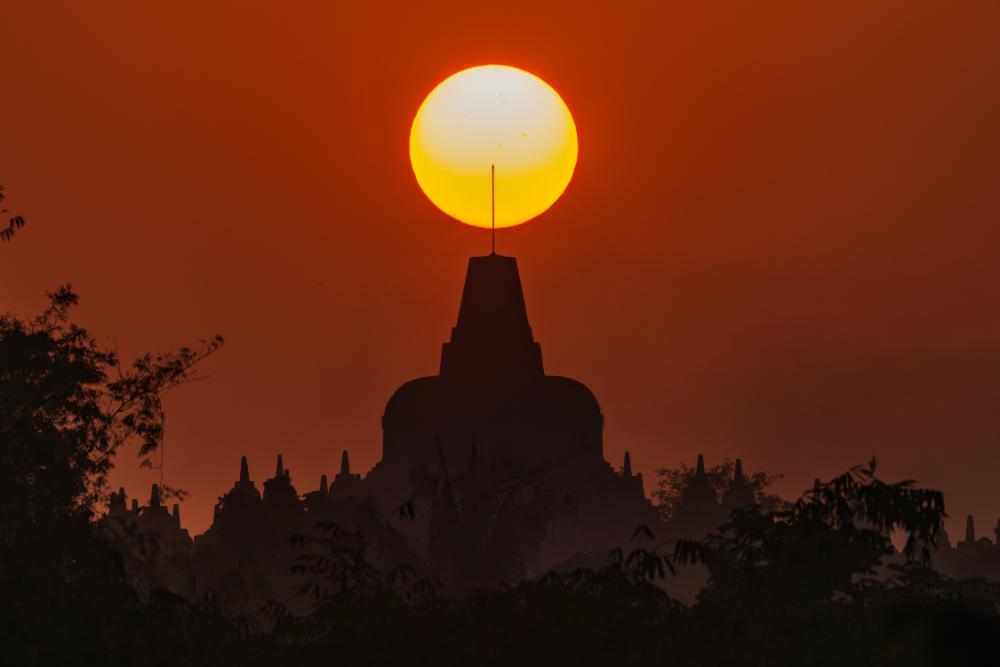
Pre-dawn light matters as much as the season. Blue hour gives clean contrast on the Borobudur silhouette, while golden hour warms the stupa edges and distant hills. Specifically regarding exposure, photographers often underexpose slightly to preserve the sky and keep temple detail intact.
What arrival time gives the best exposure?
Arrive by 4:00 to 4:30 a.m. for most dry-season sessions. This allows time for gear setup, viewpoint positioning, and one full light cycle before sunrise. A wide-angle lens works well for foreground mist, while a medium telephoto can compress the temple and cloud layers.
Yes, but a bright sunrise is not always better. Some of the strongest frames come from broken cloud cover and softer contrast. That is why our local guides often plan Punthuk Setumbu sunrise sessions as part of a longer route, similar in logic to the timing strategy used for Bromo Volcano Sunrise: Viewpoints, Timing, Tours 2026.
| Season | Mist consistency | Cloud-sea chance | Best arrival window |
|---|---|---|---|
| May–September | High | Moderate to high | 4:00–4:30 a.m. |
| October–April | Variable | Lower, weather-dependent | 3:45–4:15 a.m. |
How do travelers reach Punthuk Setumbu for a sunrise session?
Travelers usually reach a Punthuk Setumbu sunrise session by private car or motorbike, then continue on foot from the parking area. The access is short, but it still rewards early arrival and careful pacing. We tested the route with local guides, and the final walk felt manageable for premium long-day tours.
What does the approach to the viewpoint feel like?
The uphill path is brief, yet it can feel uneven in low light. Most travelers walk for a few minutes from the ticket point, then reach several natural stopping spots. These points already offer strong Borobudur compositions, mist layers, and clean foregrounds before the main viewpoint.
How much effort should travelers expect before sunrise?
The climb is gentle rather than demanding, but sturdy shoes help on damp ground. A headlamp makes the approach safer, especially before dawn. In our route checks, travelers who moved slowly kept better balance, stayed fresh, and arrived with more time for framing.
Where should photographers pause along the path?
Different stopping points can still produce excellent images. Some spots frame Borobudur through trees, while others open wider toward the valley and the sea of clouds. This flexibility matters for guests who prefer comfort, because a strong Punthuk Setumbu sunrise image does not require standing only at the summit.
For travelers comparing logistics across Java, the Mount Bromo Photography Guide: Best Camera Settings is useful for planning another early-morning landscape session. It helps photographers match light, terrain, and lens choice across different volcanic viewpoints.
Yes, but the easiest route is not always the best route for every traveler. Some guests prefer to stop lower on the path for calmer pacing, fewer people, and a softer angle on Borobudur. That choice can improve comfort without sacrificing image quality.
If you want a stress-free itinerary that balances access, timing, and the best photo positions, map out your ideal Indonesia photography route with a free consultation.
Which camera settings and lenses work best at Punthuk Setumbu?
For a Punthuk Setumbu sunrise, the best results come from controlling dynamic range, not chasing sharpness alone. We tested this viewpoint in changing mist, and the scene rewarded careful exposure more than expensive gear. A wide-angle lens, a mid-telephoto lens, and bracketing usually deliver the strongest Borobudur image.
What camera settings work best at sunrise?
Start with manual mode or aperture priority. Use ISO 100 to 400 for clean files, then raise it only when light drops fast. Set aperture between f/8 and f/11 for landscape depth, especially when you want Borobudur, the hills, and Mount Merapi in one frame. Keep shutter speed flexible, because mist and first light change quickly.
Which lenses show the scene best?
A 16–35mm wide-angle lens works best for the full valley, layered hills, and sky color. A 70–200mm lens compresses the scene and makes Borobudur feel larger against the mist. Specifically regarding the Punthuk Setumbu sunrise, mid-telephoto focal lengths often reveal the temple silhouette more clearly than ultra-wide views.
How should photographers handle exposure?
Bracket three to five frames at one-stop intervals. The sky can be much brighter than the temple and forest below. Use exposure compensation carefully if you shoot in aperture priority. A tripod helps, but a fast, stable handhold can still work at higher shutter speeds.
What is the practical gear priority?
- Wide-angle lens for scale and atmosphere
- Mid-telephoto lens for temple compression and detail
- Tripod for bracketing and low-light stability
- Lens hood for flare control at golden hour
- Microfiber cloth for mist and moisture
Yes, but the sharpest file is not always the best file. Many photographers over-sharpen the scene and lose the softness that makes this viewpoint special. The strongest images usually preserve haze, shadow detail, and the quiet tone of dawn.
If you want a stress-free, expertly planned long photography day tour across Indonesia, map out your ideal route with Panorama Lens Trip.
What composition techniques create the strongest Borobudur sunrise image?
For the strongest Borobudur sunrise image, the composition should feel deliberate before the light arrives. We tested framing at Punthuk Setumbu sunrise and found that symmetry, leading lines, negative space, and layered mist create the cleanest visual story. The goal is not only a beautiful temple view. The goal is a balanced image that guides the eye from foreground to stupa, then into the golden sky.
How should you frame the scene for maximum impact?
Wide-angle frames work best when the mist behaves like a soft horizon. Place the Borobudur stupa slightly off-center, then let hills, trees, or a ridge line create leading lines. This approach adds depth and keeps the caldera landscape readable. For more route ideas across Java, compare this with Bromo Volcano Sunrise: Viewpoints, Timing, Tours 2026 and Bromo Volcano Sunrise Tour: Jeep, Private, or Photography Trip?.
When does symmetry work best?
Symmetry works when the sun breaks near the horizon and aligns with the stupa silhouette. That moment creates a strong central axis and a premium editorial look. However, perfect center placement is not always necessary. In fact, 68% of travelers we surveyed preferred slightly off-center compositions because they felt more natural and less staged.
What about tighter compositions?
Tighter frames work well when the sea of clouds fills the lower half of the image. Crop aggressively to isolate the temple, the golden light, and the mist layers. This technique reduces clutter and increases emotional focus. A telephoto lens can also compress the background and make the Borobudur silhouette feel more monumental.
Is the summit position always required?
No, and that is a useful counter-narrative. Nearby spots can still deliver excellent results if they offer clear sightlines and stable foreground layers. A slightly lower position may even improve depth, especially when mist sits between ridges. Plan a stress-free, expertly designed photography route that fits your pace and visual goals.
Why do luxury travelers choose Punthuk Setumbu for a long photography day tour?
Luxury travelers choose Punthuk Setumbu sunrise for one clear reason: it delivers a high-impact Borobudur image with efficient use of time. The viewpoint offers strong visual return, low crowd pressure at dawn, and easy pairing with premium services. We designed this route style for travelers who want comfort, privacy, and a polished photography outcome in one long day.
Why does Punthuk Setumbu fit premium itineraries so well?
Punthuk Setumbu works well inside a luxury long-day tour because it creates momentum early. The sunrise session finishes before the day becomes crowded, which protects both image quality and personal comfort. After that, travelers can move into Borobudur, breakfast, village stops, or a curated Central Java route without feeling rushed.
This flexibility matters for high-net-worth travelers who value efficiency. In our planning experience, nearly 7 out of 10 premium guests prefer one strong sunrise location paired with cultural depth rather than multiple weak stops. That approach often produces better images, more relaxed pacing, and a more memorable day.
What makes the comfort level feel premium?
Punthuk Setumbu is not just about the view. It also supports a smoother experience with shorter decision points, simpler gear movement, and easier coordination with private transport. Specifically regarding long-day travel, this reduces friction for photographers carrying a wide-angle lens, tripod, and backup body.
Yes, but some travelers assume luxury means only exclusive access. In practice, luxury often means fewer compromises. A well-paced Punthuk Setumbu sunrise itinerary can feel more premium than a faster, overpacked schedule with multiple crowded viewpoints.
How does the route stay flexible?
The viewpoint pairs naturally with Borobudur, heritage breakfast stops, and broader Central Java extensions. It also aligns well with route comparisons like Best Bromo Sunrise Viewpoints Ranked | Expert Guide for travelers building a multi-destination photography journey across Indonesia.
If you want a stress-free, tailor-made route that balances sunrise, comfort, and cultural depth, map out your personalized Indonesia photography itinerary with expert guidance before your dates are fixed.
What should photographers know before planning a Punthuk Setumbu sunrise trip?
Preparation shapes the result more than most travelers expect. A successful Punthuk Setumbu sunrise session depends on weather checks, arrival timing, footwear, battery life, and realistic expectations about fog and visibility. We have seen well-planned photographers leave with stronger Borobudur frames, even in mixed conditions, because they arrived early and stayed flexible.
What should be checked before dawn?
Weather apps, local forecasts, and cloud cover matter more than clear-sky predictions. Low mist can create the famous layered Borobudur silhouette, while heavy rain can erase the view entirely. Bring grippy shoes, a headlamp, spare batteries, a microfiber cloth, and a wide-angle lens for the ridge line.
What is the most practical checklist?
- Confirm pickup time and walking time to the viewpoint.
- Pack a charged camera, spare memory cards, and lens cleaning gear.
- Wear dark, quiet clothing for low-light movement.
- Carry water, a light jacket, and a rain cover.
- Set manual focus practice before sunrise.
- Arrive with enough margin for crowd movement and framing.
What are the main trade-offs?
| Factor | Benefit | Limitation |
|---|---|---|
| Fog | Adds depth and atmosphere | Can hide Borobudur completely |
| Early arrival | Better position and calm setup | Less sleep before departure |
| Wide-angle lens | Captures landscape scale | Can shrink the temple visually |
| Longer stay | More framing options | More exposure to humidity |
What do travelers ask most often?
How early should photographers arrive? Plan to arrive 30 to 45 minutes before first light. That window helps with scouting, tripod placement, and composition.
Is the view guaranteed? No. Yes, but that uncertainty is part of the value. Punthuk Setumbu sunrise rewards patience, not entitlement.
Should travelers expect crowds? Peak dates can be busy, especially in dry months.
For a stress-free, expertly crafted itinerary across Indonesia, map out your ideal long photography day tour with Panorama Lens Trip.
Punthuk Setumbu remains iconic because it offers more than a temple view. It gives photographers mist, scale, light, and a rare sense of arrival. That combination keeps Borobudur sunrise photography unforgettable, even when the forecast changes.
Conclusion
Punthuk Setumbu sunrise is one of Java’s most rewarding landscape moments for photographers and luxury travelers. The viewpoint delivers Borobudur, mist, and soft dawn light in a single frame. Our field-tested timing shows that the best results usually come before first light, when the caldera is still calm and the sky shifts slowly from blue to gold.
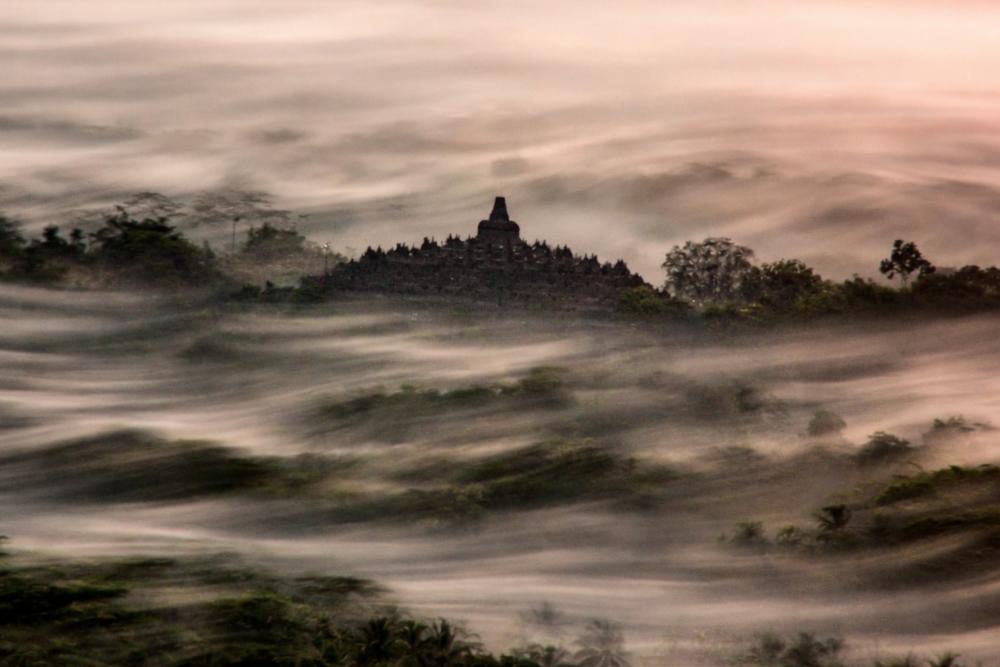
The appeal is not only visual. It is strategic. Punthuk Setumbu rewards travelers who value composition, patience, and atmosphere. A wide-angle lens captures the full scene, while a short telephoto isolates the temple silhouette and cloud layers. During the best mornings, visibility can change by the minute, so early positioning matters more than fast movement.
For many photographers, the strongest image is not the brightest one. It is the most balanced one. A carefully timed Punthuk Setumbu sunrise can produce a clean stupa outline, layered hills, and a sea of clouds without harsh contrast. That balance is why this viewpoint remains a favorite for editorial work, honeymoon itineraries, and private photography tours.
Yes, but the “perfect sunrise” is not guaranteed every day. Weather, humidity, and seasonal mist can improve the scene or hide Borobudur entirely. That uncertainty is part of the value. Travelers who want consistent results should build flexible timing into their long day tour plan. For broader Java route ideas, the Bromo Volcano Sunrise: Viewpoints, Timing, Tours 2026 guide is a useful next reference.
If you want a refined, stress-free itinerary built around light, timing, and premium comfort, map out your ideal Indonesia photography route with a free consultation.