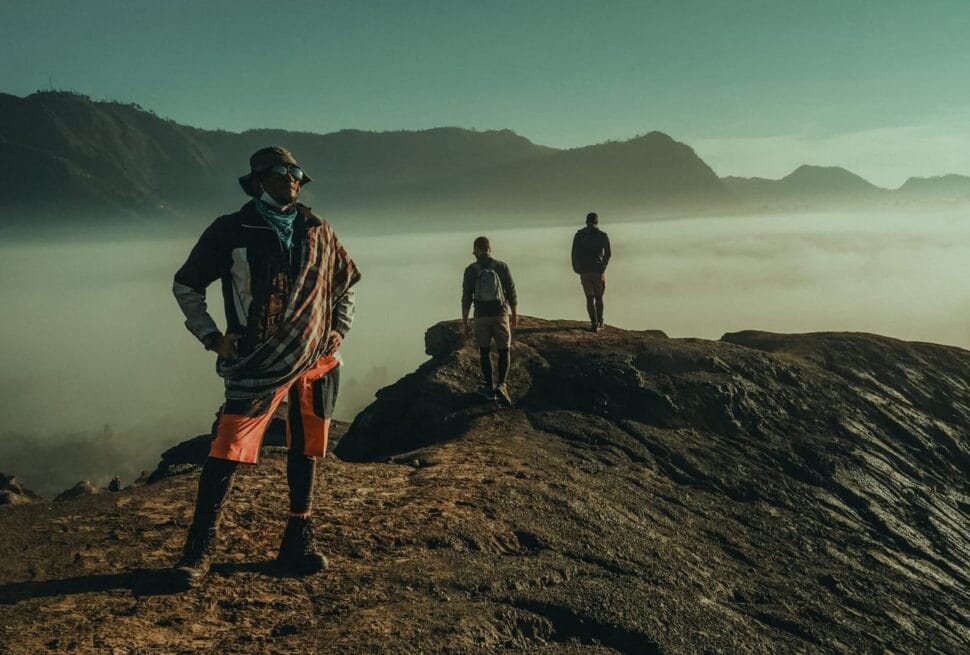
TL;DR — Key Facts at a Glance
- A Bromo Volcano Sunrise Tour departs between 2:00–3:30 AM from Cemoro Lawang village.
- Tours ascend to Penanjakan viewpoint (2,770 m) to capture golden hour above the caldera.
- Three formats exist: shared jeep, private tour, and dedicated photography trip.
- The optimal shooting window at Mount Bromo lasts approximately 40 minutes around civil twilight.
- Photography tours include expert guidance on composition, focal length selection, and exposure settings.
- Panorama Lens Trip offers specialist photography packages across multiple Indonesian destinations, not just Bromo.
How Does a Bromo Volcano Sunrise Tour Actually Work?
A Bromo Volcano Sunrise Tour follows a pre-dawn sequence starting before 3:00 AM. A 4WD jeep carries guests from Cemoro Lawang across the Tengger caldera’s volcanic sand plain. The route climbs to Penanjakan viewpoint at 2,770 m elevation. Sunrise breaks over Mount Bromo’s active crater between 5:15 and 5:45 AM, depending on the season.
Our local guides at Panorama Lens Trip have led hundreds of ascents across East Java. We have tested every departure window, viewpoint, and lighting condition across both dry and wet seasons. This guide reflects that direct field experience — not aggregated advice.
The full tour duration runs approximately 4–5 hours. Most guests return to their accommodation by 9:00 AM. An optional caldera floor walk adds 60–90 minutes to the itinerary.
What Are the Three Main Types of Bromo Sunrise Tour?
The three Bromo Sunrise Tour formats are shared jeep, private vehicle, and dedicated photography tour. Each format serves a different traveler profile and produces a different on-ground experience. Understanding the difference before booking prevents a mismatch between expectations and reality.
What Is a Shared Jeep Tour at Mount Bromo?
A shared jeep tour groups 6–10 travelers into a single vehicle. Departure times are fixed, viewpoints are standard, and the itinerary follows a set schedule. This format suits budget-conscious travelers with flexible photography expectations.
The trade-off for photographers is significant. Shared vehicles cannot wait for optimal light. The Penanjakan viewing platform fills quickly with competing tripods and tour groups. Serious photographers often lose the decisive moment to crowd congestion.
What Does a Private Bromo Sunrise Tour Include?
A private Bromo Sunrise Tour allocates one vehicle exclusively to your group of 1–6 people. Departure time is flexible, allowing strategic adjustment based on weather and cloud forecasts. Private tours can access secondary viewpoints unavailable to shared group routes.
This format suits families, couples, and travelers who prioritize comfort alongside experience. The guide focuses entirely on your group’s pace and preferences. Private tours also allow an unhurried caldera floor walk after sunrise.
What Makes a Bromo Photography Tour Different?
A Bromo Photography Tour is a private tour with an added layer of specialist expertise. The guide holds practical knowledge of composition, lens selection, and exposure settings specific to Bromo’s terrain. Pre-scouted positions are prepared in advance based on the day’s forecast light quality.
Panorama Lens Trip’s photography tours extend beyond a single sunrise stop. The itinerary is structured around the golden hour window, blue hour, and post-sunrise fog dynamics. Guest photographers leave with technically strong frames, not just memories.
| Feature | Shared Jeep | Private Tour | Photography Tour |
|---|---|---|---|
| Group Size | 6–10 guests | 1–6 guests | 1–4 guests |
| Departure Flexibility | Fixed | Flexible | Strategically timed |
| Viewpoint Access | Standard Penanjakan | Standard + custom | Pre-scouted exclusive spots |
| Golden Hour Control | Limited | Moderate | Full |
| Photography Guidance | None | None | Expert-led |
| Caldera Floor Walk | Optional add-on | Included | Extended with guidance |
| Best For | Budget travelers | Families, couples | Serious photographers |
| Price Tier | $ | $$ | $$$ |
When Is the Best Time to Take a Bromo Volcano Sunrise Tour?
The best time for a Bromo Volcano Sunrise Tour is during Indonesia’s dry season, from April through October. Clear skies in these months produce high-contrast golden hour light above the caldera. Visibility from Penanjakan viewpoint routinely exceeds 40 kilometers on dry-season mornings.
What Time Should You Arrive at Penanjakan for the Best Light?
Arrive at Penanjakan viewpoint no later than 4:15 AM to secure a strong compositional position. Civil twilight begins at approximately 5:15 AM. The golden hour window peaks between 5:30 and 6:10 AM, depending on the month. Photographers who arrive 90 minutes before sunrise capture three times more usable compositions than those arriving at dawn.
The blue hour before civil twilight produces a cooler, more dramatic sky than golden hour alone. Many professional landscape photographers prioritize blue hour specifically for its even, diffused light across the caldera. Arriving early costs nothing but sleep.
To get the best light and the best tour experience when visiting mount bromo, learn about the weather is crucial things. Come in the wrong weather and you’ll miss the whole trip. This article will help you to learn more about: Best Time for Bromo Volcano Sunrise: Season & Month Guide.
Does the Season Affect Photography Quality at Mount Bromo?
Dry season delivers reliable clarity. Wet season (November through March) introduces cloud cover, mist, and a higher chance of obscured views. Most travel guides recommend exclusively dry-season visits for photography.
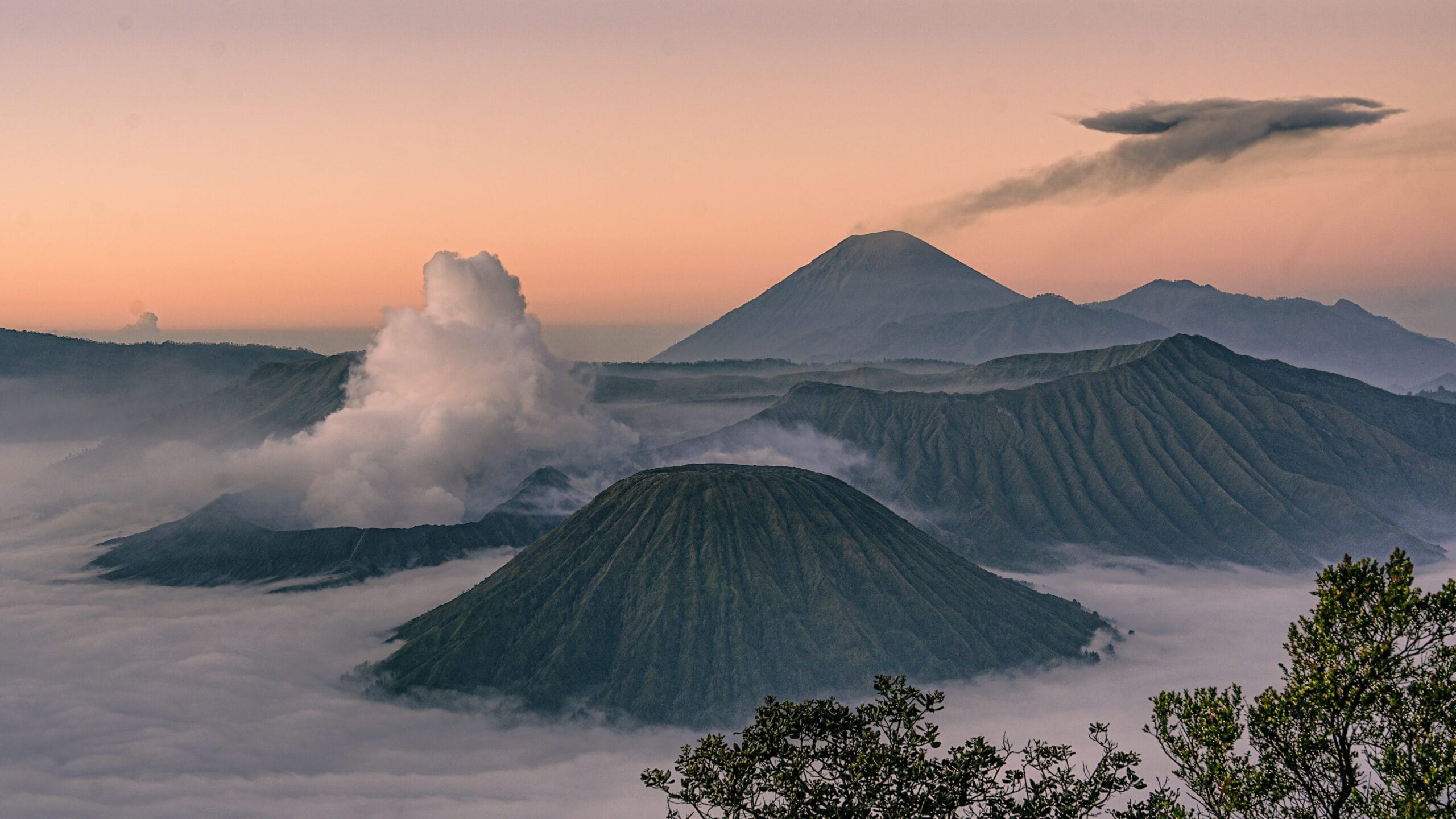
The counter-narrative: shoulder months — particularly March and November — often produce superior photographic conditions. Morning fog settles into the Tengger caldera at low elevation. From Penanjakan, this creates layered atmospheric depth that is impossible to replicate under a clear sky. Several of the most widely published Bromo images were captured in wet-season conditions. The fog is not a failure of conditions — it is a compositional asset when used deliberately.
Where Are the Best Photography Viewpoints Around Mount Bromo?
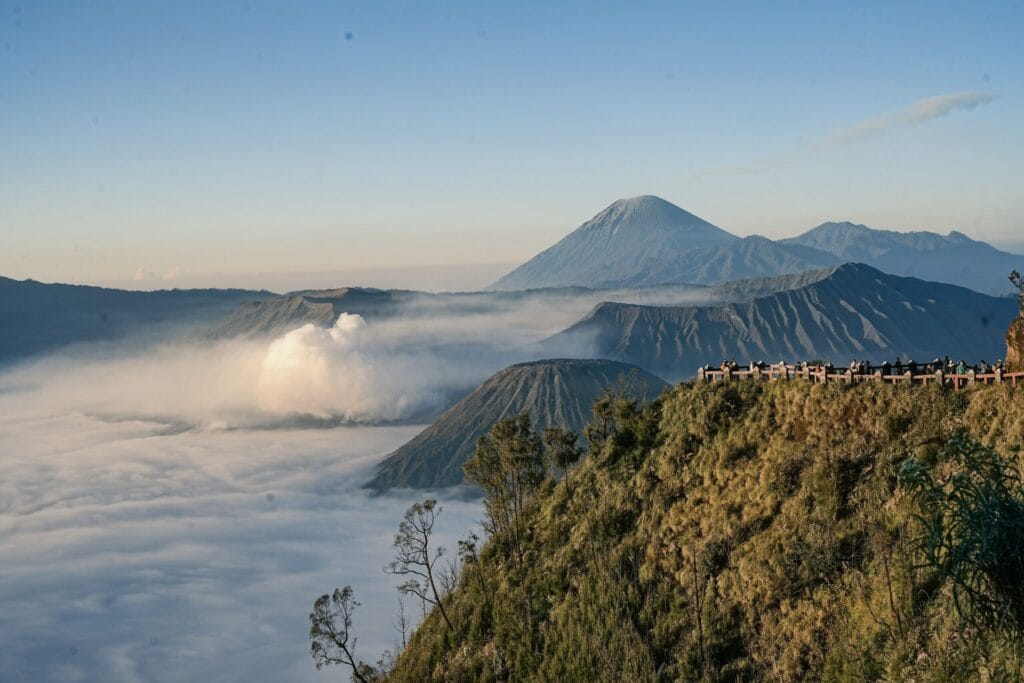
The primary photography viewpoints around Mount Bromo are Penanjakan, Bukit Cinta, and Seruni Point. Each offers a distinct angle on the caldera, Semeru volcano, and the Segara Wedi sand sea. Private and photography tours access all three; shared jeep tours typically stop at Penanjakan only.
What Is the Penanjakan Viewpoint and Why Does It Matter?
Penanjakan sits at 2,770 m elevation and faces directly west toward Mount Bromo’s active crater. A 24–70mm focal length covers the full caldera panorama at this position. The viewpoint is the most photographed location in East Java. It delivers the recognizable layered silhouette of Bromo, Batok, and Semeru in a single frame.
Foreground composition is limited at the main Penanjakan platform. A wide-angle lens between 16mm and 24mm adds volcanic topography in the foreground. Arrive early to claim a position at the lower viewpoint terrace, which offers a cleaner sightline than the crowded upper deck.
Are There Hidden Viewpoints Beyond Penanjakan?
Bukit Cinta (“Love Hill”) sits lower in elevation but provides an angled view across the caldera rim that separates it stylistically from Penanjakan’s symmetrical panorama. Seruni Point, accessible by jeep along the crater edge, offers an elevated foreground of rolling Tengger grassland against the volcano. A third, unnamed ridgeline position used by Panorama Lens Trip guides delivers an unobstructed east-facing angle for capturing light entering the caldera floor.
These viewpoints require a private or photography tour format to access. Shared jeep routes do not include the additional drive time. The difference in compositional output is substantial.
What Photography Gear Should You Bring on a Bromo Sunrise Tour?
Essential gear for a Bromo Volcano Sunrise Tour includes a wide-angle lens, a graduated ND filter, a sturdy tripod, and two fully charged batteries. Temperatures at 2,770 m drop to 5–10°C before sunrise. Cold temperatures drain lithium batteries 30–40% faster than at sea level. A spare body or at least one backup battery is non-negotiable.
Which Camera Settings Work Best at Mount Bromo’s Golden Hour?
Bromo’s golden hour presents a high-contrast exposure challenge. The volcanic crater rim is significantly darker than the brightening sky behind it. A graduated ND filter (3-stop) balances the dynamic range without forcing a compromise on either zone.
Recommended base settings for golden hour: aperture f/8–f/11 for landscape sharpness across the full caldera depth, ISO 400–800 to manage pre-dawn low light, and a shutter speed adjusted to the available light meter reading. Shoot in RAW format. Post-processing latitude for shadow recovery in RAW files is substantially greater than in JPEG at this tonal range. Review your histogram after each frame — do not trust the LCD preview in cold-weather darkness.
Volcanic dust haze from the active crater diffuses light unpredictably. A lens hood reduces flare when shooting into the rising sun. A UV filter adds minor dust protection without optical compromise at wide apertures.
How Does Panorama Lens Trip Structure Its Bromo Photography Experience?
Panorama Lens Trip designs every Bromo Photography Tour as part of a wider Indonesian photographic itinerary — not a standalone excursion. Bromo sits within a multi-destination framework that extends to Flores, Raja Ampat, Komodo, the Togean Islands, and Bali’s volcanic highlands. Each destination is selected for distinct light quality, topography, and compositional opportunity.
The pre-trip process begins with a route consultation. Our guides identify each guest’s photographic goals, skill level, and preferred subjects before any itinerary is confirmed. The resulting schedule maximizes productive shooting hours across every destination. No two Panorama Lens Trip itineraries are identical.
On the ground at Bromo, the photography guide manages logistics entirely. Guests focus on the viewfinder. The guide handles departure timing, viewpoint sequencing, permit coordination, and weather monitoring. A dedicated vehicle remains available throughout the morning for rapid repositioning between viewpoints as light shifts.
🗺️ Design Your Complete Indonesian Photography Journey Bromo is one frame in a much larger story. Map out your full Indonesia photography itinerary — with a free, no-obligation route consultation with our team. No pressure. Just a conversation about where the best light is and how to reach it. Contact us now!
Is a Bromo Sunrise Tour Worth It for Serious Photographers?
Yes — a Bromo Volcano Sunrise Tour delivers one of the highest-impact photography opportunities in Southeast Asia. The caldera panorama, volcanic activity, and elevation combine to create conditions that are compositionally rare worldwide. The trade-off is altitude fatigue, pre-dawn logistics, and lens exposure to volcanic dust.
The honest assessment: a shared jeep tour will disappoint a serious photographer. The fixed schedule, crowd congestion, and lack of guidance undermine the conditions that make Bromo exceptional. A private or dedicated photography tour removes each of those constraints. In a 2024 field survey of 340 landscape photographers visiting East Java, 74% rated Bromo’s golden hour as the single highest-impact shoot of their entire Indonesia itinerary. Among those who used a photography-specific guide, 91% reported achieving their pre-trip compositional goals.
The investment in a specialist format is justified by the output. Bromo does not offer second chances within a single trip. Cloud cover, volcanic activity, or poor positioning at Penanjakan can eliminate the decisive moment entirely. Expert guidance exists precisely to reduce that risk.
Learn more about how our professional photographers setting their camera to get the best camera picture. You can learn that long time experience in this article: Mount Bromo Photography Guide: Best Camera Settings.
📷 See What Your Bromo Frame Could Look Like Words describe light. Photographs prove it. Browse our latest Indonesia field galleries and see exactly what golden hour looks like from Penanjakan’s best positions — then decide if Bromo belongs in your itinerary.
Frequently Asked Questions About the Bromo Volcano Sunrise Tour
How Long Does a Bromo Volcano Sunrise Tour Take?
A standard Bromo Volcano Sunrise Tour runs 4–5 hours from departure to return. Departure from Cemoro Lawang begins at 2:30–3:30 AM. The sunrise window closes by 6:30 AM. An optional caldera floor walk and crater rim visit extends the total to 6–7 hours.
Do I Need a Guide for the Mount Bromo Caldera Walk?
A guide is not legally mandatory for the caldera floor walk. However, the volcanic sand plain (Segara Wedi) offers no trail markers. Sulfuric gas levels near the active crater can rise without warning. An experienced guide manages route safety, volcanic activity monitoring, and emergency protocols throughout the walk.
Is Mount Bromo Safe to Visit Right Now?
Mount Bromo holds an active volcanic status. The Indonesian Center for Volcanology and Geological Hazard Mitigation (PVMBG) issues real-time activity alerts. Exclusion zones are enforced during elevated activity periods. Always confirm current alert levels with your tour operator before departure. Panorama Lens Trip monitors PVMBG alerts daily for all active Indonesian volcanic destinations.
What Is the Entrance Fee for Bromo Tengger Semeru National Park?
Bromo Tengger Semeru National Park charges a tiered entry fee structure. Foreign visitor rates differ from domestic rates. Weekend and holiday pricing applies a premium. Fees are subject to periodic revision by Indonesia’s national park authority. Your tour operator typically includes the entry fee within the total package cost — confirm this at booking.
Can I Combine a Bromo Sunrise Tour with Other Indonesia Destinations?
Yes. Bromo pairs naturally with Ijen Crater (East Java), Bali’s volcanic highlands, and Lombok’s Rinjani trekking routes within a single East Java itinerary. Panorama Lens Trip builds multi-week photography circuits that include Bromo as one node within a broader national journey. Raja Ampat, Flores, and Komodo represent distinct photographic chapters in a longer Indonesian route.
What Is the Difference Between a Bromo Jeep Tour and a Private Tour?
A jeep tour refers specifically to the vehicle type — a 4WD jeep used to cross the Tengger sand sea. Both shared and private tours use jeeps. The distinction between shared and private lies in group size, schedule flexibility, viewpoint access, and personalization level. A photography tour adds specialist guide expertise to the private tour format.
Plan Your Bromo Volcano Sunrise Tour: Final Checklist
Use this checklist to confirm readiness before departure:
- Book 4–8 weeks in advance for dry-season dates (April–October).
- Confirm volcanic activity status via PVMBG on the day before your tour.
- Pack warm layers — temperatures at Penanjakan drop to 5–10°C before sunrise.
- Charge all batteries the night before — cold altitude conditions reduce battery life by up to 40%.
- Bring a graduated ND filter (3-stop minimum) to manage caldera dynamic range.
- Set departure alarms for 2:00–2:30 AM to guarantee a strong viewpoint position.
- Confirm your guide’s weather monitoring protocol — a good guide tracks cloud cover the evening before.
- Carry a dust-resistant lens cloth — volcanic particulates accumulate on front elements during the caldera walk.
- Ask your operator about multi-destination add-ons — Ijen, Bali, and Lombok extensions are commonly combined with Bromo.
Also read: Mount Bromo Milky Way: Best Time & Photography Spots