TL;DR
- Bali cultural experiences combine sacred temple rituals, traditional Balinese dance, and ceremonial cuisine into one of Asia’s most layered travel destinations.
- Specifically, key experiences include the Kecak fire dance at Uluwatu, Legong at Puri Saren Ubud, Pura Besakih, Tirta Empul, and Babi Guling ceremonial feasts.
- Furthermore, the best cultural access aligns with Galungan, Kuningan, and Odalan festivals on the Balinese Saka lunar calendar.
- Photography highlights include golden hour at clifftop temples, gamelan-lit dance halls, and ceremonial processions — best captured with a 70–200mm telephoto lens.
- Additionally, expert-guided tours unlock private ceremonies that are entirely unavailable through standard tourism channels.
What Are Bali Cultural Experiences, and Why Do They Matter?
Bali cultural experiences are immersive encounters with the island’s living Hindu-Balinese heritage. Specifically, they span sacred temple ceremonies, classical performing arts, and ceremonially prepared cuisine. Unlike museum-based cultural tourism, Bali’s traditions are active daily practices. Notably, the Balinese do not perform their culture for visitors — they invite visitors to witness it.
Balinese Hinduism — locally called Agama Hindu Dharma — governs nearly every aspect of daily life. For example, offerings called canang sari appear each morning at shop entrances, roadsides, and family shrines. This spiritual continuity, moreover, distinguishes Bali from other Indonesian destinations. Travelers who understand this context therefore move beyond sightseeing and into genuine cultural participation.
Furthermore, not all “cultural experiences” in Bali carry equal authenticity. Tourist-facing performances are adapted for accessibility, whereas genuine ceremonial events operate on a separate calendar. Both have value. However, travelers should understand the difference before building an itinerary.
Also read: Bali Travel Guide 2026: Complete Tips for Tourists
Which Balinese Dance Performances Offer the Most Authentic Cultural Immersion?
Balinese dance is one of the world’s most technically refined performing art traditions. Consequently, UNESCO inscribed it on the Intangible Cultural Heritage list in 2015. Each dance form, furthermore, carries a specific narrative, ceremonial function, and physical grammar. Choosing which to attend, therefore, depends on the traveler’s schedule, location, and appetite for spectacle versus subtlety.
What Is the Kecak Fire Dance and Where Can You See It?
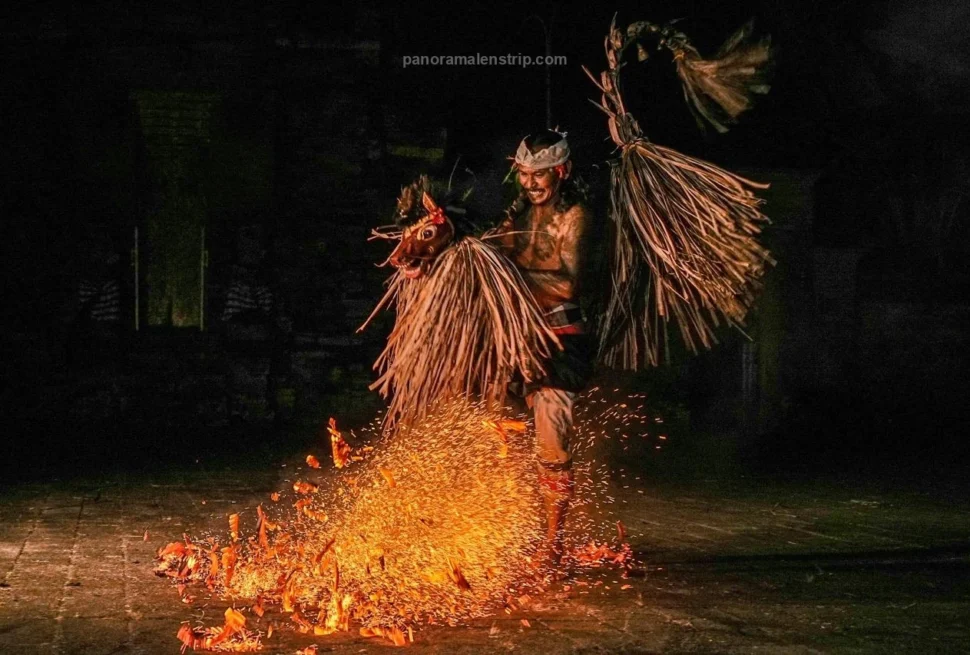
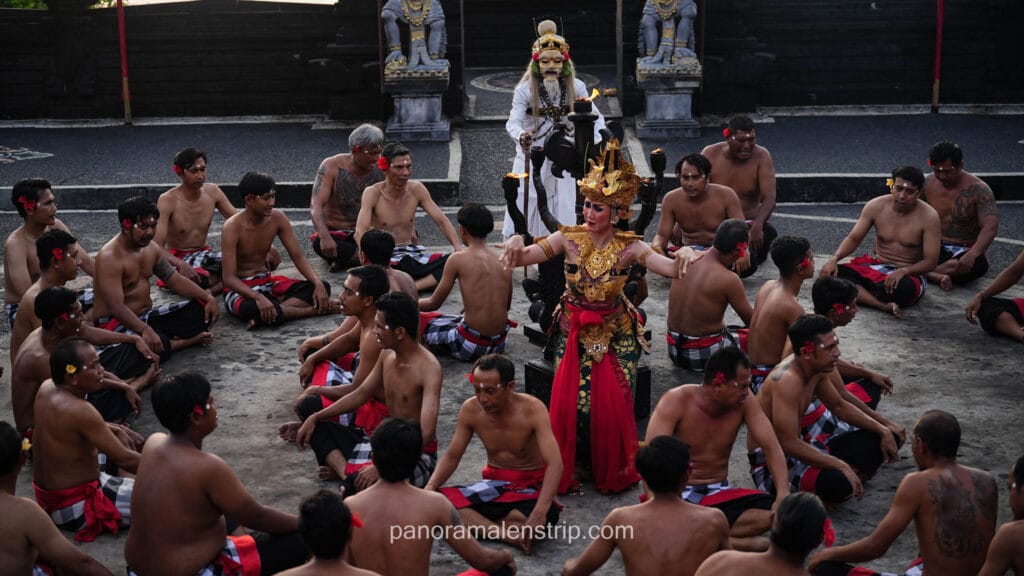
The Kecak fire dance is a choral ritual drama performed entirely without musical instruments. Instead, a circle of 50 to 150 men produce percussive rhythms through synchronized vocal chanting, recreating scenes from the Hindu epic Ramayana. It was developed in the 1930s at Uluwatu and, as a result, remains its most iconic setting. Specifically, performances take place at the clifftop amphitheater of Pura Luhur Uluwatu, beginning at sunset.
The Uluwatu setting, moreover, amplifies the experience considerably. The amphitheater sits at the southwestern cliff edge of the Bukit Peninsula. As the sun drops into the Indian Ocean, furthermore, firelight illuminates the performers against a darkening sky. For photographers specifically, the composition challenges are significant: rapidly shifting ambient light, high contrast between flame and shadow, and performers in constant motion. Consequently, a lens in the 70–200mm range at f/2.8 addresses all three variables. Additionally, arriving 45 minutes before the performance helps you secure a front-row position and establish your exposure baseline before the light drops.
Also read: Uluwatu Tour: The Complete Guide to Bali’s Sunset Cliff Temple
How Does the Legong Dance Reflect Balinese Feminine Artistic Tradition?
Legong is a refined court dance performed by young women trained from early childhood in precise finger, eye, and footwork. Consequently, it represents Bali’s most technically demanding classical dance tradition. Furthermore, performances dramatize stories from Balinese literature, with each hand gesture — called mudra — carrying a specific narrative meaning. The Ubud Royal Palace (Puri Saren Agung), specifically, hosts regular performances against a candlelit stone backdrop.
Also read: Traditional Balinese Ceremonies: A Living Cultural Heritage
Costume detail is, moreover, extraordinary. Performers wear gold headdresses (gelungan), silk wrapping (kain), and floral adornments assembled over several hours before each show. The gamelan orchestra, additionally, plays live accompaniment, with each musical phrase cued to specific movement sequences. For portrait photographers, therefore, the Legong offers ideal conditions: a stable subject distance, consistent front lighting from stage lanterns, and carved temple stone backgrounds.
See exactly what a Kecak sunset shoot looks like through a professional lens — browse our latest galleries from Bali and across Indonesia on our Instagram feed, where real-trip imagery is updated continuously.
What Are the Most Important Temples to Visit for a Deep Bali Cultural Experience?
Bali contains more than 20,000 temples (pura). Consequently, visiting without context produces little more than architectural photographs. Understanding the temple’s role in Balinese cosmology, furthermore, transforms a visit into a cultural encounter with lasting significance. Two temples above all others, therefore, anchor a serious cultural itinerary.
Why Is Pura Besakih Called the Mother Temple of Bali?
Pura Besakih is a complex of 23 interconnected temples built on the southwestern slope of Mount Agung, Bali’s highest volcano. Specifically, it serves as the supreme spiritual center for all Balinese Hindus. The main temple, Pura Penataran Agung, furthermore, operates as a focal point for island-wide religious observances. As a result, the volcanic topography creates dramatic visual framing, with temple meru towers rising against a cloud-level peak.
Visiting Besakih requires a sarong and sash at minimum. Additionally, entrance during major ceremonies may be restricted to worshippers. A certified local guide is, therefore, essential — not optional. Specifically, guides coordinate access, explain the cosmological significance of each courtyard’s elevation, and prevent inadvertent disrespect of sacred precincts. For photographers, moreover, the stacked pelinggih shrines provide strong vertical compositional lines. Consequently, a wide-angle lens between 16mm and 24mm captures the full ceremonial staircase without distortion at the base.
How Does Tirta Empul Temple Demonstrate Living Balinese Ritual Practice?
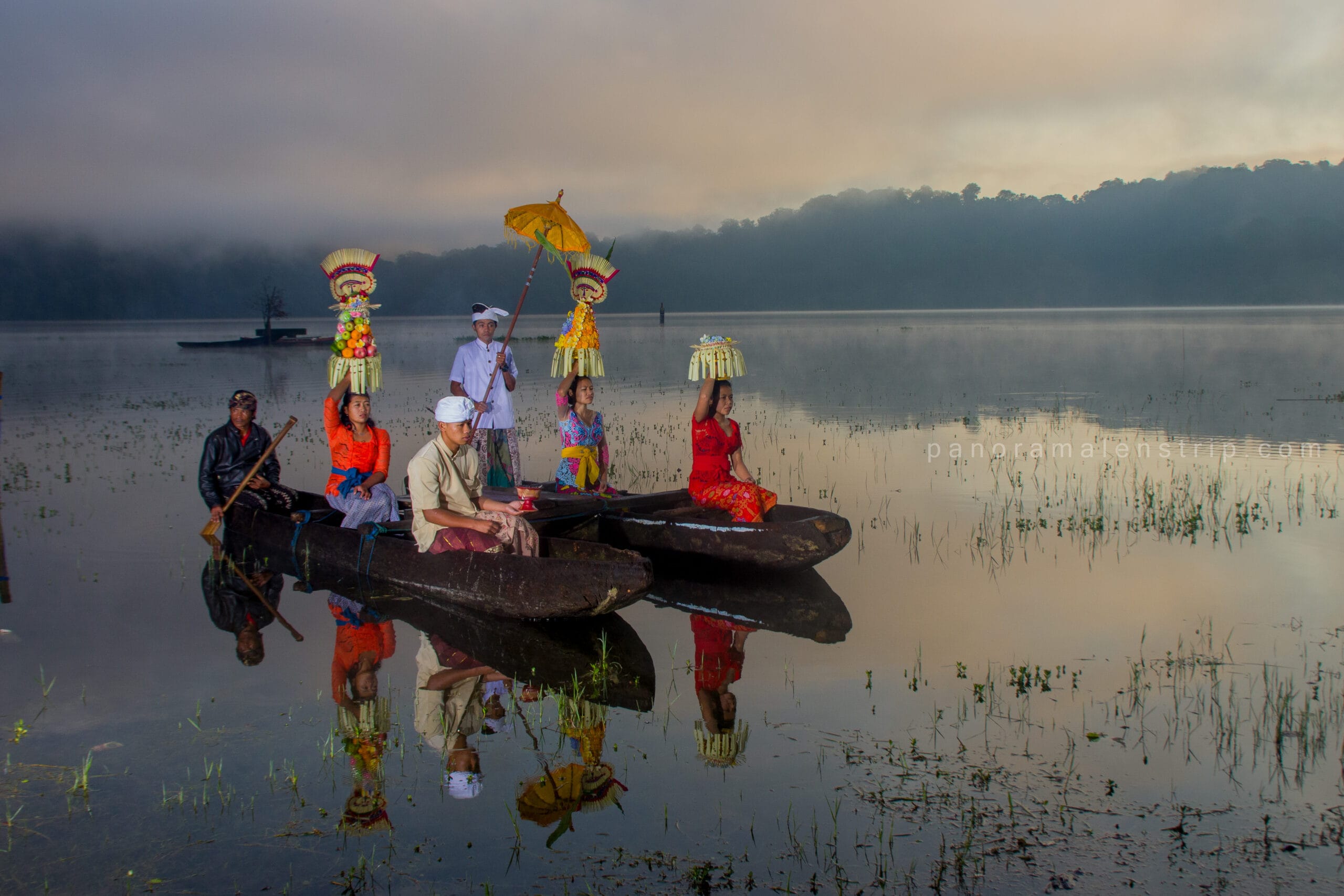
Tirta Empul is a tenth-century water temple in Tampaksiring, fed by natural springs considered sacred since its founding in 962 CE. Each day, Balinese Hindus enter the spring-fed pools to perform melukat, a ritual cleansing. Furthermore, visitors may observe — and in some cases participate — in this living practice. It is, therefore, among the most direct encounters with active Balinese religious life available to travelers.
The spring complex, moreover, rewards early arrival. By 7:00 AM, the pools draw local worshippers before tour groups arrive after 9:00. Photographing here, furthermore, requires discretion: a telephoto lens keeps physical distance while still capturing the ritual’s emotional depth. Additionally, always seek permission before directing a camera toward an individual worshipper. Composition opportunities, specifically, include the lotus-studded central courtyard and the carved stone spouts from which sacred water flows.
Learn more: Best Temples to Visit in Bali for First-Time Travelers
How Does Balinese Cuisine Function as a Cultural Experience in Itself?
Balinese cuisine is not primarily a dining tradition. Instead, it is a ceremonial practice with edible outputs. The island’s most iconic dishes — Babi Guling, Bebek Betutu, and lawar — originated, specifically, as temple offerings. Furthermore, their preparation follows ritual protocols as much as culinary ones. The spice paste base genep, composed of up to 21 ingredients, is consequently the foundational flavor base of Balinese ceremonial cooking.
Ubud, moreover, offers the most developed ecosystem for culinary cultural immersion. Market-to-table cooking classes begin at Ubud’s traditional market at dawn. Specifically, participants select ingredients with a local guide, learning to identify galangal, fresh turmeric, and kencur by scent and texture. The class then prepares a full meal using traditional tools — stone mortars, clay pots, and banana-leaf wrapping. As a result, this format builds sensory memory that deepens cultural understanding of every subsequent meal eaten in Bali.
However, a common assumption deserves direct challenge. Most travelers believe the best Balinese food is found in high-end restaurants or cultural dining experiences. In contrast, the most ceremonially authentic Balinese food is prepared for banjar community feasts during temple festivals. Furthermore, it is almost never available commercially. Consequently, a traveler seeking genuine culinary exposure should ask a certified local guide to facilitate an introduction to a village banjar during a ceremony. This requires advance coordination — however, it produces encounters that no restaurant replicates.
When Is the Best Time to Experience Balinese Culture at Its Most Vivid?
Bali’s cultural calendar operates on the Saka lunar-solar calendar and the 210-day Pawukon cycle. Consequently, these systems determine the scheduling of all major religious festivals. No single month, therefore, guarantees the richest cultural access. Furthermore, travelers should research the specific festival calendar for their intended dates before finalizing any itinerary. The dry season (April through October), additionally, offers reliable weather for outdoor ceremonies and temple photography.
| Festival / Event | Approx. Gregorian Period | Cultural Significance | Photography Opportunity |
|---|---|---|---|
| Nyepi (Day of Silence) | March | Balinese New Year; island-wide silence | Ogoh-ogoh parade on the eve of Nyepi |
| Galungan | Every 210 days (Pawukon cycle) | Victory of dharma over adharma | Penjor bamboo poles lining village roads |
| Kuningan | 10 days after Galungan | Ancestor spirits return to heaven | Temple processions, white ceremonial dress |
| Odalan (Temple Anniversary) | Varies by temple | Specific temple’s founding celebration | Elaborate offerings, gamelan performance, dance |
| Bali Arts Festival | June–July | Government-curated multi-discipline showcase | Performances at Taman Budaya, Denpasar, and Ubud |
Nyepi, specifically, deserves special attention. The Day of Silence shuts the entire island — no flights, no traffic, no lights after dark. The cultural spectacle occurs, however, on the preceding evening, when enormous demon effigies (ogoh-ogoh) are paraded through village streets and burned. Consequently, this procession is one of Asia’s most visually extraordinary public events. A wide-angle lens at f/4 with a shutter speed above 1/500s, furthermore, captures movement and firelight without motion blur.
How Can a Photography-Focused Itinerary Deepen Your Bali Cultural Experience?
Deliberate photographic intent produces deeper cultural engagement, not shallower. Specifically, when a traveler frames a composition, they must stop, observe, and interpret what is in front of them. This slows down the encounter and, as a result, activates attention in a way that passive tourism does not. Photography and cultural immersion, furthermore, reinforce each other when approached with care and respect.
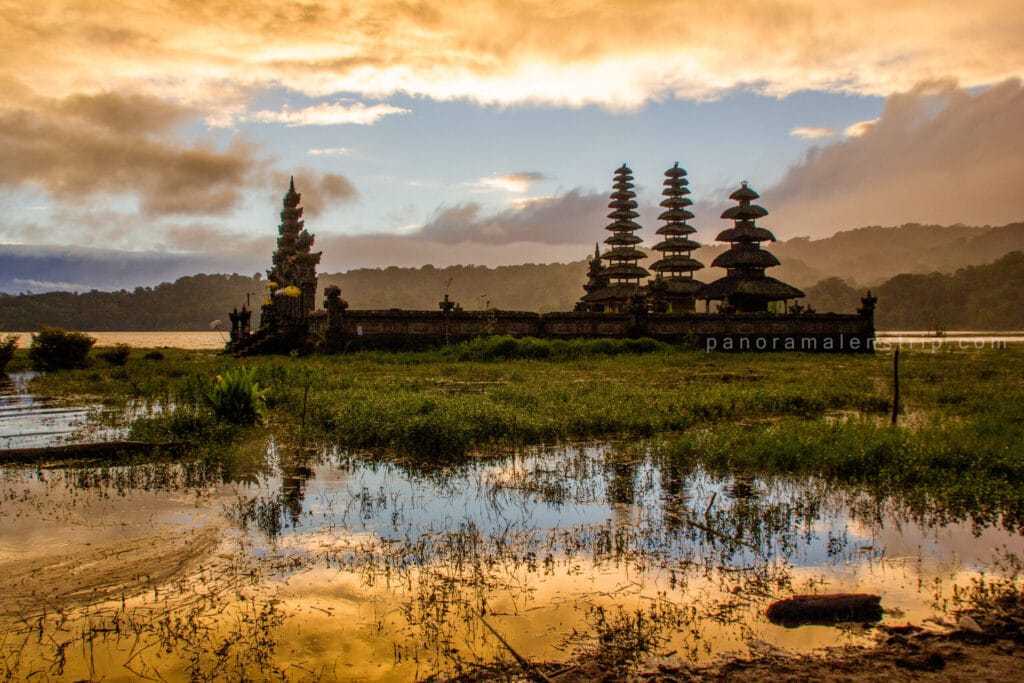
Golden hour at Pura Luhur Uluwatu, specifically, lights the Indian Ocean backdrop in amber. Blue hour at Pura Ulun Danu Bratan, in contrast, produces mirror reflections when wind is absent. For temple interiors, moreover, a wide-angle lens in the 16–24mm range captures full architectural context. Performance photography, conversely, demands the 70–200mm telephoto to capture expression and costume detail without intrusion. Consequently, understanding the exposure triangle — the interplay of ISO, aperture, and shutter speed — is essential in the rapidly shifting light of ceremonial environments.
Furthermore, Panorama Lens Trip designs multi-destination photography itineraries that extend well beyond Bali. A single journey might, for example, move from the terraced rice architecture of Tegallalang to the volcanic caldera of Mount Bromo in East Java. Additionally, the pink beaches of Komodo in Flores and the highland tea country of West Sumatra offer entirely different compositional rewards. As a result, Indonesia’s topographic and cultural diversity means no two days on a guided itinerary produce the same frame.
Also read: Best Bali Photography Spots: Sunrise, Temples & Waterfalls
Arrive in Indonesia with every sunrise, ceremony, and landscape already planned for your lens — build a personalized photography route across Bali, Java, Flores, and beyond with a free, no-obligation itinerary consultation from our local expert team. Plan your journey now!
Frequently Asked Questions About Bali Cultural Experiences
What is the most authentic cultural experience in Bali?
Attending a village Odalan temple anniversary offers the deepest cultural access. Specifically, these events are not staged for visitors. A certified local guide can, therefore, arrange respectful attendance. Tirta Empul and the Kecak fire dance at Uluwatu are, additionally, the strongest alternatives for travelers without guide connections.
Is Bali suitable for solo cultural travelers?
Yes. Bali’s infrastructure for independent travel is, furthermore, well developed. Solo travelers benefit significantly, however, from hiring a local guide for at least one full cultural day. A guide consequently unlocks access, context, and invitations that self-guided exploration cannot provide.
What should I wear when visiting Balinese temples?
A sarong and sash covering the lower body are mandatory at all temples. Specifically, these are available for rental or purchase at temple entrances. Additionally, shoulders should be covered, and women who are menstruating are traditionally asked not to enter certain sacred inner areas.
How much does a cultural day tour in Bali cost?
Guided cultural day tours range from USD $80 to USD $350 per person. Specifically, the price depends on group size, itinerary depth, and guide certification level. Private photography-focused tours, furthermore, occupy the higher end of this range. Entrance fees and transport are, additionally, typically charged separately.
Can I photograph inside Balinese temples?
Photography is permitted in most outer temple courtyards. However, inner sacred precincts (jeroan) may restrict photography during active ceremonies. Furthermore, always ask permission before photographing worshippers. A local guide consequently navigates these boundaries without awkwardness and preserves trust between host communities and visitors.
What is the difference between Kecak and Legong dance?
Kecak is a choral, large-ensemble performance based on the Ramayana epic. In contrast, Legong is a refined solo or small-group court dance using gamelan accompaniment. Kecak is, therefore, dramatic and large-scale, whereas Legong is technically intricate and intimate. Both are, furthermore, essential Bali cultural experiences for entirely different reasons.
Conclusion
Bali’s dance, temples, and cuisine are not separate categories. Instead, they are three expressions of a single cultural system rooted in Balinese Hinduism. A dancer performing Legong is, specifically, enacting the same cosmological narrative inscribed on the walls of Pura Besakih. The suckling pig served at a banjar feast, furthermore, carries the same ritual weight as the canang sari placed at a temple threshold at dawn. Consequently, travelers who see these connections move through Bali differently — and photograph it differently, too. The most meaningful Bali cultural experiences are, therefore, not on a map. They live, instead, in the relationship between a place, a practice, and an informed witness.