TL;DR — Quick Summary
- Best photography locations: Sekonyer River bends, Camp Leakey, Pondok Tanggui feeding station, and Tanjung Harapan
- Primary subjects: Wild and semi-habituated orangutans, proboscis monkeys, hornbills, and monitor lizards
- Optimal shooting window: Golden hour — 06:00–08:00 and 16:00–18:00 local time
- Recommended gear: 400–600mm telephoto zoom, 16–35mm wide-angle, polarizing filter, weather-sealed body
- Best travel season: Dry season (May–September) for consistent light and high wildlife activity
- Access method: Private klotok houseboat along the Sekonyer River, chartered for multi-day photography itineraries
Tanjung Puting National Park is one of Southeast Asia’s most photogenic wildlife destinations. The Sekonyer River delivers dark amber water, dense rainforest canopy, and close-range orangutan encounters inside a single frame. Our photography guides have scouted every major bend and feeding station across multiple dry and wet season expeditions. The result: a location-specific, light-mapped guide to the Tanjung Puting photography spots that consistently produce frame-worthy results.
What Makes Tanjung Puting a World-Class Photography Destination?
Tanjung Puting National Park in Central Kalimantan, Borneo, offers a rare combination of accessible wildlife and dramatic jungle scenery. Furthermore, the Sekonyer River — tannin-stained to a deep amber — creates natural contrast against the green canopy above. Specifically, endemic species like the Bornean orangutan, proboscis monkey, and rhinoceros hornbill are reliably present year-round. Indeed, no other location in Southeast Asia combines this level of biodiversity with a photography-friendly river platform.
What Unique Visual Elements Define Tanjung Puting’s Landscape?
The park’s peat-swamp topography produces distinctive visual characteristics found nowhere else in Indonesia. In particular, the river’s dark reflective surface acts as a natural studio mirror at dawn. Moreover, our guides have noted that the tannin water absorbs ambient light and creates what photographers call “jungle bokeh” — a naturally softened background behind wildlife subjects. Additionally, the overhanging canopy filters harsh tropical sun into dappled layers of warm diffused light. Consequently, these conditions replicate a natural photography studio across the entire 415,000-hectare park.
Where Are the Best Photography Spots in Tanjung Puting?
The five most productive Tanjung Puting photography spots are the Sekonyer River bends at dawn, Camp Leakey feeding station, Pondok Tanggui feeding station, Tanjung Harapan feeding station, and the open riverbank zones where proboscis monkeys congregate at dusk. Each location offers a distinct photographic character, subject behavior, and light angle. A well-structured multi-day klotok itinerary covers all five.
Which River Bends on the Sekonyer River Offer the Most Dramatic Compositions?
The Sekonyer River’s three most photogenic bends are located between Kumai port and Camp Leakey. The first major bend — approximately 45 minutes upstream from Kumai — delivers a near-perfect symmetrical reflection at 06:30. The second bend, roughly 90 minutes upstream, frames overhanging ironwood trees as a natural archway. The third, near the confluence with a smaller tributary, offers foreground interest from floating vegetation.
The klotok’s slow upstream drift acts as a natural camera stabilizer. Photographers benefit from this platform by using a 24–70mm focal length for wide environmental shots and switching to a 70–200mm compressed perspective to isolate the reflection lines. Leading lines, symmetrical reflections, and overhanging canopy create strong compositional anchors without requiring the photographer to move from the boat deck.
| Location | Best Time of Day | Focal Length | Primary Subject | Light Direction | Difficulty |
|---|---|---|---|---|---|
| Sekonyer Bend 1 (Kumai +45 min) | 06:00–08:00 | 24–70mm | River reflection, canopy | Front-lit, soft | Beginner |
| Sekonyer Bend 2 (Kumai +90 min) | 06:30–08:30 | 70–200mm | Ironwood archway, birds | Side-lit, warm | Intermediate |
| Sekonyer Bend 3 (Tributary mouth) | 16:30–18:00 | 16–35mm | Floating vegetation, silhouette | Back-lit, golden | Intermediate |
| Camp Leakey dock approach | 07:00–09:00 | 400–600mm | Orangutan at water’s edge | Diffused overhead | Intermediate |
| Pondok Tanggui clearing | 08:30–09:30 | 200–400mm | Semi-wild orangutan feeding | Dappled, mixed | Advanced |
| Tanjung Harapan forest edge | 14:30–16:00 | 300–500mm | Young orangutan and mother | Back-lit, warm | Advanced |
Where Are the Orangutan Feeding Stations, and Why Do Photographers Prioritize Them?
The five most productive Tanjung Puting photography spots are the Sekonyer River bends at dawn, Camp Leakey, Pondok Tanggui, Tanjung Harapan, and the open riverbank zones at dusk. Furthermore, each location offers a distinct photographic character, subject behavior, and light angle. Specifically, a well-structured multi-day klotok itinerary covers all five within three to four shooting days.
Also read: Tanjung Puting Orangutan Tour Experience Explained
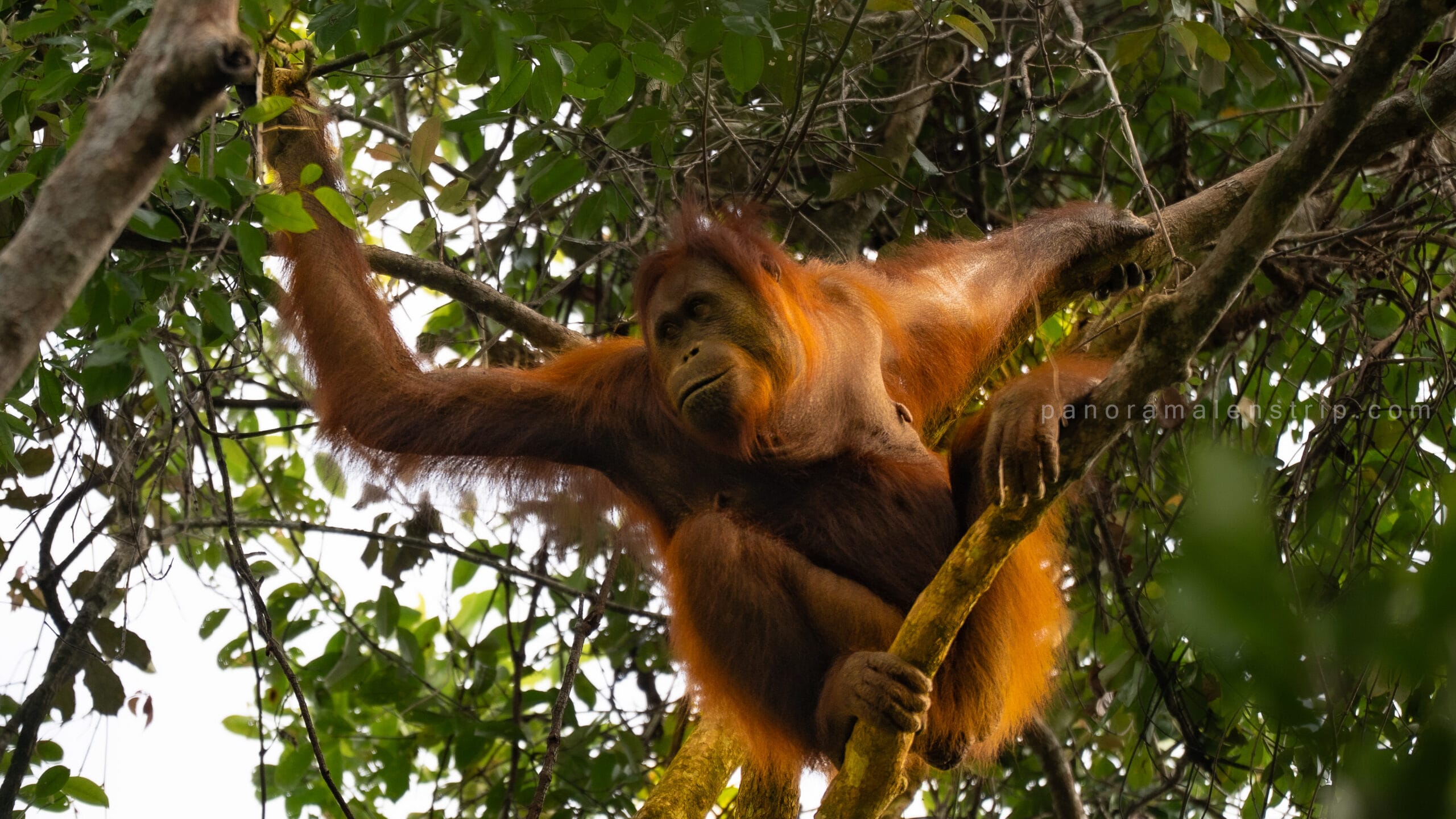
Camp Leakey is the most established station and the most famous. It sits approximately three hours upstream from Kumai by klotok. Orangutans often descend to platforms within 5–8 meters of the viewing area. The forest background is dense and uniform — ideal for subject isolation using a wide aperture. Eye-level perspective is achievable from the raised viewing platform. The natural behavior captured here — feeding, grooming, and infant care — represents high-value behavioral wildlife photography.
Pondok Tanggui offers a more open forest clearing. The light angle at the 08:30 feeding session creates strong catch light in the orangutans’ eyes. Subject-to-background separation requires more intentional positioning here than at Camp Leakey. The more open canopy means harsher midday light is a risk after 09:30, so arrival timing is critical.
Also read: Camp Leakey Feeding Times: Schedule & Crowds
Tanjung Harapan is the closest station to Kumai — reachable in approximately 30 minutes. It is smaller and less frequented by tour groups. The afternoon feeding session at approximately 15:00 coincides with warm directional backlight through the forest edge. This creates a distinctive rim-light effect on orangutan fur — a highly prized compositional outcome.
The images coming out of Camp Leakey are unlike anything else in our Southeast Asia portfolio. Browse our latest field gallery on Instagram to see exactly what your golden hour shots from the feeding stations could look like — and what to expect at each platform before you arrive.
What Other Wildlife Photography Opportunities Exist Beyond the Feeding Stations?
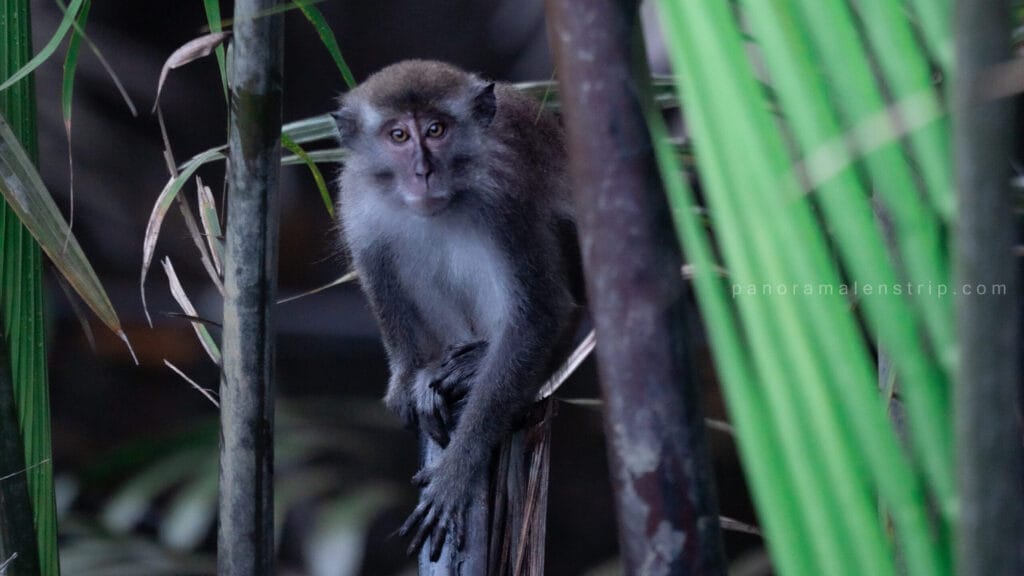
The Sekonyer River corridor produces ambient wildlife encounters continuously between stations. Proboscis monkeys — endemic to Borneo and visually unique worldwide — congregate on riverbank trees at dusk. They are most active in the 30 minutes before sunset, and a 400–600mm telephoto reach is essential for clean shots from the klotok deck. Burst mode at 10–15 frames per second is the standard capture strategy for their leaping movements between branches.
Rhinoceros hornbills appear most frequently in the upper canopy between Pondok Tanggui and Camp Leakey. Single-point autofocus tracking is recommended for hornbills in flight. Monitor lizards are frequently photographed on the lower riverbanks in the late morning. Their stillness makes them forgiving subjects — excellent for practicing exposure triangle management in variable jungle light conditions.
When Is the Best Time to Photograph Tanjung Puting?
The best time to photograph Tanjung Puting is during the dry season, from May to September. Rainfall is minimal, river levels are stable, and morning mist clears by 07:30 — leaving two to three hours of ideal golden-hour light before midday. Wildlife activity at feeding stations is highest during this period. The Sekonyer River surface is calmer, which maximizes reflection quality for wide-angle river shots.
How Does Light Quality Change Throughout the Day in the Jungle?
Tanjung Puting’s light quality follows a predictable daily arc. Pre-dawn blue hour — 05:30 to 06:00 — offers cool, even illumination across the river surface. The golden hour from 06:00 to 08:00 produces warm color temperatures (approximately 3,200K–4,500K) and soft diffused backlight through the canopy. This is the highest-value shooting window in the park.
Midday light from 10:00 to 14:00 creates harsh overhead contrast. This is unfavorable for wildlife portraiture — shadows are unflattering, and exposure compensation is constantly required to avoid histogram clipping on bright fur or feathers. The second golden window opens at approximately 16:00 and closes at 18:00. Dappled light through the west-facing canopy creates warm rim-light effects on subjects at the forest edge.
Which Travel Season Produces the Best Wildlife Photography Conditions?
The conventional guidance positions the dry season (May–September) as the definitive period for Tanjung Puting photography. Clear skies, stable humidity, and predictable wildlife behavior justify this recommendation for most photographers. However, this assumption deserves scrutiny.
The counter-narrative: Experienced photographers seeking atmospheric imagery and dramatic compositions should consider the wet season (October–April) seriously. Wet season conditions produce a lush, saturated green canopy that the dry season cannot replicate. Proboscis monkey movement along the riverbanks increases during wetter months as food sources shift. Storm-light conditions — the brief window between a rain event and resumed overcast — produce dramatic directional light not available at any other time of year. The trade-off is logistical. A weather-sealed camera body becomes non-negotiable. Fast shutter speeds (1/1000s or higher) compensate for reduced light. River levels are higher, occasionally restricting access to smaller tributaries. For photographers with the right gear and the right creative brief, the wet season is an underutilized opportunity.
Learn more: Best Time to Visit Tanjung Puting for Wildlife (2026 Guide)
What Camera Gear Do Professional Photographers Pack for Tanjung Puting?
A two-lens system covers the full photographic range at Tanjung Puting: a 100–600mm telephoto zoom for wildlife and feeding station subjects, and a 16–35mm wide-angle for river landscape and environmental storytelling. A weather-sealed camera body is non-negotiable. The klotok boat platform eliminates tripod use entirely — image stabilization (IS/VR) on both body and lens is the primary tool for sharpness at long focal lengths on a moving platform.
Which Lens Focal Lengths Are Essential for River and Wildlife Shots?
The 400–600mm range is the primary wildlife focal length at feeding stations. At Camp Leakey, orangutan subjects are often 5–12 meters from the photographer. A 500mm equivalent on a crop-sensor body delivers tight portraits while maintaining a respectful distance from the animals. At Pondok Tanggui, where the clearing is more open, 300–400mm is often sufficient.
The 16–35mm wide-angle serves a different but equally important role. Environmental storytelling — an orangutan in the context of the rainforest canopy, or a klotok silhouetted against a golden river bend — requires focal lengths that place the subject inside a landscape rather than extracted from it. Many photographers over-rely on telephoto compression and miss the environmental context that makes Tanjung Puting visually distinct from other wildlife destinations.
Humidity in Tanjung Puting regularly exceeds 85% during morning shooting windows. Sensor condensation and lens element fogging are real risks on equipment transitions between air-conditioned klotok cabins and open-air deck shooting. Weather-sealing and slow acclimatization between environments protect both the camera system and long-term image quality.
Also read: Borneo Orangutan Photography: Settings for Low-Light Shooting
Our field video walks you through an entire Tanjung Puting photography expedition — from boarding the klotok at Kumai port at dawn through the Camp Leakey afternoon session. Watch it on our YouTube channel to visualize your full shooting schedule before you arrive, so you can focus entirely on the images when you’re there.
How Do Expert-Led Photography Tours Approach Tanjung Puting Differently?
Standard ecotourism packages at Tanjung Puting follow fixed group schedules, shared klotoks, and feeding station visits timed for general tourist turnover — not photographic light windows. Expert-guided photography tours operate on a fundamentally different framework. The klotok departure time is set around pre-dawn river positioning, not comfort. Feeding station arrival is timed to precede group tourist arrivals, securing unobstructed sightlines and undisturbed animal behavior.
Panorama Lens Trip’s Tanjung Puting expeditions operate a guide-to-photographer ratio of 1:3 maximum. This allows real-time exposure consultation, immediate repositioning when subjects move, and flexible itinerary adjustments based on wildlife activity on a given day. Shooting schedules are built around the light, not the clock. The klotok anchors overnight at productive locations — giving photographers access to blue hour and golden hour without any transit time.
What Are the Most Common Mistakes Photographers Make at Tanjung Puting?
Four specific mistakes consistently reduce image quality on first-time Tanjung Puting expeditions.
First: Arriving with only a telephoto lens. The feeding stations are compelling. But the Sekonyer River’s environmental storytelling requires a wide-angle perspective. Photographers who bring only a 100–600mm miss the river bend reflections, the canopy archway compositions, and the scale-establishing shots that give the wildlife images context.
Second: Spending all available shooting time at feeding stations. The scheduled morning feeding window at each station is 60–90 minutes. Photographers who spend remaining time in the klotok cabin miss the river’s highest-quality light. Dawn and dusk on the Sekonyer River — with no station schedule to follow — produce some of the most photogenic conditions in the entire park.
Third: Trusting auto white balance in warm jungle light. The 06:00–08:00 golden hour creates color temperatures between 3,200K and 4,500K. Auto white balance frequently neutralizes this warmth, producing technically correct but visually flat images. Setting a fixed Kelvin value of 4,000–4,500K manually preserves the golden quality that defines Tanjung Puting’s visual identity.
Fourth: Underestimating humidity’s effect on gear. Lens changes on the open boat deck in high-humidity conditions introduce moisture risk. Using a single zoom lens that covers the needed focal range — rather than prime lenses requiring frequent changes — reduces this risk significantly.
How Does Tanjung Puting Compare to Other Indonesia Photography Destinations?
Indonesia offers diverse photography ecosystems across its archipelago. Tanjung Puting occupies a distinct and largely unchallenged niche: primate and rainforest river photography on a navigable waterway. No other Indonesian destination replicates this combination.
Komodo National Park (East Nusa Tenggara) specializes in reptile close-ups and dramatic volcanic coastal landscapes. Raja Ampat (West Papua) is the definitive underwater and aerial photography destination — above-water jungle subjects are secondary. Mount Bromo (East Java) delivers volcanic caldera and sea-of-sand landscape photography at high altitude. Each destination is photographic in its own right. But none provides the species diversity, behavioral accessibility, and river-platform shooting conditions that define Tanjung Puting.
For photographers seeking a multi-destination Indonesia itinerary, Tanjung Puting pairs naturally with Bromo (volcanic contrast), Raja Ampat (marine and aerial), or Bali’s rice terraces and cultural subjects. A well-designed route sequences these destinations by season, geography, and shooting condition to maximize the quality of every shooting day across a single trip.
Planning a multi-destination Indonesia photography trip is complex — permits, seasonal windows, gear logistics, and inter-island transfers all require specialist knowledge. Stop piecing it together alone. Map out a seamless Indonesia photography itinerary — from Tanjung Puting to Bromo, Raja Ampat, and beyond — with a free, no-obligation route consultation from our senior photography guides. You’ll receive a draft shooting schedule with light windows, location breakdowns, and gear recommendations before you commit to anything. Contact us now!
Frequently Asked Questions About Tanjung Puting Photography Spots
Is Tanjung Puting Suitable for Beginner Photographers?
Yes. Tanjung Puting is one of the most beginner-accessible wildlife photography destinations in Southeast Asia. Feeding stations allow extended time with stationary subjects at close range. The klotok platform is stable for handheld shooting. Subjects are predictable and unhurried. Beginners should bring a versatile zoom lens covering 70–400mm and shoot in aperture-priority mode to simplify exposure decisions.
Do Photographers Need Special Permits to Access Feeding Stations?
Yes. Tanjung Puting National Park requires a national park entry permit, a SIMAKSI permit for overnight klotok stays, and a separate guide permit for each feeding station visit. These permits are obtained through licensed tour operators in Kumai. Expert-led photography tours include all permit logistics as part of the package. Processing typically takes 24–48 hours ahead of the scheduled expedition start date.
Can Tanjung Puting Be Combined With Other Indonesia Photography Destinations in One Tour?
Yes. Tanjung Puting connects logistically with Bali, Java, and Komodo via domestic flight networks through Pangkalan Bun airport. A 10–14 day multi-destination Indonesia photography itinerary can combine Tanjung Puting (3–4 days) with Mount Bromo (2 days) and Komodo or Bali (2–3 days) within a single trip. Panorama Lens Trip designs long-format itineraries that sequence these destinations to align with optimal shooting windows at each location.
What Type of Boat Is Used for River Photography, and How Does It Affect Shooting?
A klotok is a traditional wooden motorized houseboat used exclusively in Tanjung Puting. It has an open upper deck, a covered sleeping area, and a small kitchen. The flat, wide deck provides a stable shooting platform at water level. The boat’s slow upstream speed (approximately 5–8 km/h) allows continuous composition adjustments during river transit. Overnight aboard the klotok positions photographers for pre-dawn departures without any travel time from accommodation.
How Many Days Are Needed to Photograph Tanjung Puting Properly?
A minimum of three full days is required to visit all three feeding stations and cover the most productive river bends. Four to five days is the recommended duration for photography-focused expeditions. This allows repeat visits to the highest-value locations at different times of day and under different light conditions. Multi-day klotok charters are the standard format — day trips from Kumai do not access Camp Leakey and miss the park’s most productive shooting locations.
Conclusion
Tanjung Puting National Park delivers a concentrated set of high-quality Tanjung Puting photography spots within a single navigable waterway. The Sekonyer River provides the platform. Camp Leakey, Pondok Tanggui, and Tanjung Harapan provide the subjects. The dry season from May to September provides the light. A private klotok charter — positioned for pre-dawn departures and anchored overnight at productive locations — provides the access. The photographers who leave with the strongest images are those who treat the river itself as a location, not a transit route. Every bend, every dawn hour, and every dusk window on the Sekonyer River is a photograph waiting to be made.