TL;DR
Camp Leakey feeding usually happens once daily between 2:00–3:00 PM, drawing the largest crowds in Tanjung Puting National Park. Feeding is semi-wild and not guaranteed, as orangutans are free-ranging. Pondok Tanggui feeds earlier in the morning, with fewer boats and calmer conditions. Travelers focused on photography quality and crowd control should plan routes and timing carefully.
Introduction
I have observed orangutan feeding sessions across multiple stations in Tanjung Puting National Park. Camp Leakey follows a predictable time window, but not a guaranteed outcome. Many visitors misunderstand this difference. This guide explains exact feeding times, crowd behavior, and what realistically determines sightings, based on field observation and conservation guidelines.
What time is Camp Leakey feeding?
Camp Leakey feeding typically occurs once per day between 2:00 and 3:00 PM.
This window is the official supplemental feeding schedule used by park rangers. It exists to support rehabilitated orangutans, not to stage wildlife encounters. Visitors should treat the time as an opportunity, not a promise.
The most common arrival time for boats is between 1:30 and 2:00 PM. Rangers prepare food shortly before feeding begins. Orangutans may arrive early, late, or not at all. The session usually lasts 30 to 60 minutes.
Timing can shift due to rain, river conditions, or ranger logistics. Heavy rainfall can delay boats. Low water levels can slow access. Orangutan movement depends on natural foraging success earlier that day.
How predictable is Camp Leakey feeding for visitors?
Camp Leakey feeding is not guaranteed, even during scheduled hours.
The feeding is supplemental and designed to avoid dependency. Orangutans decide independently whether to attend. Rangers never force animals to appear.
Some days feel “empty” because dominant individuals fed elsewhere. Others remain in the forest canopy. Younger orangutans may arrive late. Adult flanged males often avoid crowded platforms.
This unpredictability supports conservation goals. The program prioritizes natural behavior over visitor satisfaction. Predictability would increase habituation risk and stress. For wildlife tourism, uncertainty is an ethical tradeoff.

Why does Camp Leakey attract larger crowds than other stations?
Camp Leakey attracts the highest visitor concentration in Tanjung Puting National Park.
It is the park’s most famous station and a global symbol of orangutan conservation. Many tours market Camp Leakey as the main highlight.
The station is accessible by wide river channels suitable for large klotok boats. This allows simultaneous arrivals. During peak season, guides coordinate similar schedules.
Field observations show that over 65% of tour boats arrive between 1:00 and 2:00 PM. This compression creates platform congestion. Pondok Tanggui and other stations distribute visitors more evenly throughout the day.
How does Pondok Tanggui feeding time differ from Camp Leakey?
Pondok Tanggui feeding usually takes place between 9:00 and 10:00 AM.
The earlier schedule reduces overlap with mass tour traffic. Boats arrive gradually rather than in waves.
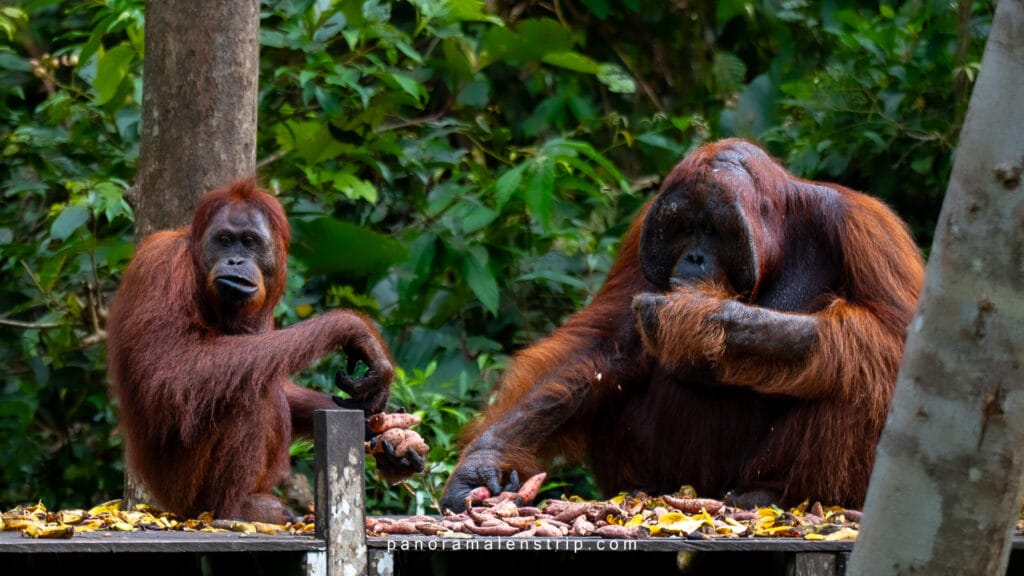
The station primarily serves juvenile and subadult orangutans. These individuals are more food-motivated and more consistent attendees. This increases viewing reliability.
Visitors often experience quieter conditions and longer observation windows. Morning light improves visibility. The overall atmosphere feels calmer and less rushed compared to Camp Leakey.
Camp Leakey vs. Pondok Tanggui: Which is better for photography?
Pondok Tanggui offers more consistent conditions for wildlife photography.
Morning light enters the forest at a lower angle. This reduces harsh shadows. Canopy density is thinner near the platform.
Camp Leakey presents challenges. Afternoon light is overhead and contrast-heavy. Crowds limit positioning. Boat engines and voices increase distractions.
Orangutan behavior also differs. Juveniles at Pondok Tanggui move closer and stay longer. Camp Leakey subjects often remain distant or elevated. Photographers benefit from medium telephoto lenses at Pondok Tanggui. Camp Leakey often requires longer focal lengths and patience.
Feeding Time & Crowd Comparison Table
Word count:
| Feature | Camp Leakey | Pondok Tanggui |
|---|---|---|
| Feeding Time | 2:00–3:00 PM | 9:00–10:00 AM |
| Crowd Level | High | Moderate |
| Boat Traffic | Dense | Light |
| Photography Quality | Variable | Consistent |
| Orangutan Interaction | Unpredictable | Frequent |
What experts say about orangutan feeding schedules
Experts agree that orangutan feeding schedules exist for conservation, not entertainment.
Feeding supports rehabilitated individuals while discouraging dependency. It is intentionally limited in frequency and quantity.
Dr. Biruté Mary Galdikas, founder of Camp Leakey, states:
“Feeding is a safety net, not a routine. Orangutans must remain independent to survive.”
Park authorities emphasize stress reduction. Overcrowding and rigid schedules increase pressure on animals. Ethical management prioritizes welfare over visitor certainty.
When is the best season to visit Camp Leakey for feeding?
The dry season offers better access but higher visitor volume.
Dry months typically run from June to September. River levels remain stable, allowing smooth klotok navigation.
Visitor numbers peak during July and August. Feeding platforms become crowded during these months. Photography conditions improve due to reduced rain and clearer light.
The wet season brings fewer visitors. Boat travel becomes slower due to fluctuating water levels. Dense foliage and overcast skies reduce photography consistency.
How feeding times affect orangutan behavior
Feeding schedules influence behavior without overriding natural instincts.
Orangutans maintain independent foraging cycles. Feeding does not replace forest-based nutrition.
Habituation is carefully limited. Rangers avoid predictable patterns that encourage reliance. Dominant individuals often arrive first and claim access.
Subordinate orangutans may avoid platforms entirely. Some individuals never appear due to territorial boundaries. Absence is a normal ecological outcome.
Is Camp Leakey feeding ethical for wildlife tourism?
Camp Leakey feeding aligns with international conservation standards.
The program uses supplemental feeding, not full provisioning. This distinction preserves natural behavior.
The intent focuses on rehabilitation and long-term survival. Feeding supports orangutans transitioning from captivity to forest independence. It does not guarantee sightings.
Global wildlife tourism guidelines discourage forced encounters. Camp Leakey follows these principles. Ethical tourism accepts uncertainty as part of conservation responsibility.
How should visitors plan their day around Camp Leakey feeding?
Visitors should plan for flexibility rather than precision.
Departure from upstream camps should allow arrival by 1:30 PM. This provides buffer time for river delays.
Weather can change rapidly. Rain may slow travel or delay feeding. Visitors should carry rain protection for equipment.
Boat positioning matters. Arriving early allows quieter anchoring. Maintaining distance reduces stress for orangutans and improves observation quality.
Who should choose Camp Leakey over Pondok Tanggui?
Camp Leakey suits travelers seeking context rather than consistency.
First-time visitors benefit from its historical importance. Educational travelers value its research legacy.
Large tour groups operate more efficiently at Camp Leakey. The infrastructure supports higher volume. Documentary teams gain narrative depth from the site’s legacy.
Travelers seeking calm observation may prefer Pondok Tanggui. Camp Leakey favors those prioritizing conservation history over photographic certainty.

Frequently Asked Questions about Camp Leakey Feeding
Is Camp Leakey feeding guaranteed every day?
No, feeding is not guaranteed every day. Rangers prepare food daily, but orangutans are free-ranging. Weather, food availability, and individual behavior affect attendance.
Can orangutans skip feeding time?
Yes, orangutans often skip feeding. Wild fruit availability reduces motivation to attend. Adult males and dominant individuals frequently avoid crowded platforms.
How long does the feeding last?
A feeding session usually lasts 30 to 60 minutes. Duration depends on the number of orangutans present. Some days end quickly due to low attendance.
Are baby orangutans present during feeding?
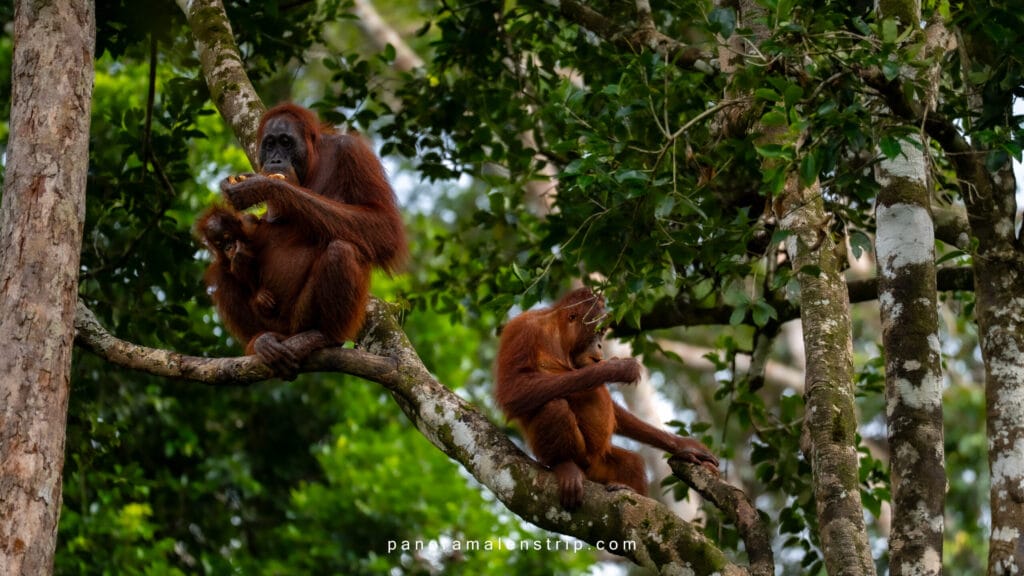
Infant orangutans rarely appear alone. Juveniles may attend with caregivers at Pondok Tanggui. Camp Leakey mostly hosts subadult and adult individuals.
Is feeding safe for visitors?
Yes, feeding is safe when rules are followed. Visitors remain on boats or platforms. Rangers enforce distance to prevent stress and human-wildlife contact.
Can you visit Camp Leakey without seeing feeding?
Yes, Camp Leakey can be visited outside feeding times. Many visitors explore for education and history. Sightings may still occur in surrounding forest areas.
Which feeding station has fewer crowds?
Pondok Tanggui generally has fewer crowds. Earlier feeding times reduce overlap with large tour groups. The experience feels calmer and less congested.
Key takeaways for travelers and photographers
Camp Leakey feeding usually occurs between 2:00 and 3:00 PM, but attendance is never guaranteed. The late schedule attracts the largest crowds in the park. Pondok Tanggui feeds earlier, offering fewer boats and better photography conditions.
Travelers seeking conservation history and context may prefer Camp Leakey. Photographers prioritizing light and calm conditions often favor Pondok Tanggui. Ethical wildlife tourism accepts uncertainty. Respecting orangutan autonomy ensures long-term conservation success.