What Makes the Borobudur Sunrise View So Special
The Borobudur sunrise view refers to the experience of watching the sun rise over Borobudur Temple, Indonesia’s largest Buddhist monument. As dawn breaks, soft light gradually reveals the stone stupas, reliefs, and surrounding landscapes. This moment transforms the temple from shadow into form, creating a calm and almost meditative atmosphere.
Borobudur sits on a hill about 265 meters above sea level, surrounded by fertile plains and distant volcanoes. This elevated position allows visitors to see layers of scenery unfold as the light changes. Morning mist often drapes the valleys, while Mount Merapi, Mount Merbabu, and Mount Sumbing appear on the horizon when the sky is clear.
Sunrise is special because the temple was designed with symbolism that aligns with natural light. As the sun rises, shadows emphasize the carved reliefs that tell stories of Buddhist teachings and the path to enlightenment. The gradual illumination mirrors spiritual awakening, making dawn the most meaningful time to visit.
Culturally, sunrise represents renewal and balance. For many visitors, the quiet hours at dawn offer a deeper connection to Borobudur’s spiritual roots. Visibility is usually best within the first 30 minutes after sunrise, when light angles are low and textures appear sharper. This balance of nature, history, and symbolism is what makes the Borobudur sunrise view truly unforgettable.
Where to See the Best Borobudur Sunrise Viewpoints
Inside Borobudur Temple Grounds
Watching the Borobudur sunrise view from inside the temple grounds offers the most immersive experience. The central stupa area provides a balanced, panoramic perspective where symmetry and light work together. As the sun rises, the stupas appear in silhouette before slowly revealing their details.
The upper terraces are especially popular because they align closely with the sunrise direction. From this level, visitors can see the surrounding plains and volcanoes while standing among ancient stone carvings. This viewpoint feels intimate and spiritual, as you are physically inside the monument during dawn.
Punthuk Setumbu Sunrise Hill
Punthuk Setumbu is located about 4 kilometers from Borobudur and sits at a higher elevation. This hill offers a wide-angle view of the temple rising from morning mist, with volcanoes in the background. Photographers favor this spot because it captures Borobudur as part of a larger natural landscape.
The distance creates depth, allowing dramatic layers of fog, forest, and sky. While you do not see temple details, the overall composition is often more striking in photos.
Bukit Rhema and Chicken Church View
Bukit Rhema, known for the Chicken Church, provides alternative angles of the Borobudur sunrise view. It is less focused on the temple itself and more on the surrounding scenery. Crowds here are usually smaller than at Punthuk Setumbu, making it a quieter option.
Borobudur Sunrise Tickets and Entry Options Explained
A Borobudur sunrise ticket allows visitors to enter the temple area before regular opening hours. This special access is limited and designed to protect the site while offering a premium experience. Sunrise tickets are different from standard daytime tickets.
Official ticket types usually include sunrise-only access or sunrise combined with general entry. Sunrise access lets visitors enter early, stay for the dawn experience, and leave before regular crowds arrive. Regular entry tickets do not allow early access and start later in the morning.
Sunrise access differs significantly from regular entry. The number of visitors is restricted, the atmosphere is quieter, and movement is more controlled. This makes the Borobudur sunrise view feel exclusive and more respectful to the site’s spiritual nature.
Travelers can choose between tour packages and independent visits. Tour packages often include transport, tickets, guides, and sometimes breakfast. Independent visits offer more flexibility but require advance planning and early arrival.
Typically included are early entry, guided flow, and limited access areas. Exclusions may include meals, photography equipment permits, or additional viewpoints outside the temple. A ticket comparison table usually highlights price, access time, group size, and inclusions, helping visitors choose the best option for their travel style.
Best Time of Year to Experience Borobudur Sunrise
The best time to experience the Borobudur sunrise view depends on weather and visibility. The dry season, from April to October, offers clearer skies and higher chances of seeing volcanoes. Rainfall is lower, and sunrise views are more consistent.
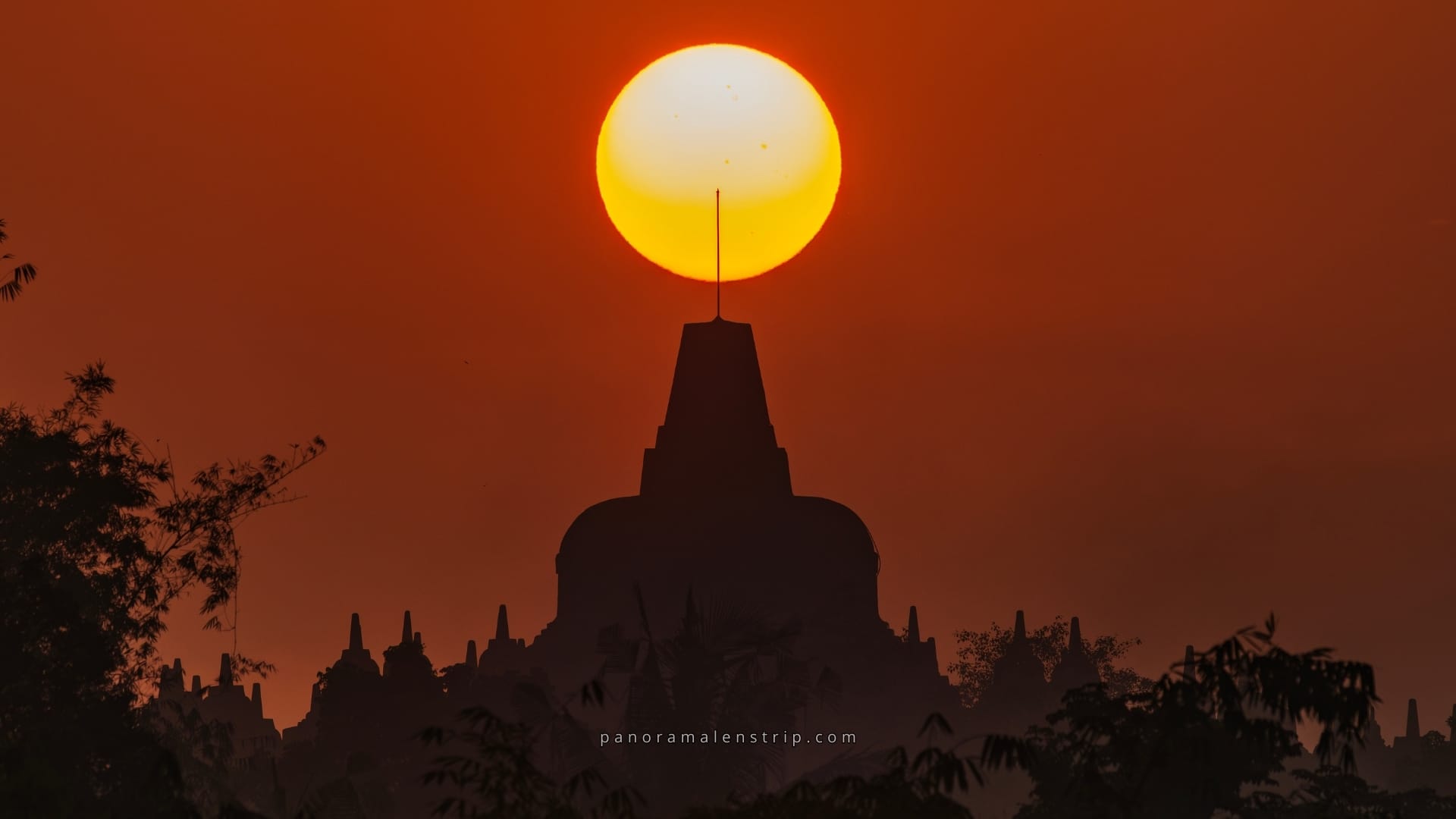
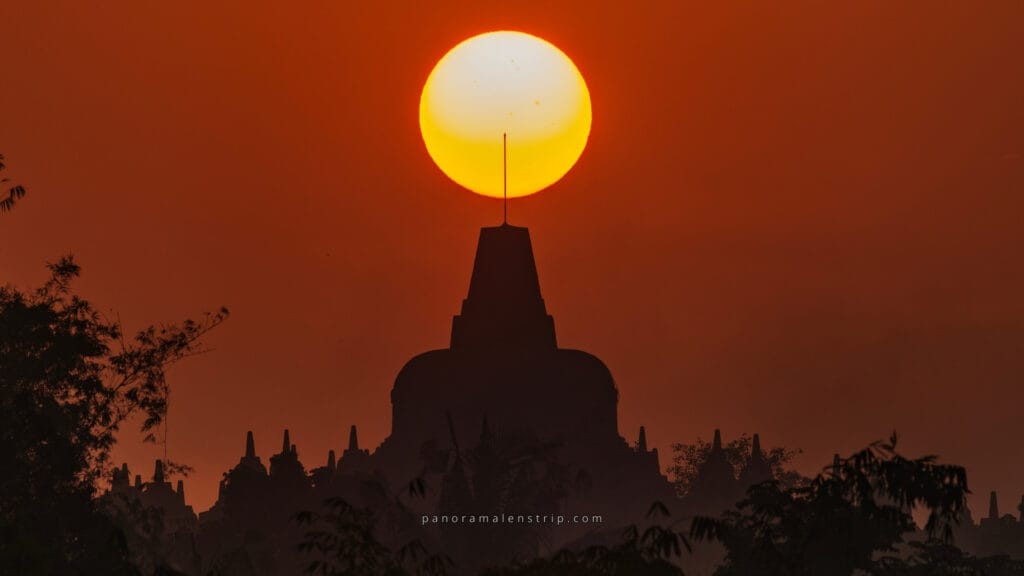
This photograph captures a rare Borobudur sunrise view when the rising sun aligns perfectly parallel and symmetrical with the main stupa. This natural alignment occurs only around 23–26 September, With Recommend lens 100 – 500mm, creating a precise balance of light, form, and spiritual geometry. The image was taken from our secret sunrise photography spot, a carefully chosen vantage point that reveals Borobudur in its most iconic and fleeting moment.
The rainy season, from November to March, brings lush landscapes and dramatic mist. While clouds are more common, this season often creates thicker fog layers around the temple. Some travelers prefer this moodier atmosphere, even if volcano views are less certain.
Monthly visibility trends show that June to September usually provide the clearest mornings. During these months, the probability of seeing Mount Merapi and nearby peaks is highest. In contrast, January and February have lower visibility due to rain and cloud cover.
Weather patterns strongly affect mist formation. Cool nights followed by warm mornings create fog that lifts slowly after sunrise. This timing often produces the most photogenic scenes. Sunrise times vary slightly by season, generally occurring between 5:15 and 5:45 a.m., making early planning essential for the best Borobudur sunrise view.
Step-by-Step Guide to Experiencing Borobudur Sunrise
To enjoy the Borobudur sunrise view, timing is essential. Most sunrise visitors arrive between 4:00 and 4:30 a.m., depending on ticket type and season. Entry is managed through designated gates, and access is only granted to confirmed sunrise ticket holders. Arriving early ensures a smooth check-in and time to prepare before dawn.
Security checks are brief but strict. Bags may be inspected, and visitors must follow the dress code. Modest clothing is required, and special temple sandals are often provided to protect the stone surface. Long pants and covered shoulders help meet cultural guidelines and keep you warm in the early hours.
Inside the temple, movement follows a guided flow direction. This system prevents crowding and protects the structure. Visitors usually move clockwise, starting from lower levels and gradually ascending. Following this order helps maintain a calm atmosphere during sunrise.
The best order of viewpoints begins at the upper terraces. These areas capture the first light and wide horizons. After sunrise, moving closer to the central stupa allows for quieter moments as crowds begin to thin. This sequence balances scenery and serenity.
After sunrise, visitors exit through designated paths. Some choose to explore nearby villages or enjoy breakfast with temple views. Others continue with a full Borobudur visit once regular hours begin, extending the experience beyond dawn.
Borobudur Sunrise View for Photography Lovers
Camera Settings for Low Light
Capturing the Borobudur sunrise view requires adjusting to low light conditions. Start with an ISO between 800 and 1600, depending on available light. A slower shutter speed helps gather light, but stabilization is important to avoid blur. Aperture settings around f/8 balance sharpness and depth.
Composition and Framing Tips
Strong composition makes sunrise photos memorable. Stupa silhouettes work best just before the sun appears, when contrast is highest. Positioning a stupa in the foreground adds scale and context to the scene.
Volcano alignment is another key element. When skies are clear, frame Mount Merapi or nearby peaks between stupas. This natural framing connects the temple to its landscape and adds visual depth.
Drone and Tripod Rules
Drone use is strictly prohibited around Borobudur due to safety and preservation laws. Tripods may be restricted during sunrise hours to manage space and visitor flow. Always check current regulations and respect staff instructions. Ethical photography ensures the Borobudur sunrise view remains protected for future visitors.
Borobudur Sunrise View vs Borobudur Sunset View
The Borobudur sunrise view offers soft, gradual light that reveals details slowly. In contrast, sunset light is warmer and more direct, creating stronger shadows. Sunrise is often preferred for balanced exposure and subtle tones.
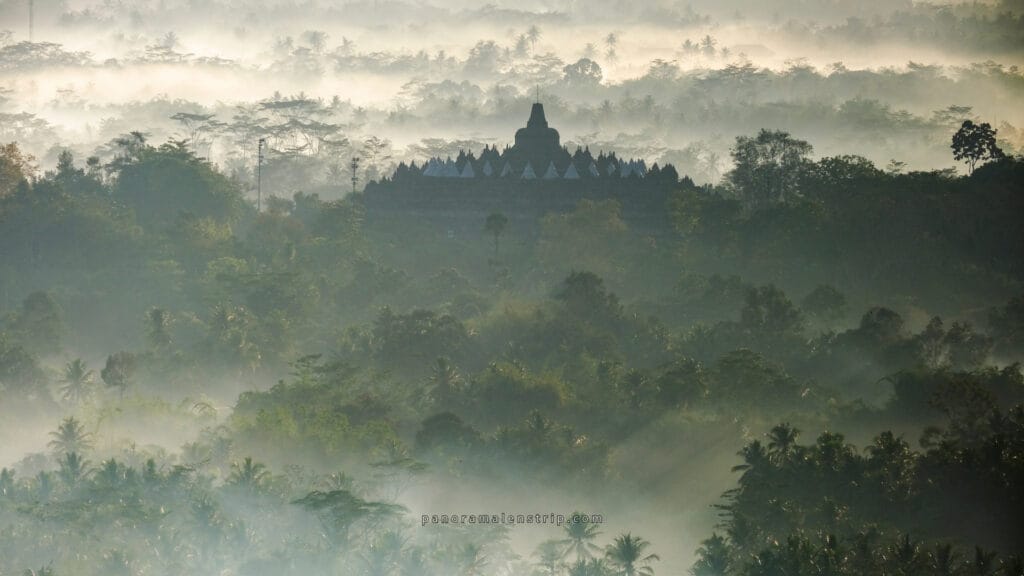
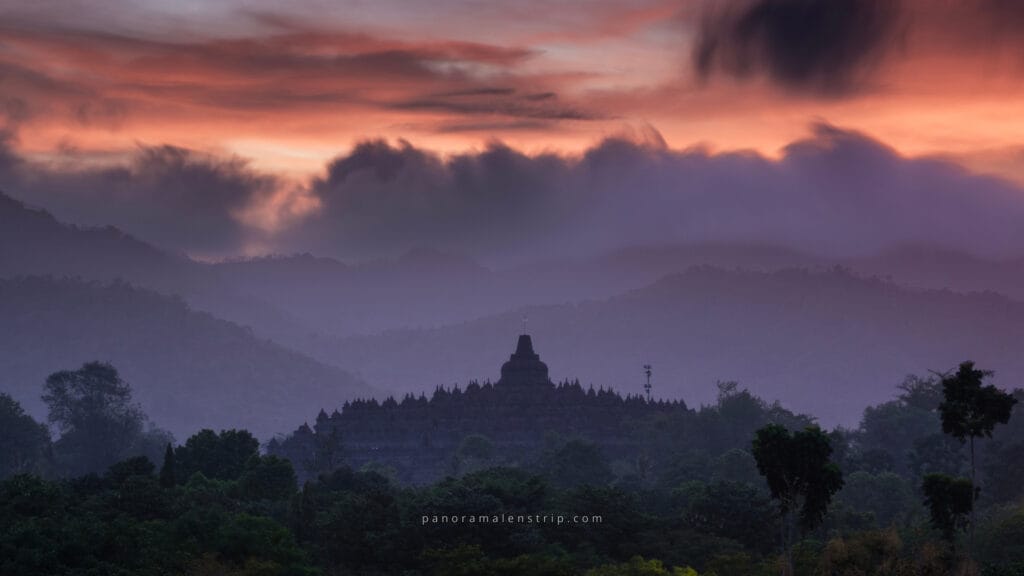
This image captures Borobudur Temple at dawn, wrapped in a calm, mystical atmosphere. Layers of mist drift over the surrounding hills, while the ancient stone stupa rises quietly from the jungle below. The image was taken with recommend lens 70 – 200mm. Overall, the picture conveys serenity, spirituality, and timeless beauty, highlighting Borobudur as one of Southeast Asia’s most iconic sunrise destinations.
Crowd size also differs. Sunrise access is limited, making it quieter and more controlled. Sunset attracts larger numbers, especially during peak travel seasons. This can affect movement and viewing comfort.
Weather reliability favors sunrise in the dry season, when mornings are clearer. Afternoon clouds are more common, which can block sunset views. Spiritually, sunrise feels calmer and more reflective, while sunset is more social and energetic.
Photographers and spiritual travelers often prefer sunrise. Casual visitors and those seeking convenience may enjoy sunset more. Both offer beauty, but sunrise delivers a deeper sense of connection.
Cultural Etiquette and Rules During Sunrise Visits
Respect is central to experiencing the Borobudur sunrise view. Visitors must wear modest clothing, covering shoulders and legs. Temple sandals help protect the stone and show respect for the site.
Silence is encouraged during sunrise hours. Soft voices and slow movement preserve the peaceful atmosphere. This is especially important when worshippers are present, as Borobudur remains an active spiritual site.
Photography is allowed, but flash use is discouraged. Avoid blocking pathways or standing on restricted areas. Always be mindful of others seeking quiet reflection.
These rules matter because Borobudur is more than a landmark. It is a sacred space shaped by centuries of belief and tradition. Following etiquette ensures the sunrise experience remains meaningful and respectful for everyone.
Common Mistakes Tourists Make at Borobudur Sunrise
Many travelers miss the Borobudur sunrise view because they arrive too late. Sunrise access is strictly timed, and late arrivals are often denied entry. Planning transport and waking up early are essential for this experience.
Choosing the wrong viewpoint is another common mistake. Some visitors expect wide volcanic views from inside the temple or detailed carvings from distant hills. Each viewpoint offers a different perspective, so expectations should match the location.
Ignoring weather forecasts can also lead to disappointment. Heavy clouds or rain may block visibility, especially during the wet season. Checking local forecasts increases the chance of clear skies or dramatic mist.
Overpacking camera gear can slow movement and reduce enjoyment. Large bags may be restricted, and heavy equipment can be tiring on temple stairs. Simple, lightweight gear works best at dawn.
Breaking temple rules is the most serious mistake. Standing on restricted areas, speaking loudly, or ignoring dress codes can disrupt others and damage the site. Respect ensures a smooth and meaningful Borobudur sunrise view.
Is the Borobudur Sunrise View Worth It? Honest Perspective
The Borobudur sunrise view often exceeds expectations, but it is not perfect for everyone. Visitors imagine clear skies and glowing volcanoes, yet weather can be unpredictable. Some mornings offer mist instead of distant peaks, which changes the experience.
Crowd management is better than during regular hours, but sunrise is not completely private. Visitor numbers are limited, yet popular spots still attract attention. Understanding this helps set realistic expectations.
In terms of value for money, sunrise tickets cost more than standard entry. Many travelers feel the quiet atmosphere and early access justify the price. Others prefer spending that budget on tours or accommodation.
Sunrise is ideal for photographers, cultural travelers, and those seeking calm moments. Visitors who dislike early mornings or strict schedules might skip it. The experience is rewarding, but only when it matches personal travel style.
Travel Tips for International Visitors
Most international visitors reach Borobudur from Yogyakarta, which is about 40 kilometers away. Private cars, hired drivers, and organized tours are the most reliable options for early morning travel. Public transport is limited before dawn.
Staying near Borobudur or in nearby villages makes sunrise visits easier. Local guesthouses and eco-lodges often offer early departures and local insights. This reduces travel stress and supports nearby communities.
Health and safety are important at dawn. The temple stairs can be slippery due to morning dew, so wear comfortable footwear. Staying hydrated and carrying light layers helps manage temperature changes.
Accessibility can be challenging. Borobudur has many steps and uneven surfaces, which may limit access for some visitors. Checking official accessibility services in advance is recommended.
Local guides add value by explaining symbolism, history, and sunrise traditions. Their insights deepen understanding and enrich the Borobudur sunrise view.
Sustainable and Responsible Sunrise Tourism at Borobudur
Visitor limits play a key role in preserving the Borobudur sunrise view. Controlled entry reduces wear on ancient stones and protects carvings from damage. These measures help maintain the site for future generations.
Supporting local communities is part of responsible travel. Choosing local guides, drivers, and accommodations keeps economic benefits within the region. Small actions contribute to long-term sustainability.
Ethical photography practices also matter. Avoid climbing on structures or disturbing others for the perfect shot. Respecting boundaries protects both the monument and the experience.
Future conservation efforts depend on mindful tourism. By following rules and valuing preservation over convenience, visitors help ensure Borobudur remains a living cultural treasure, not just a photo destination.
Frequently Asked Questions About Borobudur Sunrise View
What time does Borobudur sunrise start?
The Borobudur sunrise view usually begins between 5:15 and 5:45 a.m., depending on the season. Entry for sunrise visitors typically starts earlier to allow time to reach viewing areas before first light.
Do I need a guide for sunrise?
A guide is not required to enjoy the Borobudur sunrise view. However, a knowledgeable guide can add cultural context and explain the symbolism revealed by the morning light.
Is Borobudur sunrise crowded?
Borobudur sunrise is less crowded than daytime visits because access is limited. Popular viewpoints may still feel busy, but the atmosphere remains calm and controlled.
Can children attend sunrise visits?
Children are allowed to attend the Borobudur sunrise view if they follow safety and dress guidelines. Parents should consider early hours, stairs, and weather conditions when planning.
Is sunrise better than sunset?
Sunrise is often considered better because of softer light and fewer visitors. Sunset offers warmer colors but usually comes with larger crowds and less predictable weather.
What happens if it rains?
Sunrise visits continue even if it rains lightly. Heavy rain or thick clouds may reduce visibility, but mist can still create a unique Borobudur sunrise view.
Are sunrise tickets refundable?
Sunrise tickets are generally non-refundable. This policy exists because access is limited and planned in advance.
Conclusion: Planning Your Borobudur Sunrise Experience
The Borobudur sunrise view offers a rare blend of natural beauty, spiritual meaning, and cultural depth. From misty valleys to softly lit stupas, sunrise reveals the temple at its most peaceful and symbolic moment. With the right planning, visitors can avoid common mistakes and choose viewpoints that match their travel style. Understanding tickets, timing, and etiquette helps ensure a smooth experience. If you value quiet moments, meaningful scenery, and thoughtful travel, sunrise at Borobudur is worth the effort. Plan ahead, respect the site, and take the first step toward experiencing one of Southeast Asia’s most memorable dawns.