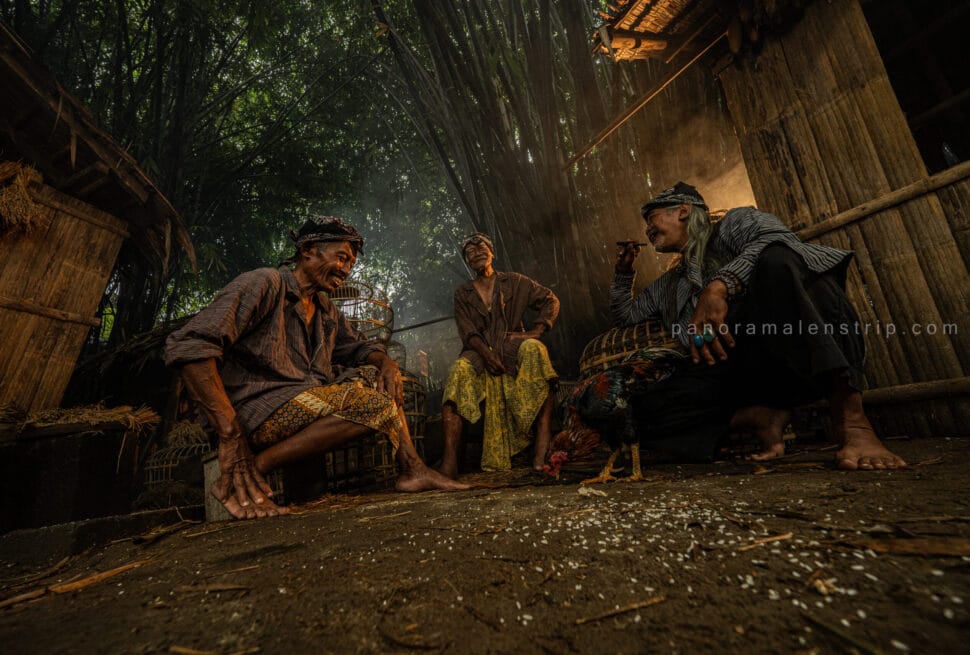
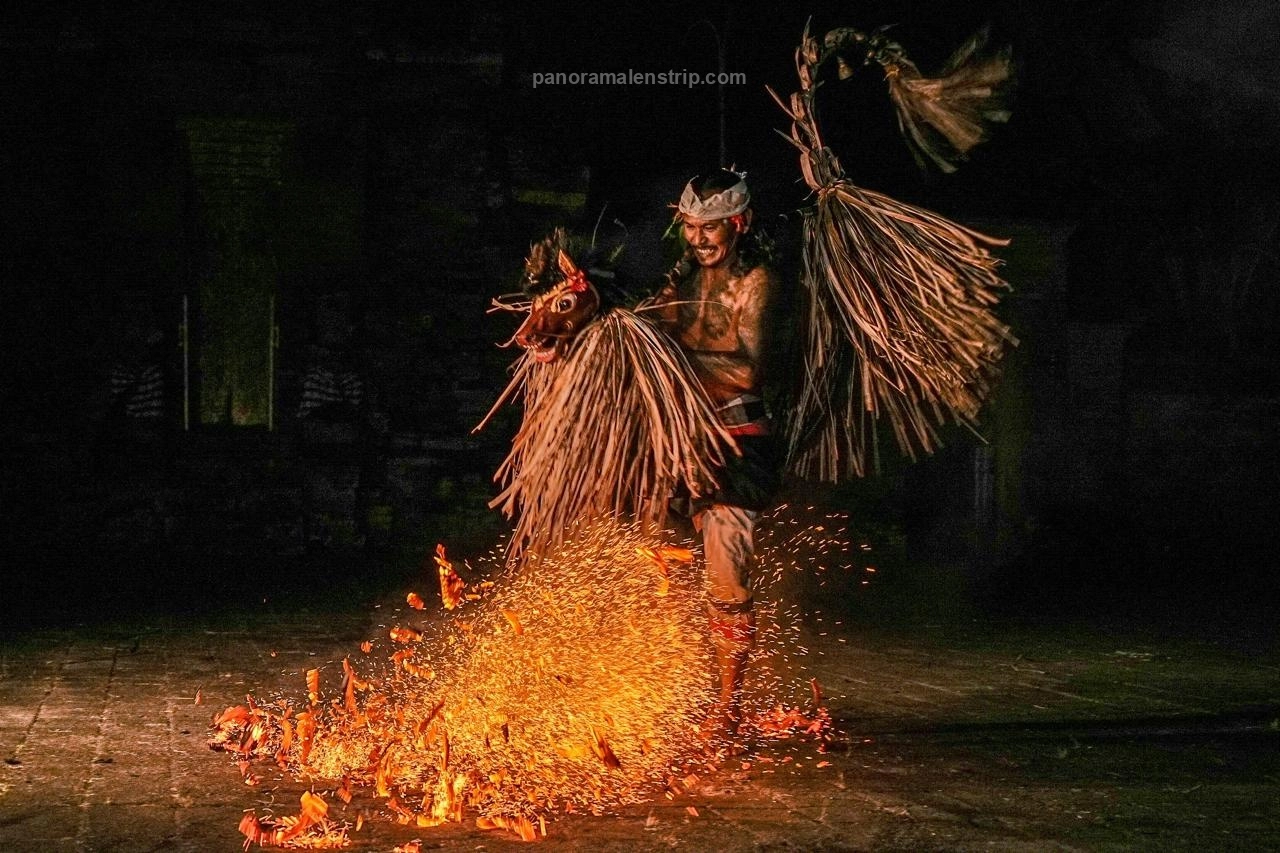
To photograph a Bali traditional dance, you need deep cultural respect and good technical skills. Therefore, our local guides studied decades of shows to understand this unique ritual. The Sanghyang Jaran is a stunning fire dance requiring special low-light camera skills. Furthermore, capturing this event means freezing flying embers while exposing for intense emotions.
What Is The Sanghyang Jaran Bali Traditional Dance?
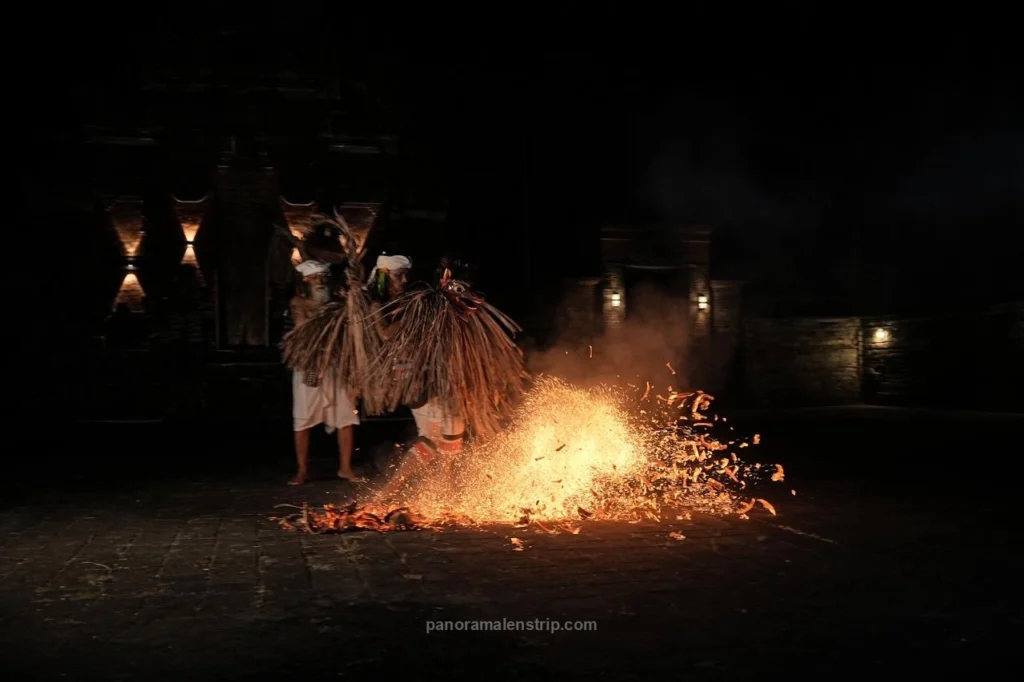
The Sanghyang Jaran is an ancient Balinese exorcism ritual designed to purify local villages. It centers entirely around a highly respected dancer riding a sacred wooden horse prop. This spiritual event always occurs within the courtyards of historical Balinese Hindu temples.
The ceremony begins with a hypnotic trance initiation phase guided by local village priests. A rhythmic chanting choir replaces traditional gamelan instruments to induce the altered state. Photographers will notice illuminated temple gates providing stunning architectural backdrops for their compositions.
How Does A Dancer Transition In This Bali Traditional Dance?
First, the change happens when the dancer inhales the smoke of burning coconut husks. Elder guides closely watch this critical phase to keep the performer safe. These spiritual guardians physically support the dancer as the trance takes hold.
The dancer begins moving erratically, signaling the complete spiritual possession by divine entities. Photographers must anticipate these sudden, explosive movements during this brief transition window. High shutter speeds are absolutely essential to freeze this dynamic cultural display.
What Camera Gear Do You Need For A Bali Traditional Dance?
Photographing this fire dance demands specialized gear built for extreme low-light environments. You must balance the exposure triangle while dealing with erratic subject movement. A reliable wide-angle lens is critical for capturing the surrounding temple architecture. Fast aperture prime lenses are highly recommended for optimal light transmission.
- Fast prime lenses allow lower ISO values.
- Dual-card slots ensure immediate data redundancy.
- Weather-sealed bodies protect against ash and debris.
| Equipment Type | Recommended Focal Length | Minimum ISO Capability | Autofocus Performance |
|---|---|---|---|
| Full-Frame Mirrorless | 35mm to 50mm | ISO 12,800 | Subject-tracking required |
| Crop-Sensor DSLR | 24mm to 35mm | ISO 6,400 | Cross-type sensors needed |
| Wide-Angle Lens | 16mm to 24mm | N/A | Fast internal focusing |
Understanding your lens focal length dictates your proximity to the dangerous fire embers. Excellent low-light autofocus performance prevents missed shots during unpredictable trance movements. Modern mirrorless systems offer distinct advantages for focusing in near-total darkness.
How Do You Freeze Action Shots In A Bali Traditional Dance?
To freeze action in low light, you must raise ISO and use fast prime lenses. Specifically, wide apertures like f/1.8 allow more light to reach the camera sensor. Thus, this setup helps balance the fast shutter speeds needed for quick motion, much like when doing Milky Way photography.
Balancing the exposure triangle is complex when facing high-contrast embers against absolute darkness. Spot metering prevents the bright flames from underexposing the surrounding cultural elements. Modern mirrorless sensors offer superior high-ISO performance with minimal chromatic noise.
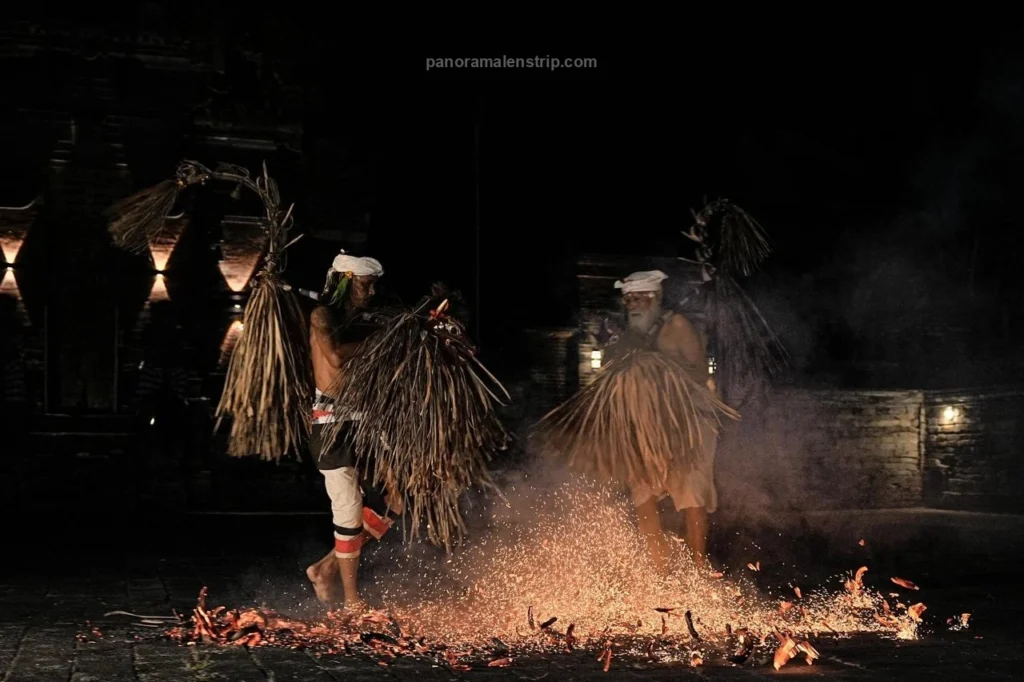
Key settings for low-light fire photography include:
- Shutter speed above 1/500s to freeze sparks.
- Aperture set to f/1.4 or f/1.8.
- ISO between 3200 and 6400.
- Continuous autofocus mode for moving subjects.
See exactly what your low-light fire shots could look like by exploring our recent galleries.
Why Is Burst Mode Essential For Fire Dance Photography?
Burst mode is essential because it captures the exact fraction of a second required. A high frame rate captures the immediate explosion of fire upon impact. Continuous shooting modes yield sequence files that track rapid thermodynamic changes.
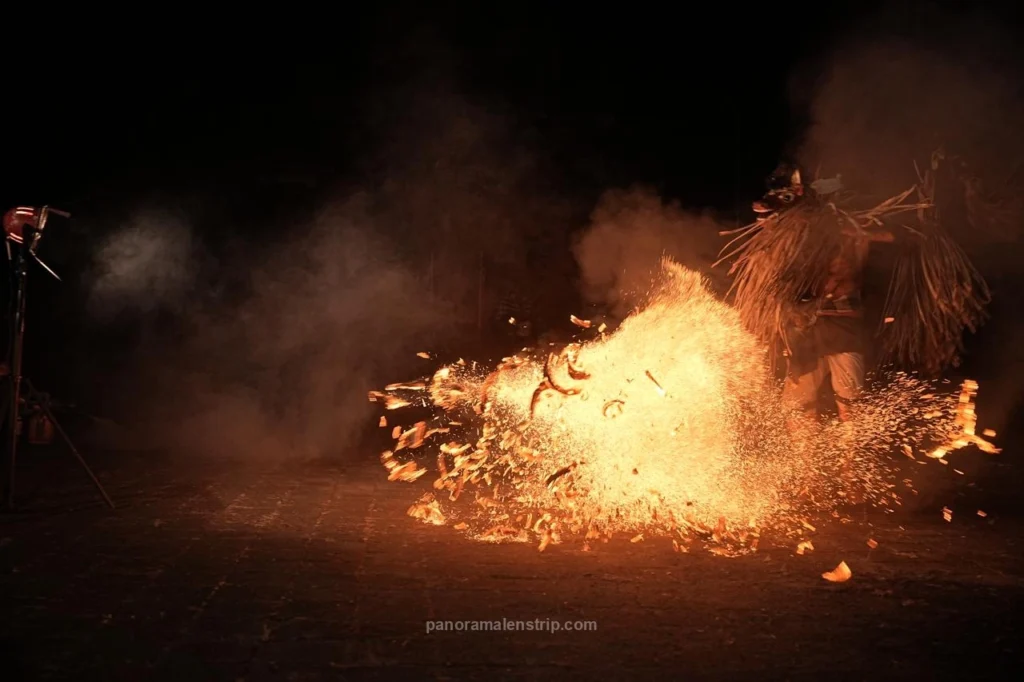
Firing ten frames per second isolates the peak kinetic energy of the performer. Photographers must anticipate the strike to capture the resulting cloud of smoke perfectly. This technique mitigates motion blur during chaotic cultural performances.
Advantages of high-speed continuous shooting:
- Capturing exact moments of physical impact.
- Isolating perfect ember trajectories in mid-air.
- Securing sharp focus through dense smoke clouds.
- Providing multiple exposure variations of brief explosions.
Buffer capacity dictates how long you can sustain maximum continuous shooting speeds. Utilizing ultra-fast memory cards prevents bottlenecks during critical performance sequences.
How Can You Capture Emotion Amidst The Chaos?
You capture emotion by utilizing telephoto focal lengths to isolate facial expressions during chaos. Environmental portraiture requires balancing the subject’s face with the surrounding dynamic lighting. Fast shutter speeds secure the joyful expression of the moving trance dancer.
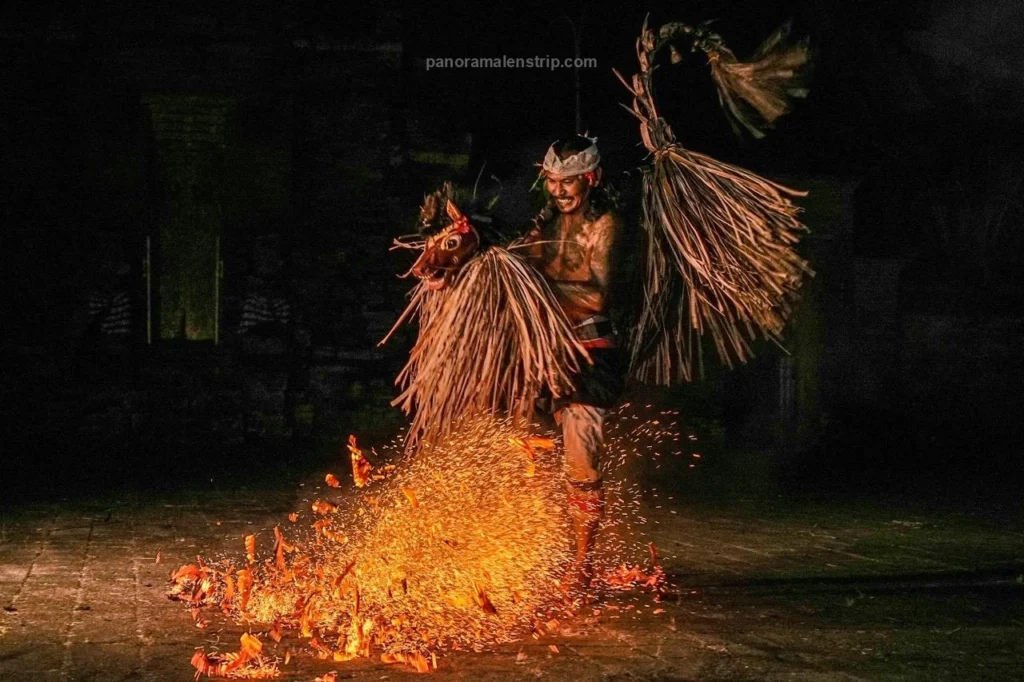
A wider focal plane maintains focus on both the dancer and architectural elements. Stopping down the aperture slightly ensures a full view of the temple background. This technique establishes geographical context without sacrificing the emotional weight of the subject.
Critical focus areas for chaotic portraiture:
- Using Eye-AF technology for moving human subjects.
- Balancing ambient background light with bright foreground subjects.
- Framing architectural topography to provide environmental context.
- Timing shots between major fire bursts for clarity.
Where Can Photographers Experience The Authentic Sanghyang Jaran Ritual?
You can easily experience this Bali traditional dance in the remote Gianyar and Bangli areas. Specifically, these spots have mountains and old village structures ideal for cultural photos. Many travelers seek popular theaters for cultural shows. However, getting real photos means visiting hidden village ceremonies. Therefore, step into the lively temple grounds to visualize your next shoot.
Specific locations for optimal photography include:
- Bona village in the Gianyar regency.
- Isolated temple compounds near the Mount Batur caldera.
- Remote community pavilions maintaining original animist traditions.
These rural locations offer superior environmental context for your compositions. Photographers gain access to unfiltered rituals without commercial staging. You can document the raw interplay between the performers and their community.
When Is The Best Time To Photograph This Sacred Ritual?
Usually, the best time to shoot this Bali traditional dance follows the local calendar cycle. These events mostly happen during the fifth and sixth lunar months. In addition, this time marks changes in weather and local harvest cycles. Therefore, you must arrive in the late afternoon to prepare.
First, the event begins during the ambient blue hour. As a result, this timing gives a balanced light before total darkness falls. Later, as night descends, the bonfire becomes the main light source. Thus, you must make quick changes to your ISO and lens settings.
Optimal timing strategies include:
- Arriving two hours before sunset to scout locations.
- Metering the courtyard during the blue hour transition.
- Pre-focusing on the coconut husk fire pit.
What Are The Cultural Rules For Photographing A Bali Traditional Dance?
Photographers must respect strict space limits and dress codes during temple events. For instance, you must always wear a local sarong and sash. This required clothing shows deep respect for the sacred site. Also, if you plan to visit Tamblingan Lake Temple, never stand higher than the local priest.
Maintaining appropriate distance is crucial for safety and respect. Use a telephoto focal length to compress the scene. This keeps you clear of the erratic trance movements. Avoid using flash, as it disrupts the spiritual atmosphere.
Essential cultural protocols include:
- Wearing modest clothing covering shoulders and knees.
- Remaining completely silent during the initial purification mantras.
- Never stepping over offerings placed on the ground.
- Following all movement directives from local temple guards.
How Does Sanghyang Jaran Compare To Other Balinese Performances?
This Bali traditional dance offers amazing chances for dynamic low-light action photography. For example, while many tourists shoot the Kecak dance, few see the intense fire-kicking here. Moreover, this ritual gives fully natural and high-contrast visual stories. As a result, the wild setup truly tests your camera skills.
The erratic movement of the trance dancer demands advanced autofocus tracking. Unlike predictable stage shows, this ceremony requires rapid exposure compensation. You capture authentic human endurance amid flying embers. Map out your perfect Indonesian photography itinerary with a free, no-obligation route consultation via WhatsApp. Our experts will help you sequence these rare cultural events.
What Frequently Asked Questions Arise About Photographing Bali Dances?
What Is The Safest Shutter Speed For Fire Photography?
The safest shutter speed for freezing flying embers is 1/500th of a second. This speed stops motion blur while retaining fire texture. Slower speeds will render the sparks as continuous light trails. Adjust your ISO to maintain proper exposure at this speed.
How Do You Avoid Overexposing The Flames?
You avoid overexposing flames by utilizing spot metering modes. Meter directly off the brightest part of the bonfire. Underexpose the overall scene by one to two stops. This technique preserves the highlight details within the fire.
Additional methods for preserving highlights include:
- Shooting entirely in RAW format for post-processing recovery.
- Monitoring your camera histogram for highlight clipping warnings.
- Using exposure bracketing during the peak fire kicking.
Who Can Participate As A Guide During These Photo Tours?
Only certified local Balinese fixers with specific village ties act as guides. These individuals possess deep knowledge of the local animist traditions. They navigate the complex topography and secure proper temple permissions. Their linguistic skills ensure seamless communication with village elders.