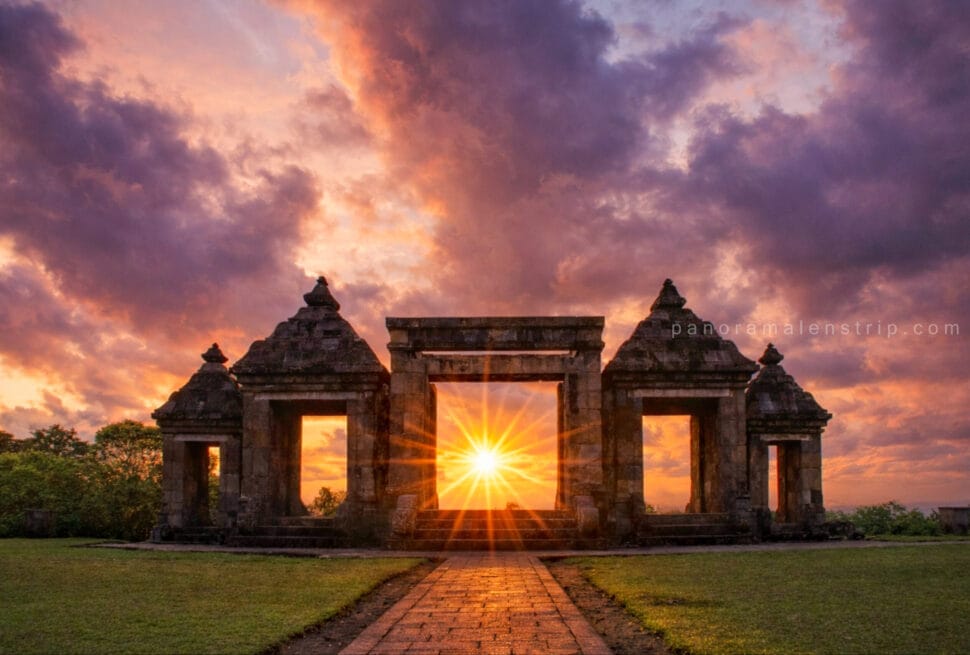
During my recent field testing for Bali traditional village photography across Penglipuran, I navigated unpredictable monsoon lighting conditions. Carrying a heavy prime lens kit revealed distinct environmental challenges. High humidity directly impacted lens coatings and auto-focus speed. Navigating these narrow alleys requires specialized environmental sealing.
Why Choose a Bali Traditional Village for Travel Photography?
Engaging in Bali traditional village photography offers unparalleled structural geometry. Centered pathways create natural leading lines for documentary photography. The uniform thatched roofs provide repeating patterns across the visual frame. These elements simplify complex compositions into striking minimalist images.
Photographers encounter unique dynamic range challenges daily. Harsh equatorial sunlight casts deep shadows along stone walls. Therefore, this bright light requires careful camera settings to get right. Spot metering ensures accurate skin tones during impromptu street portraits.
Optimal results require specific technical approaches:
- Select a versatile 24-70mm f/2.8 lens for shifting field conditions.
- Apply polarizing filters to cut atmospheric haze and foliage glare.
- Utilize fast shutter speeds to freeze sudden subject movement.
- Engage continuous auto-focus for tracking active village life.
Documenting indigenous architecture preserves vital cultural narratives. Intricate wood carvings demand macro focal lengths for detail preservation. Layered foregrounds establish a profound sense of location depth. These techniques build a cohesive cultural photography portfolio.
Mastering this topography elevates standard travel snapshots. Photographers must analyze ambient light direction constantly. Anticipating shadow placement transforms ordinary scenes into dramatic compositions. This structural awareness defines professional travel photography.
How Do You Capture Color Dynamics in Bali Traditional Village Photography?
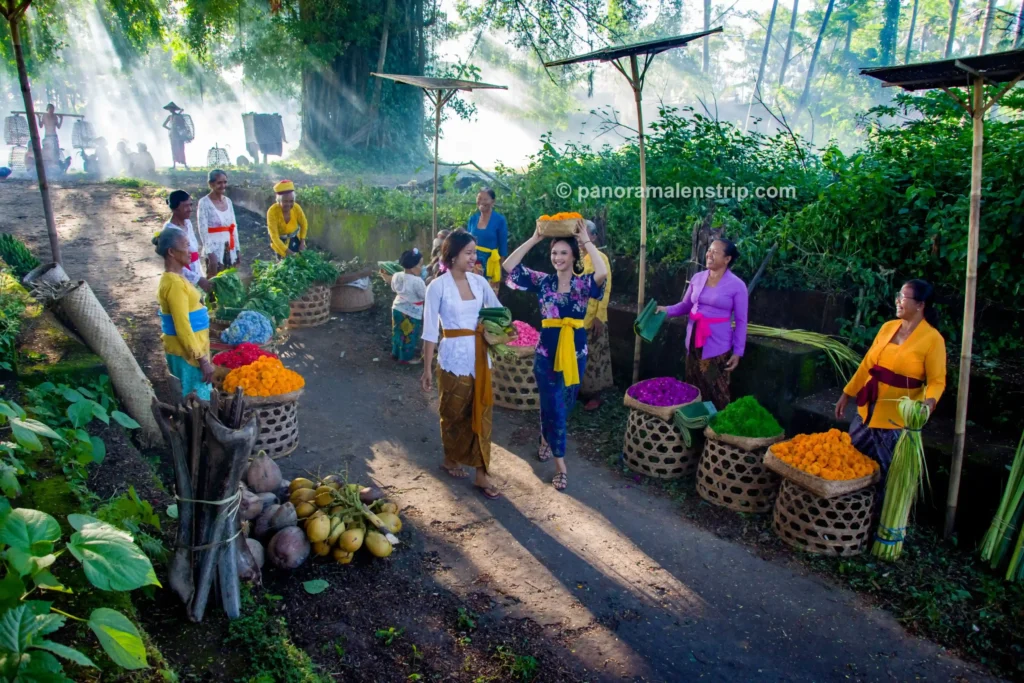
Morning flower markets present extraordinary color grading opportunities for Bali traditional village photography. Vibrantly dyed offerings contrast sharply with muted earthen surroundings. This saturation disparity requires careful white balance calibration. Setting a custom Kelvin value ensures accurate color rendition.
Arrive before sunrise to exploit optimal blue hour lighting. Low-light conditions necessitate wide apertures and elevated ISO settings. A fast f/1.4 prime lens isolates specific floral arrangements beautifully. Shallow depth of field blurs distracting background elements effectively.
Implement these settings for vibrant market stalls:
- Switch to aperture priority mode for rapid depth adjustments.
- Activate highlight alert warnings to prevent blown color channels.
- Use single-point auto-focus to pinpoint intricate petal details.
- Shoot in RAW format for maximum post-processing latitude.
Directional sunlight pierces through structural gaps shortly after dawn. These sharp light beams create dramatic chiaroscuro effects. Underexposing by one stop preserves critical highlights within the frame. This technique saturates the vibrant marigold and frangipani pigments.
Follow our latest visual updates for daily inspiration. See exactly what your golden hour shots could look like by exploring our recent galleries. Connect with other photographers mastering these precise lighting conditions.
Framing Human Subjects in the Market
Capturing human interaction adds crucial narrative context. Vendors weaving intricate ceremonial offerings provide excellent action subjects. Maintain a minimum shutter speed of 1/250s for sharp hands. This prevents motion blur during fast-paced weaving techniques.
Assess the color wheel when framing your subjects. Complementary colors naturally draw the viewer’s eye. Position green banana leaves behind bright pink lotus flowers. This deliberate color contrast maximizes overall visual impact.
Reflective surfaces introduce unpredictable lighting variables. Wet pavement from morning dew bounces ambient light upward. Utilize this natural fill light to illuminate shadowed faces. Mastering environmental reflectors elevates standard market photography.
Evaluate the overall scene geometry constantly. Leading lines of stacked baskets guide focus toward the vendor. Strategic framing transforms chaotic markets into organized visual stories. Patience remains essential for capturing decisive moments.
Always monitor the histogram during rapidly changing sunrise light. Avoid clipping the red channel when photographing bright ceremonial flowers. Accurate exposure in-camera drastically reduces necessary editing time. Precise color capture defines premium documentary work.
Where Can Photographers Frame Scale Beneath Sacred Banyan Trees?
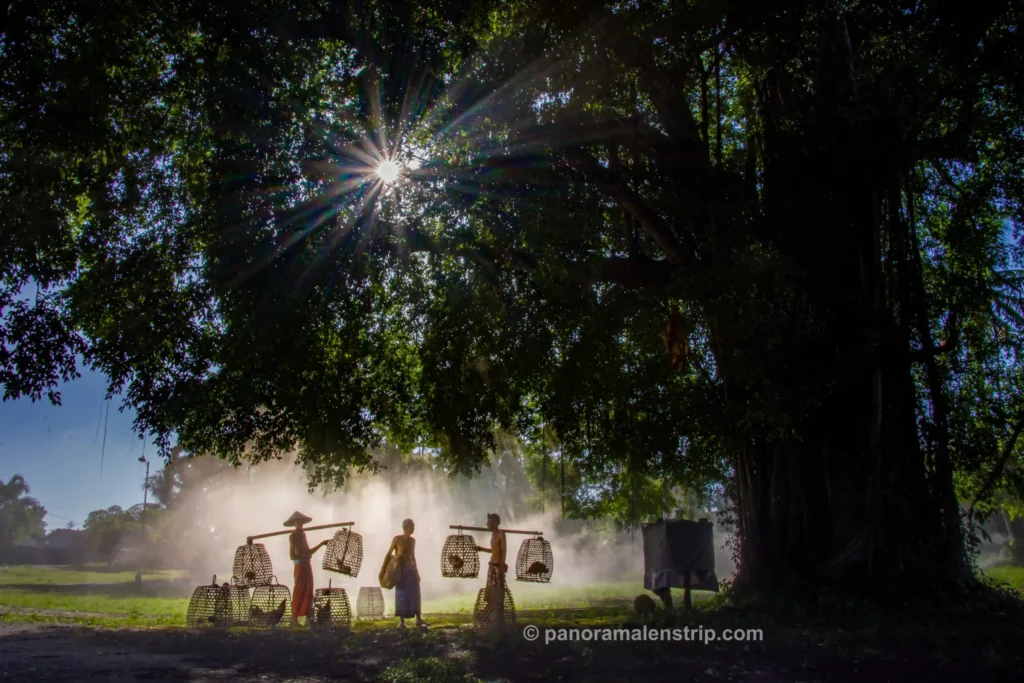
Ancient banyan trees dominate the central village topography. Their sprawling root systems create natural, highly textured backdrops. Capturing this immense scale requires strategic subject placement. Positioning villagers in the foreground establishes immediate size relationships.
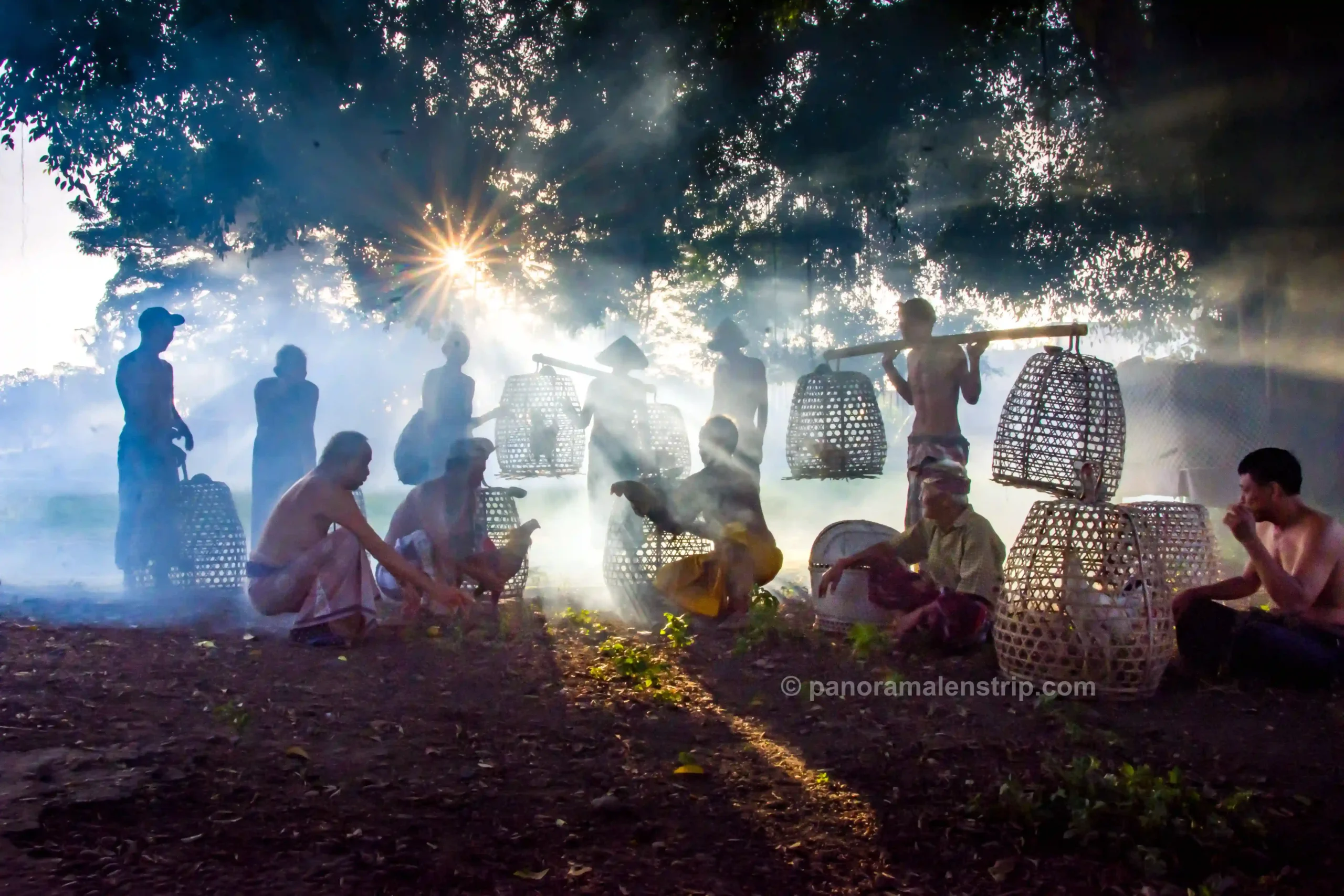
Local men often gather beneath these expansive canopies. They frequently bring prized roosters for morning socialization. This activity offers prime opportunities for authentic lifestyle portraits. Utilize an 85mm lens to compress these engaging foreground subjects.
The dense foliage heavily filters overhead sunlight. This creates a soft, diffused lighting environment underneath. However, scattered light pockets can cause uneven exposures. Spot metering on the subject’s face is absolutely critical here.
Optimize your camera settings for shaded environments:
- Increase ISO to 800 or 1600 for adequate exposure.
- Open the aperture to f/2.8 or wider for light gathering.
- Enable in-body image stabilization for slower shutter speeds.
- Utilize a warm white balance preset for natural skin tones.
Best Lenses for Capturing Banyan Tree Scale
Wide-angle lenses emphasize the towering height of the trees. A 16-35mm zoom captures the sprawling branches dynamically. Shoot from a low angle to exaggerate the vertical perspective. This focal distortion enhances the perceived majesty of the location.
Framing men with their roosters requires rapid reflexes. The birds exhibit unpredictable, sudden movements constantly. Switch your camera to high-speed continuous shooting mode. A minimum shutter speed of 1/500s freezes unexpected action effectively.
Include the hanging aerial roots for added compositional depth. These vertical lines draw the viewer’s eye downward naturally. Focus critically on the texture of the ancient bark. Blurring the distant village elements isolates the primary scene completely.
Black and white processing often suits these high-texture environments. Removing color emphasizes the deep contrast of the shadows. The intricate patterns of roots and feathers become highly pronounced. This monochromatic approach yields powerful, timeless documentary imagery.
What Camera Settings Optimize Morning Mist and Social Gatherings?
Capturing morning mist requires precise control over the exposure triangle. Mist tricks camera metering systems into underexposing the frame. You must manually adjust your settings to compensate. A positive exposure compensation of +0.5 to +1 stops is ideal.
This adjustment prevents the atmospheric moisture from appearing dull gray. Utilizing a wider aperture like f/2.8 or f/4 helps. It isolates subjects while rendering the mist as a soft backdrop. Shutter speed remains critical for sharp social interactions.
Fast shutter speeds freeze dynamic cultural gatherings effectively. Aim for at least 1/250s when photographing moving subjects. If locals are interacting with animals, increase to 1/500s. Experiment with exposure bracketing to ensure one perfect frame.
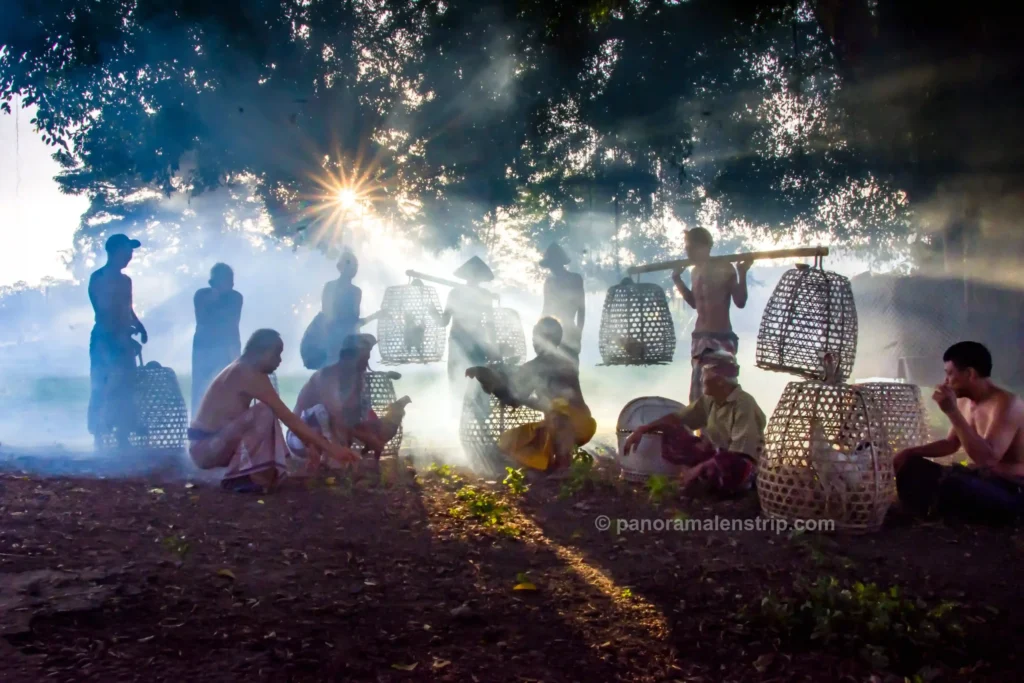
Mist density fluctuates rapidly as the sun begins to rise. Bracketed shots give you multiple exposure options during post-processing. Base ISO should remain as low as possible. Start at ISO 100 or 200 to maximize dynamic range.
However, morning light is often incredibly dim in rural topography. Do not hesitate to push ISO to 800 or 1600. Modern sensors handle high ISO noise exceptionally well. Capturing a sharp, slightly grainy image is better than motion blur. This high-ISO capability is equally crucial for capturing stunning Milky Way shots over Mount Bromo.
White balance also demands careful attention during early hours. Switching to daylight or cloudy presets warms the morning tones. Auto white balance often overcorrects the natural blue hour hues. Manual adjustments ensure the authentic atmosphere translates to the sensor.
Understanding Metering Modes for Complex Lighting
Metering modes dictate how your camera interprets complex lighting. Matrix metering evaluates the entire scene for balanced exposures. Use center-weighted metering to prioritize the primary subjects. Consider these technical configurations for morning shoots:
- Set aperture priority mode for quick depth of field control.
- Enable continuous autofocus (AF-C) to track moving subjects.
- Utilize spot metering to expose correctly for faces.
- Shoot in RAW format to retain maximum highlight data.
These parameters ensure robust data collection in challenging lighting. Proper technique transforms fleeting atmospheric conditions into striking visual narratives.
Which Lenses Perform Best for Bali Traditional Village Photography?
Narrow rural pathways severely restrict your working distance. Choosing the correct focal length dictates your compositional success. Wide-angle lenses are essential for these confined topographical spaces. A 24mm or 35mm prime lens offers exceptional versatility.
These focal lengths capture environmental context without extreme distortion. They pull the viewer directly into the immediate cultural scene. Prime lenses also typically provide faster maximum apertures. This is crucial for shooting in heavily shaded village alleys.
Step directly into the deep rural pathways and visualize your upcoming shoot by walking through our latest field video.
A 50mm lens can feel too restrictive in tight corridors. However, it excels at isolating architectural details and intimate portraits. Zoom lenses like a 24-70mm f/2.8 offer maximum adaptability. They allow rapid reframing without requiring physical movement.
Physical movement is often impossible in crowded communal layouts. Heavy telephoto lenses create an unnatural disconnect from subjects. They also intimidate residents within close-quarter environments. Consider these lens characteristics for village photography:
- Fast apertures (f/1.4 to f/2.8) for low-light performance.
- Weather sealing to protect against sudden humidity changes.
- Compact barrel designs to remain unobtrusive among locals.
- Fast autofocus motors to capture fleeting candid moments.
Staying wide and close fosters a more intimate documentary aesthetic. The right glass dictates the entire structural framework of your images. Lens selection directly impacts your ability to navigate rural terrain.
When Is the Golden Hour Most Effective for Cultural Portraits?
Golden hour provides unparalleled directional lighting for portraiture. This lighting window occurs shortly after sunrise and before sunset. Furthermore, you can experience this dramatic light on a grander scale by exploring our premium Bromo sunrise tours. The low sun angle creates long, dramatic shadows across topography. It wraps subjects in warm, diffused, and highly flattering light.
For Bali traditional village photography, morning golden hour is consistently superior. Villages are highly active during these specific early morning hours. Locals engage in morning rituals, market preparations, and daily chores. This activity provides authentic context for environmental portraiture.
Evening golden hour often features exhausted subjects winding down. The light is beautiful, but the dynamic energy has dissipated. Proper positioning relative to the light source is mandatory. Backlighting your subject creates striking rim light around their silhouette.
Use a reflector to bounce soft light back onto faces. This balances the high contrast ratio inherent in backlit scenarios. Alternatively, front lighting during this time enhances vibrant cultural textiles. Maximize golden hour impact with these strategic approaches:
- Map the solar trajectory against the village topography beforehand.
- Identify structural elements that create interesting shadow patterns.
- Engage subjects when they are naturally illuminated by shafts of light.
- Underexpose slightly to preserve the rich, saturated sky colors.
Golden hour lighting requires rapid technical execution. The quality and intensity of light shift by the minute. Preparation ensures you capture the intersection of light and culture.
What Are the Unspoken Etiquette Rules for Photographing Locals?
Ethical Bali traditional village photography demands respect for local customs and privacy. A camera can easily become an intrusive and offensive tool. Establishing a human connection must precede pressing the shutter release. Non-verbal communication is vital when language barriers exist.
A simple smile and a nod often secure basic consent. Point to your camera and wait for an affirmative response. Yes, candid documentary shots often yield the most authentic imagery, but ignoring local permission protocols entirely can quickly ruin the social dynamic of a small community. Always respect a refusal without hesitation or visible frustration.
Do not treat daily spiritual rituals as tourist spectacles. Maintain a respectful distance during ceremonies and private moments. Use silent shooting modes to minimize auditory disruption during proceedings. Village elders strictly prohibit flash photography inside sacred temples. Furthermore, for exclusive access, join our premium Bali temple tour.
Intense light bursts disrupt spiritual practices and damage historical artifacts. Always seek explicit guidance from village elders before entering shrines.
Ethical Compensation Methods for Locals
Compensating subjects requires careful ethical consideration in rural areas. Handing out cash creates unsustainable and transactional local dynamics.
Instead, offer to send printed photographs back to the village. Purchasing local goods is a better method of economic exchange. Take time to explain your photographic intentions to community leaders. Showing them your previous work builds instant credibility and trust.
Participate in communal activities before bringing your equipment out. This integration proves your genuine interest in their daily lives. Adhere to these fundamental rules of photographic etiquette:
- Learn basic local greetings to initiate polite interactions.
- Lower your camera immediately if someone appears visually uncomfortable.
- Dress modestly and align with regional cultural expectations.
- Never interrupt ongoing work or commercial activities for photographs.
Building trust yields vastly superior photographic results over time. Subjects relax when they feel respected and structurally secure. This mutual respect translates directly into powerful visual narratives. Ethical behavior preserves these locations for future visiting photographers.
How Do Premium Long Day Tours Elevate the Photographic Experience?
Premium long day tours fundamentally restructure the Bali traditional village photography workflow. They eliminate logistical friction during complex travel. Photographers can prioritize the exposure triangle over navigation. This structured approach yields superior compositional opportunities.
Extended itineraries allow photographers to chase the golden hour. They also provide access to the coveted blue hour. Lighting conditions change drastically across Indonesian landscapes. Premium tours anticipate these dynamic environmental shifts.
Professional guides secure exclusive access to restricted locations. This access prevents overcrowding at popular vantage points. Dedicated transport handles heavy pelican cases effortlessly. This logistical support minimizes physical fatigue during extended shoots.
These tailored experiences maximize fieldwork efficiency. Photographers gain more time for precise subject framing. The investment translates directly into high-fidelity portfolio assets. Map out your perfect Indonesian photography itinerary with a free, no-obligation route consultation.
Premium excursions offer distinct technical advantages:
- Optimized routing for solar positioning and shadows.
- Dedicated assistants for managing lighting modifiers.
- Pre-scouted locations with verified focal points.
- Uninterrupted time for complex bracketing sequences.
Extended durations allow for immersive environmental portraits. Quick visits often result in superficial snapshot aesthetics. Long tours facilitate genuine connections with local subjects. This rapport yields authentic, emotionally resonant captures.
High-end itineraries integrate weather contingency plans. Unpredictable tropical microclimates often disrupt tight schedules. Flexible premium routes pivot to alternative indoor locations. This adaptability ensures continuous shooting regardless of weather.
Advanced planning mitigates harsh midday lighting constraints. Guides organize post-processing workshops during peak solar intensity. This scheduling maximizes productivity during otherwise unusable hours. Photographers return with fully optimized raw files.
What Technical Gear Should High-End Photographers Pack for Indonesia?
Selecting the correct optical equipment for Bali traditional village photography is paramount. Indonesian topography ranges from dense jungles to volcanic craters. Each environment demands specific focal length capabilities. Packing efficiency directly impacts physical mobility.
Prime lenses offer superior light transmission capabilities. However, variable zoom lenses provide necessary compositional flexibility. High-end photographers must balance aperture speed with weight. A strategic kit covers ultra-wide to telephoto ranges.
Tropical humidity necessitates robust weather sealing. Condensation frequently damages unprotected internal lens elements. Silica gel packs are mandatory inside camera bags. Professional-grade equipment easily withstands these harsh microclimates.
Below is a technical comparison of essential lenses. This data helps optimize packing for Indonesian topography.
| Lens Focal Length | Ideal Photographic Scenario | Travel Weight |
|---|---|---|
| 14-24mm f/2.8 | Expansive volcanic landscapes and astrophotography. | 800g – 1kg |
| 24-70mm f/2.8 | Village documentaries and environmental portraits. | 800g – 900g |
| 70-200mm f/2.8 | Compressing terraced landscapes and candid wildlife. | 1.4kg – 1.5kg |
| 85mm f/1.2 | Isolated cultural portraits with shallow depth of field. | 1kg – 1.2kg |
| 100mm Macro | Flora details and intricate traditional textiles. | 600g – 750g |
Drone deployment requires careful logistical consideration. Many high-end travelers pack sub-250g aerial units. These lighter drones bypass strict aviation regulations. They still deliver high-bitrate, cinematic 4K resolution.
Tripod selection impacts long-exposure landscape viability. Carbon fiber models offer optimal strength-to-weight ratios. Avoid cheap aluminum tripods near corrosive saltwater environments. Sand spikes enhance stability on coastal shorelines.
Filtration systems manage extreme tropical dynamic range. Circular polarizers reduce glare on dense foliage. Neutral density filters enable long exposures of waterfalls. This specific filter technique is essential for mastering locations featured in our Tumpak Sewu landscape photography guide. A comprehensive filter kit is absolutely essential.
Memory management requires redundant backup strategies. High-resolution sensors generate massive raw file outputs. Portable solid-state drives withstand extreme physical shocks. Dual-slot camera bodies prevent catastrophic data loss.
Who Benefits Most from Specialized Cultural Photography Routes?
Specialized cultural routes attract serious visual storytellers. These itineraries cater to professionals demanding authenticity. Commercial photographers frequently utilize these curated paths. The routes guarantee high-value production environments.
Recent industry data highlights shifting travel photography trends. High-net-worth individuals increasingly seek educational, purpose-driven excursions. Over 68% of luxury travelers prioritize skill acquisition. Photography-focused travel represents a rapidly growing market segment.
These premium demographics expect frictionless logistical execution. They require private access to traditional ceremonies. Standard group tours cannot provide this level of exclusivity. Specialized routes deliver high-fidelity cultural immersion.
Key demographics utilizing these specialized photography routes include:
- Editorial photographers building regional portfolios.
- Gallery artists seeking unique cultural narratives.
- Advanced enthusiasts upgrading their technical capabilities.
- High-net-worth travelers desiring structured creative outputs.
Anthropological researchers also leverage these structured tours. They require precise visual documentation of indigenous practices. The tours provide necessary ethical clearance and translation. This professional mediation ensures respectful subject interaction.
Architectural photographers benefit from localized historical insights. Traditional Indonesian structures feature complex geometric patterns. Dedicated guides explain the spatial significance of these buildings. This context enhances the final compositional narrative.
Fine art photographers require extended observation periods. They study lighting interactions across cultural textiles. Specialized routes allocate sufficient time for this analysis. The resulting images reflect deep cultural comprehension.
Documentary filmmakers maximize their daily production schedules. These routes optimize location transitions and equipment transport. Creators capture comprehensive B-roll without logistical delays. For aerial enthusiasts, understanding specific regional regulations like the drone rules for Tumpak Sewu ensures smooth production. Efficiency remains the primary value proposition.
FAQs About Bali Traditional Village Photography
Cultural photography presents unique logistical and ethical challenges. Travelers frequently encounter unfamiliar environmental and social dynamics. Proper preparation prevents missed opportunities and cultural faux pas. Below are the most common technical inquiries.
How much time is needed for Bali traditional village photography?
A thorough village shoot requires minimal rush. Professionals allocate at least four to six hours. This duration allows photographers to establish community rapport. Rushed visits yield superficial, disconnected imagery.
Morning sessions should begin before sunrise. This timing captures authentic daily preparations. Afternoon sessions benefit from elongated, directional shadows. Comprehensive coverage necessitates a full-day commitment.
Complex documentary projects demand multiple return visits. Familiarity breeds comfort among local village residents. Subjects ignore the camera during subsequent interactions. This invisible presence generates superior candid photographs.
Which Bali traditional village offers the best morning light?
Penglipuran village offers exceptional morning light conditions. Its linear architectural layout aligns perfectly with sunrise. The bamboo forests filter harsh early sunlight. This creates a soft, directional glow on pathways.
Tenganan village also provides unique atmospheric lighting. Morning mist frequently rolls through this ancient settlement. The low-contrast environment perfectly flatters human subjects. It is ideal for moody environmental portraits.
Photographers must arrive during the astronomical twilight. Early positioning ensures optimal framing without tourist crowds. The morning golden hour here is notoriously brief. Preparation is paramount for capturing peak illumination.
Can photographers use external flash during cultural ceremonies?
External flash usage requires strict cultural sensitivity. Most sacred ceremonies prohibit artificial lighting bursts. Flash photography easily disrupts religious focus and ambiance. It is generally considered highly disrespectful.
Photographers should rely on fast prime lenses. Wide apertures compensate for low-light temple environments. Modern camera sensors offer excellent high-ISO noise performance. Artificial lighting is rarely technically necessary today.
Always consult your local guide before shooting. They understand the specific rules of each ceremony. Some secular cultural performances permit off-camera flash. However, ambient light preserves the authentic atmosphere better.
Are tripods practical in busy morning markets?
Tripods are generally impractical in bustling markets. The sprawling legs create dangerous tripping hazards. Traditional markets feature narrow, congested pedestrian pathways. Static gear obstructs local commerce and movement.
Monopods offer a superior stabilization alternative. They maintain a minimal physical footprint during operation. Photographers retain crucial mobility in dynamic environments. Monopods still provide sufficient support for heavier lenses.
In-body image stabilization eliminates most tripod requirements. Modern mirrorless systems handle slow shutter speeds easily. Photographers should prioritize lightweight, handheld configurations. This approach ensures maximum agility and unobtrusive shooting.