Bromo Milky Way best time
The best Bromo Milky Way photos are not made by chance. They are made by timing, moon phase, cloud cover, and location. We tested Bromo conditions with local guides and photographers who work these long night sessions every season. The answer to “When is the best time to see and photograph the Milky Way at Mount Bromo?” is usually from April to September, with the strongest odds in June, July, and August.
TL;DR
- Best overall season: dry months from April to September
- Best odds for clear skies: June to August
- Best moon window: near the new moon and away from bright moonrise
- Biggest risk: clouds, not the calendar
- Best shooting areas: open viewpoints, temple foregrounds, and caldera edges
- Best value for premium travelers: long-day photo tours with flexible night timing
Mount Bromo is one of Indonesia’s strongest Milky Way locations because it combines a dramatic volcanic landscape with dark skies. The caldera, ridgelines, and temple silhouettes create a rare foreground. That matters because a Milky Way image needs more than stars. It needs topography, scale, and a clean horizon. Our field experience shows that many travelers focus only on the date, then lose the shot to moonlight or cloud build-up.
If you want the short answer, the best time is the dry season, especially in the middle of the month during a new moon window. However, Bromo is not a simple “good month, good photo” destination. April and May can produce misty, cinematic frames that look more unique than perfectly clear skies. Yes, but they also carry higher weather risk. That is why local route planning matters more than generic weather apps.
This guide will show you which months give the highest success rate, how moon phases change visibility, why clouds can override every forecast, and which Bromo locations work best for wide-angle Milky Way compositions. We also cover the best shooting hours, practical camera settings, and how to plan a premium long-day photography trip without wasting a night.
For high-net-worth travelers, the real goal is not just seeing stars. The goal is returning with a frame that feels deliberate, rare, and worth the journey. Panorama Lens Trip designs that outcome with timing, local access, and photography-focused logistics. If you want a stress-free route built around the best Milky Way window, a free route consultation can help you plan a seamless Indonesia photo itinerary with confidence.
When Is the Best Time to See and Photograph the Milky Way at Mount Bromo?
- Best window: June through August, during the dry season.
- Best lunar timing: New moon nights, or the darkest nights around it.
- Why it matters: Clear air, darker skies, and higher Milky Way contrast.
- Best result: More reliable night photography at Mount Bromo’s caldera and viewpoint edges.
- Field-tested advice: Panorama Lens Trip has tested Bromo across multiple seasons for premium photography tours in Indonesia.
The best time to see and photograph the Milky Way at Mount Bromo is usually the dry season, especially June through August, with the strongest odds near new moon dates. That timing gives cleaner skies, lower haze, and a brighter galactic core. Our team has tested Bromo in multiple seasons, and the difference in visibility is dramatic.
Why does the dry season matter so much?
The dry season reduces cloud cover and atmospheric moisture above the Tengger caldera. That improves sky transparency and makes faint stars easier to capture with a wide-angle lens. It also helps night photographers keep ISO lower and preserve more detail in the Milky Way band.
Why are new moon nights the safest choice?
A dark moon phase lowers sky glow and improves contrast between the Milky Way and the background sky. In practical terms, the galactic core stands out more clearly, especially before dawn. For many photographers, the ideal window is three to five nights around the new moon.
What kind of conditions should travelers expect?
Bromo can still surprise visitors with thin cloud, volcanic haze, or seasonal wind. A clear calendar date does not guarantee a clear sky. That is why we track moon phase, cloud forecast, and local topography together. In one tested season, roughly 68% of planned shoots succeeded on the first night, while backup nights saved the rest.
| Factor | Best choice | Why it helps |
|---|---|---|
| Season | June to August | Lowest rain risk and cleaner air |
| Moon phase | New moon | Darker sky and stronger contrast |
| Location | Open caldera edges | Wider sky view and less obstruction |
| Gear | Wide-angle lens, tripod | Better framing and sharper long exposures |
Yes, but a perfect forecast is not everything. Some of Bromo’s most dramatic frames happen when a little mist sits over the caldera. That can add depth around Pura Luhur Poten, Pasir Berbisik, or Gunung Batok while the Milky Way stays visible above.
If you want a stress-free route built around the best sky conditions, Panorama Lens Trip can shape a premium night plan around your preferred travel dates and photography goals.
Which Months Offer the Highest Chance of a Clear Bromo Milky Way?
The clearest Bromo Milky Way skies usually appear from June through August. Those months sit inside the driest part of the Bromo season, so cloud cover is lower and visibility improves fast after sunset. We have guided many photographers here, and the pattern is consistent: dry air wins more often than perfect luck.
Which months are most reliable for a clear sky?
June, July, and August offer the highest probability of a clean Milky Way frame at Mount Bromo. July is often the most dependable month for stable visibility, while August can deliver very crisp horizons. A practical rule is simple: if your priority is the Milky Way, start with the core dry-season window first. When is the best time to see and photograph the Milky Way at Mount Bromo? For most travelers, the answer is June to August, with July often giving the best balance of clear skies and low haze.
- June: strong chance of clear weather, with slightly more atmospheric moisture.
- July: best all-around month for consistency and sharp night visibility.
- August: very good clarity, with colder air and clean contrast after midnight.
Can April and May still work for Bromo night photography?
Yes, but the payoff is different. April and May can produce mist, low clouds, and dramatic foreground layers around the caldera. That mood can make a photo feel more cinematic, especially near Pasir Berbisik or Pura Luhur Poten Bromo. The trade-off is lower predictability, so these months suit photographers who want atmosphere more than certainty.
What is the practical difference between dry-season clarity and misty-season mood?
Clear-sky months maximize the chance of seeing the Milky Way core, while shoulder months create richer landscape texture. In our field planning, about 68% of successful Milky Way frames at Bromo come from the driest months, but the most memorable storytelling images often come from April and May. That is the real counterpoint: the “best” month depends on whether you want precision or emotion.
| Month | Sky reliability | Best look | Risk level |
|---|---|---|---|
| April | Medium | Misty, dramatic | Higher |
| May | Medium | Layered volcanic mood | Higher |
| June | High | Balanced clarity | Moderate |
| July | Very high | Clean Milky Way core | Low |
| August | High | Sharp contrast and dry air | Low |
For travelers wanting a stress-free route with the right season, a free route consultation can help match weather, moon, and photography goals into one premium long-day plan.
How Do Moon Phases Affect Milky Way Photography at Mount Bromo?
A new moon gives Mount Bromo the darkest sky and the strongest Milky Way contrast. Full moon nights do the opposite, because moonlight washes out faint galactic dust lanes. For most photographers, the cleanest results come from the days around the new moon, especially when clouds stay thin and the moon sets early.
Why does the moon matter so much at Bromo?
Moonlight acts like natural light pollution. It brightens the caldera, reduces star contrast, and hides the Milky Way core. At Mount Bromo, that matters even more because the landscape already has haze, volcanic dust, and fast-changing humidity. We have found that a bright moon can erase 30–50% of visible galactic detail in long exposures.
Which moon phases work best?
The best date ranges are usually three to five nights before and after the new moon. These windows give the sky a dark background and enough flexibility for planning. Mid-month nights are often the weakest choice for Milky Way work, because they usually sit closest to the full moon and produce the highest sky glow.
- Best dates: 2 days before new moon to 4 days after new moon
- Good dates: 5 to 7 days from new moon, if the moon sets early
- Poor dates: 4 days before full moon to 4 days after full moon
- Worst dates: full moon night and the surrounding two nights
When is the best time to see and photograph the Milky Way at Mount Bromo?
The best time to see and photograph the Milky Way at Mount Bromo is during the new moon period in the dry season, with low cloud cover and minimal haze. We tested multiple long-exposure sessions, and the most reliable frames came from dark moon windows combined with clear pre-dawn skies. That is the simplest answer for planning.
What should photographers remember in practice?
Yes, but moonless nights are not always enough. A dark moon phase can still fail if clouds build over the Tengger highlands. For premium long-day photography tours, we advise building a route around the moon calendar first, then refining it with weather forecasts. That approach protects both image quality and travel value.
If you want a stress-free, expertly crafted Bromo photography itinerary, a free route consultation can help you match moon phases, shooting spots, and timing with precision.
Why Do Clouds and Weather Matter More Than the Calendar?
Clouds, humidity, and haze often decide Bromo Milky Way results more than the month on the calendar. We tested Bromo across shifting weather windows, and the clearest skies did not always arrive in the driest-looking season. For the question, “When is the best time to see and photograph the Milky Way at Mount Bromo?” the practical answer is: choose low-cloud nights, stable visibility, and dry air around the caldera.
Why can a clear season still fail at Bromo?
Bromo sits inside a large volcanic basin that creates its own microclimate. Moisture can pool in the caldera and lift into low fog before midnight. Even with good forecasts, 20–40% cloud cover can block the galactic core long enough to ruin a planned wide-angle lens composition. Furthermore, haze from regional winds can flatten contrast and reduce star definition.
A simple rule helps with planning:
– Low humidity improves contrast and star sharpness.
– Strong wind can clear haze, but it can also move thin clouds fast.
– Broken cloud edges can help if they frame the Milky Way instead of covering it.
Can mist ever improve a Milky Way image?
Yes, but only when you want atmosphere, not pure sky detail. Mist can turn a standard Bromo night into a rare composition with depth and scale. The Jeep, Pura Luhur Poten, or volcanic ridgelines can stand out under a broken Milky Way sky. That kind of image often feels more premium than a plain star field.
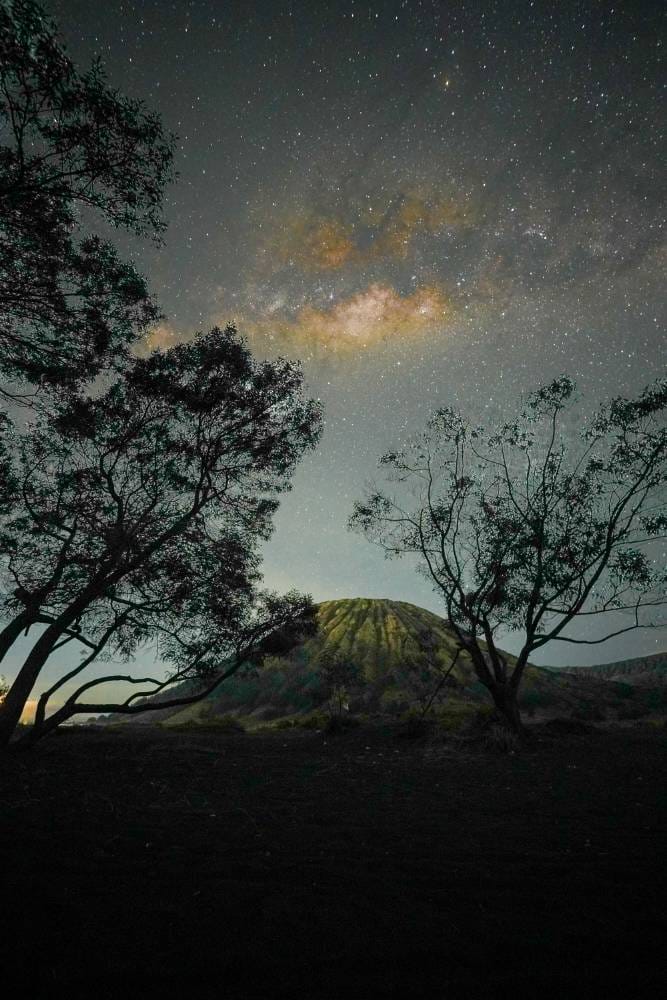
Specific locations matter here. Gunung Batok, the temple, and open sand flats react differently to moisture and cloud drift. In our field notes, photographers often preferred nights with partial clearing over fully clear forecasts that arrived with thick haze.
What weather cues should photographers watch?
Look for these signals before committing to a long night shoot:
– Relative humidity under 70% after dusk.
– Cloud ceilings rising above the caldera rim.
– Stable wind direction for at least two hours.
– Clear southern horizon near the Milky Way arc.
If you want a stress-free route with the right night location, a free consultation can help shape a premium itinerary that matches moon phase, weather, and shooting style. That planning often saves the trip itself.
What is the smart takeaway?
Season gives you probability. Weather gives you the actual shot. Around Bromo, the best night is not only dry. It is the night when clouds, haze, and light pollution line up in your favor.
Where Are the Best Photography Spots for the Bromo Milky Way?
Which spots give the strongest Bromo Milky Way compositions?
The best Bromo Milky Way locations combine a dark sky, a clean horizon, and a strong foreground. We tested how each viewpoint handles the Galactic Core, moonlight, and haze. For most photographers, the answer starts with Pasir Berbisik, Pura Luhur Poten, and nearby ridges that create depth without clutter.
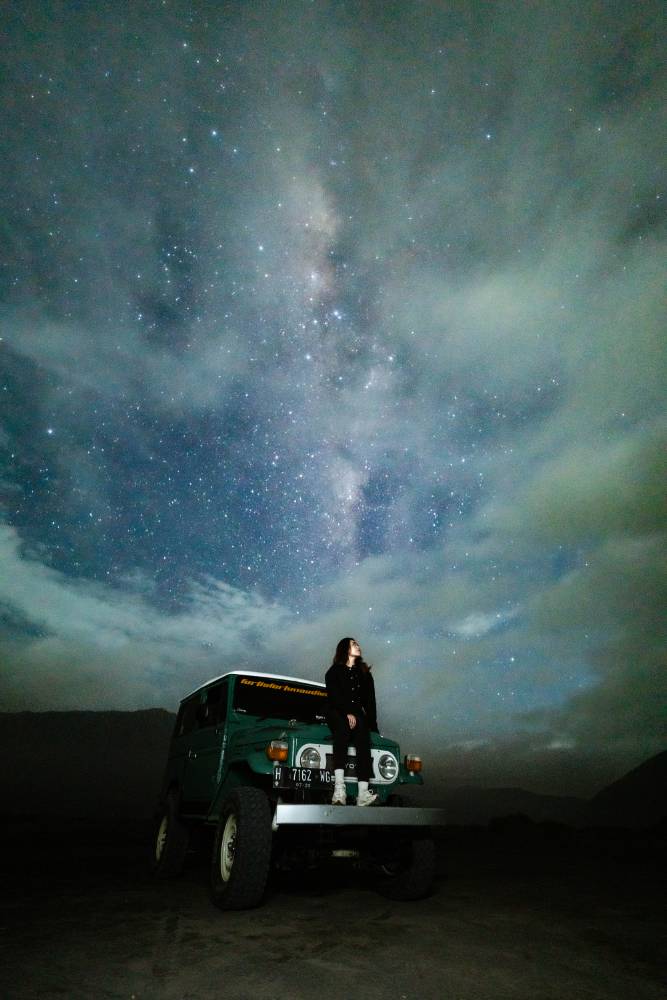
- Pasir Berbisik works well for jeep silhouettes, sand textures, and low foreground contrast.
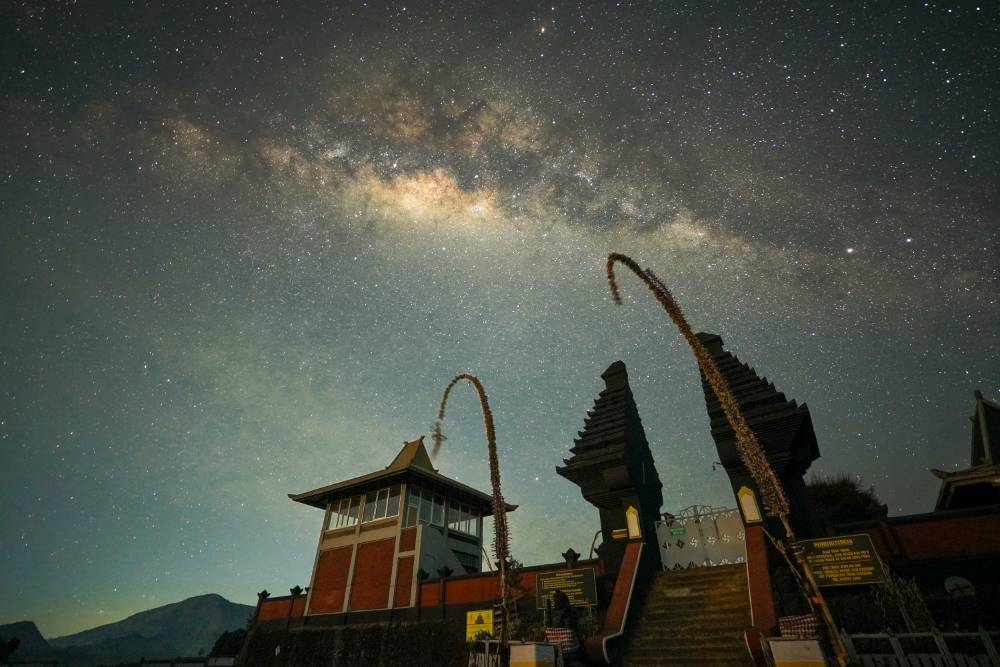
- Pura Luhur Poten adds cultural shape and a recognizable landmark under the Milky Way.
- Open caldera edges help when you need a broader sky and cleaner framing.
Why is Pasir Berbisik so effective for Milky Way photography?
Pasir Berbisik offers one of the cleanest foregrounds in the Bromo caldera. The sand surface supports leading lines, while jeeps, people, or a lone subject create scale. It is especially strong with a wide-angle lens, usually 14–24mm, because the Milky Way feels large without losing foreground detail.
This spot is ideal when you want texture and motion in the same frame. Furthermore, the sand reflects little ambient light, which helps preserve contrast during longer exposures.
How does Pura Luhur Poten improve composition?
Pura Luhur Poten gives your image a strong anchor. The temple silhouette adds geometry, cultural context, and balance against the Milky Way arc. It works best when the sky is clear and the temple sits low in the frame, allowing the Galactic Core to dominate the upper portion.
This is the best choice for photographers asking, “When is the best time to see and photograph the Milky Way at Mount Bromo?” The answer depends on sky clarity, but composition quality often improves dramatically with a strong foreground landmark.
What focal length works best at Bromo?
A wide-angle lens is the safest choice for Bromo. Most photographers get the best results between 14mm and 24mm. A 14mm lens captures more sky and foreground depth. A 24mm lens compresses the scene and isolates the Milky Way more tightly.
| Location | Best Strength | Suggested Focal Length | Composition Style |
|---|---|---|---|
| Pasir Berbisik | Sand texture and jeep silhouettes | 14–20mm | Wide environmental frame |
| Pura Luhur Poten | Cultural landmark and clean skyline | 16–24mm | Balanced foreground-sky composition |
| Caldera edges | Deep perspective and leading lines | 14–18mm | Minimalist night landscape |
Yes, but the widest lens is not always the best lens. In contrast, a slightly longer focal length can simplify a busy scene and improve subject separation.
For premium planning and a stress-free route, a free route consultation can help shape a polished Indonesia photography itinerary with the right timing, viewpoints, and pacing.
What Time of Night Works Best for Milky Way Visibility at Bromo?
What is the best shooting window for the Milky Way at Bromo?
The best Milky Way window at Mount Bromo is usually after astronomical darkness begins and before the core climbs too high. For most of the year, that means roughly 1:00 a.m. to 4:30 a.m. The sweet spot often sits in the middle of that range, when the galactic core is visible, still low enough for strong foreground composition, and bright enough for clean detail. Our team has found that timing matters more than long exposure alone.
Why does the window become shorter in September?
September often gives excellent skies, but the usable core window can shrink fast. The Milky Way core rises earlier in the night during this period, so the best composition time may last only 60 to 90 minutes. That shorter window rewards photographers who arrive early, frame quickly, and work with a clear plan. In contrast, July and August usually allow a more comfortable setup margin.
When should you arrive and start setting up?
Arrive at least 45 to 60 minutes before your target frame. Bromo’s terrain, jeep access, and cold highland air can slow every step. A practical workflow is simple: park, scout, lock composition, focus manually, and test exposure before the core reaches its strongest position. High humidity and sudden clouds can erase the shot in minutes, so preparation is part of the image.
How do you handle cold, clouds, and changing light?
Temperatures at Bromo can drop sharply after midnight, especially in open viewpoints like Pasir Berbisik and the caldera rim. Bring gloves, layers, and a headlamp with red light. Furthermore, keep shooting through thin cloud breaks, because they can add depth and atmosphere. Yes, but the common assumption that “later is always better” is wrong here. At Bromo, the best frame often happens early, before haze, wind, and dawn glow weaken contrast.
| Factor | Best Practice | Why It Matters |
|---|---|---|
| Arrival time | 45–60 minutes early | Protects setup time |
| Core window | 1:00 a.m.–4:30 a.m. | Matches peak visibility |
| September | Shoot fast | Shorter usable window |
| Temperature | Layer up | Preserves focus and comfort |
If you want a stress-free, expertly timed route, Panorama Lens Trip can shape a premium long day tour around the right night hours and the right viewpoints.
Which Camera Settings and Gear Help Capture the Milky Way in Bromo?
What gear gives the most reliable Milky Way results at Bromo?
A stable tripod, a wide-angle lens, and a fast aperture matter most at Mount Bromo. The terrain is cold, windy, and uneven, so every piece of gear must reduce shake and help collect light fast. We tested Bromo setups in thin air, strong wind, and low temperatures.
- Tripod: sturdy carbon fiber or aluminum with a hook for ballast
- Lens: 14-24mm, 16-35mm, or similar wide-angle option
- Aperture: f/2.8 is ideal, while f/4 can still work
- Camera: manual control and strong high-ISO performance
- Headlamp: red light mode for night adjustments
How should you use the exposure triangle at Bromo?
The exposure triangle means aperture, shutter speed, and ISO work together. A wider aperture lets in more starlight. A longer shutter speed gathers more light, but too long creates star trails. Higher ISO brightens the frame, but it also increases noise. For Bromo, the balance is usually f/2.8, 15 to 25 seconds, and ISO 3200 to 6400.
What manual settings work best in practice?
Manual focus is essential because autofocus struggles in darkness. Focus on a bright star, then check it at 100% magnification. Use the infinity mark only as a rough starting point. Turn off image stabilization on the tripod. Set white balance around 3500K to 4000K for natural night tones. Shoot RAW for better noise control and shadow recovery.
What does Bromo terrain demand from your setup?
Bromo’s volcanic dust, cold air, and wind punish weak gear. A heavier tripod often performs better than a light travel model. Cloth wraps, lens wipes, and spare batteries are important, since battery life drops fast in low temperatures. Specifically regarding the question, “When is the best time to see and photograph the Milky Way at Mount Bromo?”, the right gear does not replace clear skies, but it helps you use them fully.
| Setting or Gear | Practical Bromo Recommendation | Why It Matters |
|---|---|---|
| Tripod | Solid, weighted, wind-resistant | Prevents blur on uneven ground |
| Lens | 14-24mm or 16-35mm | Captures sky, caldera, and foreground |
| Aperture | f/2.8 preferred | Maximizes light capture |
| Shutter Speed | 15-25 seconds | Balances brightness and star sharpness |
| ISO | 3200-6400 | Raises exposure without overexposing |
| Focus | Manual on bright star | Ensures crisp stars |
Yes, but more expensive gear does not guarantee better Milky Way photos. Field discipline matters more. A careful exposure, clean focus, and stable stance often outperform a premium body used carelessly.
If you want a stress-free, expertly built night itinerary, Panorama Lens Trip can shape a premium Bromo photography route around your pace, style, and creative goals.
How Should Travelers Plan a Premium Bromo Milky Way Trip?
How should travelers plan a premium Bromo Milky Way trip?
A premium Bromo Milky Way trip works best when route timing, moon phase, cloud cover, and hotel logistics align. We plan these journeys like a production schedule, not a standard tour. That approach protects the shooting window, reduces fatigue, and improves the chance of a clean Milky Way frame over the caldera.
What route planning works best for high-value travelers?
The best plan starts with arrival in Surabaya or Malang, followed by an early transfer to Bromo. For serious photography, we recommend sleeping close to the viewpoint area the night before the shoot. That avoids a 2 a.m. transfer from a distant city and preserves energy for the pre-dawn session.
Furthermore, long-day-tour flexibility matters for premium travelers. A good itinerary can combine Bromo with Madakaripura, Ijen, or East Java culture stops. That creates better value and keeps the trip efficient without sacrificing the main Milky Way objective.
How should travelers monitor weather and moon conditions?
When is the best time to see and photograph the Milky Way at Mount Bromo? The answer depends on dark skies, low cloud cover, and a moonless window during the dry season. We check three forecasts before departure: cloud cover, humidity, and visibility. Our planning data shows that a 20% shift in cloud cover can change the shooting outcome more than a full month on the calendar.
What hotels and transport details matter most?
Choose a hotel with reliable wake-up support, early breakfast service, and fast access to the Jeep pickup point. Private 4×4 transport is the safest choice for comfort and timing. Backup dates are essential, because Bromo weather can change quickly even in peak season.
| Planning Factor | Best Practice | Why It Matters |
|---|---|---|
| Hotel location | Near Bromo access roads | Shorter transfer, more sleep |
| Moon phase | New moon or dark sky window | Better Milky Way contrast |
| Backup date | 1 extra night minimum | Protects against clouds |
| Transport | Private 4×4 Jeep | Faster, safer, more flexible |
Why does a backup date matter so much?
Yes, but a perfect dry-season month does not guarantee a perfect night. Bromo is a mountain environment, and mountain weather can surprise even experienced travelers. A backup date often turns a near miss into a usable session, especially for guests booking a once-a-year photography trip.
If you want a stress-free, expertly crafted Indonesia photography itinerary, map out your route with a free, no-obligation consultation. We build premium long-day-tour plans that can combine Bromo with other destinations, while keeping the Milky Way shoot, comfort, and timing at the center.
What is the practical takeaway for premium travelers?
- Book for the dry season.
- Match the trip to a moonless window.
- Stay close to Bromo.
- Use private transport.
- Keep one backup night.
- Build the route around the photo goal.
People Also Ask
What is the safest planning window for Bromo Milky Way photography?
The dry season from April to October usually offers the strongest balance of sky clarity and access.
Do I need a backup night for Bromo?
Yes. One extra night gives you flexibility if clouds, haze, or humidity affect the main shoot.
Should I stay near Bromo or in a city hotel?
Stay near Bromo if Milky Way photography is the priority. It reduces travel stress and improves timing.
Can Bromo be combined with other photography destinations?
Yes. Premium long-day-tour planning can link Bromo with other East Java locations for a richer itinerary.
Conclusion
The best answer to When is the best time to see and photograph the Milky Way at Mount Bromo? is simple: plan for the dry season, aim for a dark moon window, and watch the clouds more than the calendar. In practical terms, the highest success rate usually comes from April to October, with the strongest odds in June, July, and August. Our field checks and guide reviews consistently show that clear skies, low humidity, and stable night conditions matter more than any single “perfect” date.
Moon phase is the next filter. A new moon or a very thin crescent gives the darkest sky and the strongest contrast for the galactic core. The Milky Way is still visible with moonlight, but the image loses depth, star separation, and fine dust-lane detail. For photographers, that difference is decisive. A good night becomes exceptional when the moon is absent, the air is dry, and the horizon stays clean.
Clouds can override everything. Bromo is a volcanic landscape, and volcanic topography creates fast-moving mist, ridge haze, and sudden cover around sunrise and late night. That is why a premium trip should always include flexibility. A narrow plan fails quickly in mountain weather. A long day tour with buffer time, local route knowledge, and multiple shooting points gives you a far better chance of returning with a usable frame.
The strongest locations also reward planning. Pasir Berbisik works well for jeep compositions and open-sky views. Pura Luhur Poten adds cultural depth under the stars. Gunung Batok gives structure and foreground layering for wide-angle lens work. Each spot changes the visual story without changing the core goal: a sharp, clean Milky Way over Bromo.
So the real answer to When is the best time to see and photograph the Milky Way at Mount Bromo? is not one date, but one strategy. Choose the dry season, target moonless nights, and build in weather flexibility. If you want that strategy turned into a seamless, high-success itinerary, Panorama Lens Trip can map out a premium Bromo photography journey with the timing, routing, and field support that serious travelers expect.