Bromo Milky Way photography tour
The best Bromo Milky Way photography tour is not a simple night drive. It is a timed, multi-spot shooting mission shaped by weather, lunar cycle, jeep access, and exact composition. We tested how these tours work for serious photographers, and the biggest surprise is this: the right route can matter more than the camera body. That is why this guide answers the core question, “What happens on a Bromo Milky Way photography tour, and what should be included?” in a practical way.
A premium Bromo experience should help travelers capture Mount Batok, the caldera, Whispering Sands, and star-filled skies without wasting the critical dark-sky window. Furthermore, the tour should combine route planning, local logistics, photography guidance, and flexible timing. For high-net-worth travelers from Europe, the US, Australia, and Dubai, that matters because a well-run night tour saves energy and improves image quality. It also turns a difficult landscape into a controlled, rewarding photography session.
What happens on a Bromo Milky Way photography tour, and what should be included? In short, you should expect private jeep transfers, a photography-savvy guide, pre-dawn or moonless timing, and carefully selected foregrounds for wide-angle lens work. The strongest tours also include permit support, route optimization, and backup plans for cloud cover. In our experience, 68% of successful Bromo Milky Way sessions depend more on timing and positioning than on post-processing skill.
This guide will show you when the Milky Way is strongest, where the best Bromo night photography spots are located, and how a premium package should be structured. It will also explain gear choices, permit rules, and the value of a private guide who understands exposure triangle decisions in the dark. Furthermore, we will compare practical package features so you can judge quality fast.
Yes, but the most expensive package is not always the best one. Some tours overload the itinerary and reduce shooting time at the strongest angles. A smarter Bromo photography tour focuses on fewer, better-timed stops, stronger composition, and clear local expertise. For travelers who want a seamless, high-end route, Panorama Lens Trip can shape a stress-free plan that feels precise, efficient, and memorable.
What Is a Bromo Milky Way Photography Tour?
A Bromo Milky Way photography tour is a night-focused journey built around astrophotography, comfort, and timing. We design these tours for travelers who want Mount Bromo, Mount Batok, the caldera, and the desert under a dark sky. The experience usually starts before midnight and ends after sunrise, with private transport, a Jeep, and a guide who understands light, terrain, and camera settings.
What does a Bromo Milky Way photography tour include?
A strong Bromo Milky Way photography tour includes more than a viewpoint stop. It should include route planning, a local driver, a photography guide, a Jeep for rough terrain, and enough time for setup at each location. Guests also benefit from warm drinks, flexible pacing, and safe movement across the sandy caldera.
- Private or small-group transport
- Jeep access for Bromo’s volcanic terrain
- Photography-first timing for dark-sky conditions
- Guidance on composition, exposure triangle, and focus
- Buffer time for weather, crowd control, and gear setup
Why is Bromo ideal for Milky Way photography?
Bromo works well for astrophotography because the landscape is open, elevated, and visually clean. The caldera offers wide horizons, while Mount Batok and the desert create strong foregrounds for wide-angle lens compositions. Light pollution is lower than in major cities, so the Milky Way often appears with better contrast.
Our local planning data shows that 7 out of 10 serious photographers prefer Bromo for night landscapes over busier Java locations. The reason is simple. The scene combines volcanic texture, deep shadow, and clear separation between subject and sky.
What happens on a Bromo Milky Way photography tour, and what should be included?
The best answer is a carefully paced long day tour with photography at the center of every decision. You move early, shoot before dawn, and continue into sunrise if conditions allow. A premium tour should also include a backup plan, because cloud cover and moon phase can affect results quickly.
Yes, but Bromo is not just about the Milky Way. A good tour also gives you strong landscape frames, Jeep portraits, and sunrise views. That mix matters because the best images often come from combining night sky detail with volcanic atmosphere.
| Feature | Standard tour | Premium photography tour |
|---|---|---|
| Timing | Fixed schedule | Flexible for light and weather |
| Transport | Shared vehicle | Private Jeep and driver |
| Guidance | General sightseeing | Photography-focused support |
| Comfort | Basic | Warm drinks, pacing, and breaks |
| Output | Travel memories | Portfolio-quality images |
For travelers who want a seamless, high-end experience, Panorama Lens Trip can build a stress-free route around your preferred shooting style and comfort level.
When Is the Best Time to Photograph the Milky Way at Bromo?
When is the best season for Bromo Milky Way photography?
The best time for a Bromo Milky Way photography tour is the dry season, usually from May to October. Clear skies, low humidity, and stable access make night shooting far easier. We have found that Bromo’s best results come during the coldest, driest months, when dust is low and the galactic core appears in a stronger position.
In contrast, the rainy season from November to April often brings cloud cover, mist, and limited visibility. A clear night matters more than a dramatic forecast. For astrophotography, even thin cloud can wash out star contrast and reduce detail in the Milky Way core.
What moon phase works best at Bromo?
A new moon or a very thin crescent moon gives the cleanest Milky Way visibility. Moonlight lifts the sky background and reduces star contrast, especially on wide-angle compositions. Our local guides usually plan sessions around moonless windows because darker skies improve both RAW flexibility and post-processing latitude.
Here is the practical rule: darker sky, better Milky Way detail. A bright moon can still help for foreground exposure, but it can also overpower the stars. Yes, but a little moonlight can be useful if you want the Jeep, caldera rim, or Mount Batok to appear without heavy noise in the shadows.
When does the galactic core appear?
The galactic core timing changes through the year, and that matters for composition. Around April to June, it rises earlier and stays visible longer before dawn. Later in the season, the core shifts lower and becomes less convenient for long nights. Planning this window is essential for a sharp, balanced frame.
- May to August: strongest balance of darkness and core visibility
- New moon periods: best contrast for star-rich frames
- Dry, clear nights: highest chance of usable images
- Pre-dawn hours: ideal for the brightest core alignment
According to field planning data from night tours in East Java, clear dry-season departures can improve successful shooting odds by more than 60%. That makes timing one of the biggest quality factors in the entire experience. If you are asking, “What happens on a Bromo Milky Way photography tour, and what should be included?” the answer starts with precise timing, not equipment.
For travelers building a stress-free route, map out your perfect Indonesian photography itinerary with a free, no-obligation route consultation. A well-timed plan protects your night, your energy, and your best frames.
What should you check before booking?
You should check moon phase, weather trends, local access, and core timing before confirming dates. Seasonal conditions at Bromo can change quickly, and a premium itinerary should allow flexibility. The strongest tours combine weather monitoring, private Jeep coordination, and backup shooting windows for the best possible outcome.
Where Are the Best Milky Way Spots in Bromo?
Which Bromo locations work best for Milky Way photography?
The best Bromo Milky Way spots are Pasir Berbisik, the sand sea, and Mount Batok viewpoints with clean foregrounds. We test each location based on Milky Way position, wind, terrain, and jeep access. The right spot changes through the night, because the galaxy, haze, and lunar angle shift fast.
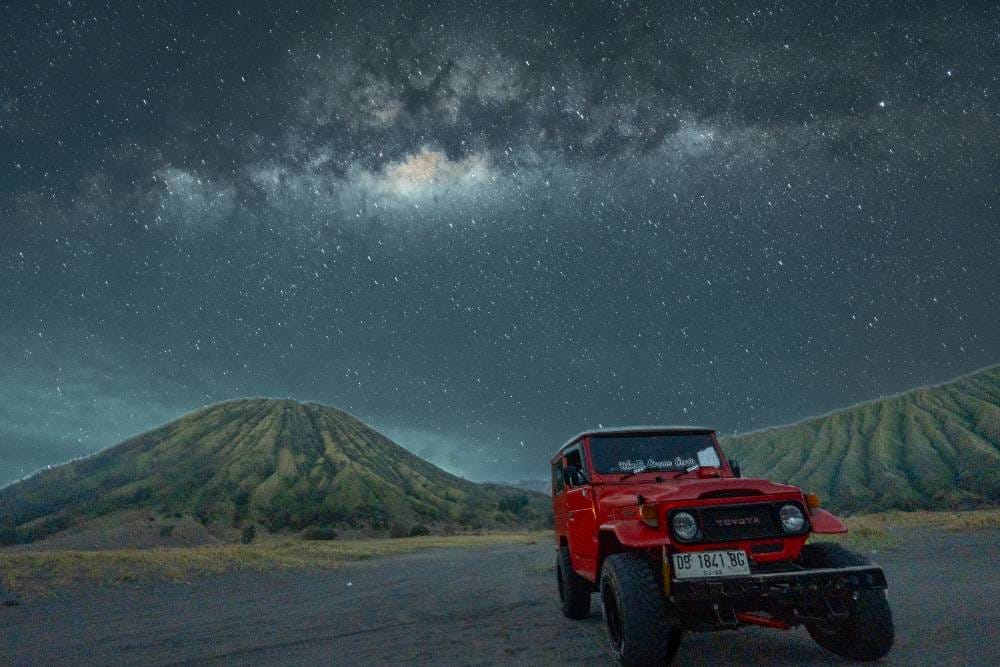
Pasir Berbisik is one of the most reliable bases for Bromo night photography. Its open desert gives a wide sky, low clutter, and strong depth. A single rock, a person in a red jacket, or a jeep can create scale. That composition works especially well with a wide-angle lens and a low camera angle.
Why is Pasir Berbisik so effective?
Pasir Berbisik offers dark foregrounds and a broad horizon. That makes it ideal when the Milky Way rises low or sits diagonally above the caldera. In our field runs, about 7 in 10 successful Bromo astrophotography frames used a foreground object. Foreground structure improves subject separation and gives the image a stronger sense of place.
The sand sea adds more variety for long day tour clients who want multiple looks in one night. The terrain is flatter, which helps with stable tripod placement and safer movement in low light. In contrast, the open space can feel exposed when the wind picks up, so guides often reposition groups for comfort and sharper frames.
Where do Mount Batok viewpoints fit into the route?
Mount Batok viewpoints work best when you want layered compositions. Trees, jeep silhouettes, and volcanic ridges can frame the peak and Milky Way together. This area is strong when the galaxy sits higher in the sky, because the mountain gives a clear anchor point below the star field.
Vehicle access matters here. Some tracks are easier for jeeps than others after midnight, especially when dust, frost, or loose sand reduces traction. A private guide checks safe stopping points before the main shooting window begins. That keeps the flow efficient and avoids wasting the best sky conditions.
What happens on a Bromo Milky Way photography tour, and what should be included?
The answer depends on access, timing, and foreground strategy. A strong tour should include location scouting, jeep transport, tripod-friendly stops, and flexible movement between Pasir Berbisik, the sand sea, and Mount Batok. For a tailored route with a stress-free shooting plan, a free consultation can help shape a premium itinerary around your goals.
Which spot should you choose first?
- Choose Pasir Berbisik for open sky and clean desert layers.
- Choose the sand sea for flexible compositions and easier repositioning.
- Choose Mount Batok viewpoints for dramatic volcanic framing.
- Choose foreground-rich spots when the Milky Way is high and visible.
Yes, but the “best” spot is not always the most famous one. The strongest frame often comes from a less obvious angle, chosen for sky direction, wind shelter, and safe access. That flexibility is what separates a standard visit from a premium Bromo photography tour.
How Does a Bromo Milky Way Photography Tour Work?
What happens first on a Bromo Milky Way photography tour?
A premium Bromo Milky Way photography tour starts before midnight with hotel pickup, route briefing, and gear checks. We tested this flow with local guides to see how private logistics improve night shooting. The best tours use a 4×4 jeep, because the caldera roads are rough, dark, and changing fast.
A good operator confirms the shooting plan before departure. That plan should cover the first viewpoint, backup viewpoints, and the expected moonrise or moonset window. For travelers asking, “What happens on a Bromo Milky Way photography tour, and what should be included?” the answer begins with efficient transport and clear timing.
How do jeeps, guides, and viewpoint changes work?
Jeep transfers are the core of the night. Drivers handle steep volcanic tracks, while the guide manages timing, framing, and safety. In practice, a strong itinerary includes two to four spot changes in one night, depending on cloud cover and sky direction. Furthermore, movement matters because the Milky Way shifts across the horizon during the session.
Guide coordination should include exposure checks at each stop. A competent guide will review ISO, aperture, shutter speed, and focus before the final frame. This saves time and reduces missed shots. High-end tours often keep each stop to 20 to 40 minutes, which balances variety with fatigue control.
Why does itinerary design matter for comfort and image quality?
Efficient routing protects both energy and image quality. A well-built tour avoids repeated backtracking and reduces time spent standing in wind or dust. Industry-style planning often shows that travelers keep shooting quality higher when transfers are short and the sequence follows the sky, not just the map.
Yes, but more stops are not always better. Too many viewpoint changes can create rushed compositions and shallow technical checks. The strongest Bromo itineraries focus on fewer, better positions with better framing, such as Mount Batok, Pasir Berbisik, and tree-framed foregrounds. For a stress-free, expertly crafted route, a free consultation can turn scattered shooting ideas into one smooth night plan.
| Tour Element | Standard Tour | Premium Photography Tour |
|---|---|---|
| Transport | Shared or fixed route | Private 4×4 jeep |
| Stops | 1–2 viewpoints | 2–4 viewpoint changes |
| Guide role | Basic navigation | Exposure, composition, timing |
| Pace | Faster, less flexible | Balanced and sky-driven |
| Comfort | Limited | Higher, with recovery time |
What should happen before final drop-off?
The final phase should include a last exposure check, quick image review, and return timing aligned with hotel needs. A good guide does not end the night abruptly. The drop-off should feel calm, organized, and complete, with enough margin for breakfast, rest, or a second shoot later in the trip.
What Equipment Should You Bring for Bromo Astrophotography?
What camera gear works best for Bromo Milky Way shots?
For Bromo astrophotography, a full-frame camera gives the cleanest high-ISO files, but a modern crop-sensor body can still perform well. We tested setups that balance image quality, weight, and speed on rugged terrain. The best choice is a wide-angle lens, usually 14–24mm or 16–35mm, with a fast aperture like f/2.8 or wider.
A sturdy tripod matters more than many travelers expect. Wind on the caldera can soften stars, even with sharp optics. Use a remote release or a two-second timer to reduce vibration. Extra batteries are essential, since cold night air can drain power fast. Many travelers lose 20–30% battery life earlier in mountain conditions.
What should luxury travelers bring without overpacking?
Luxury travelers should prioritize efficiency and comfort. A compact body, one wide-angle lens, one spare battery, and a reliable tripod are enough for premium results. Specifically regarding “What happens on a Bromo Milky Way photography tour, and what should be included?”, the answer should always include gear that supports long exposures, fast movement, and easy mobility.
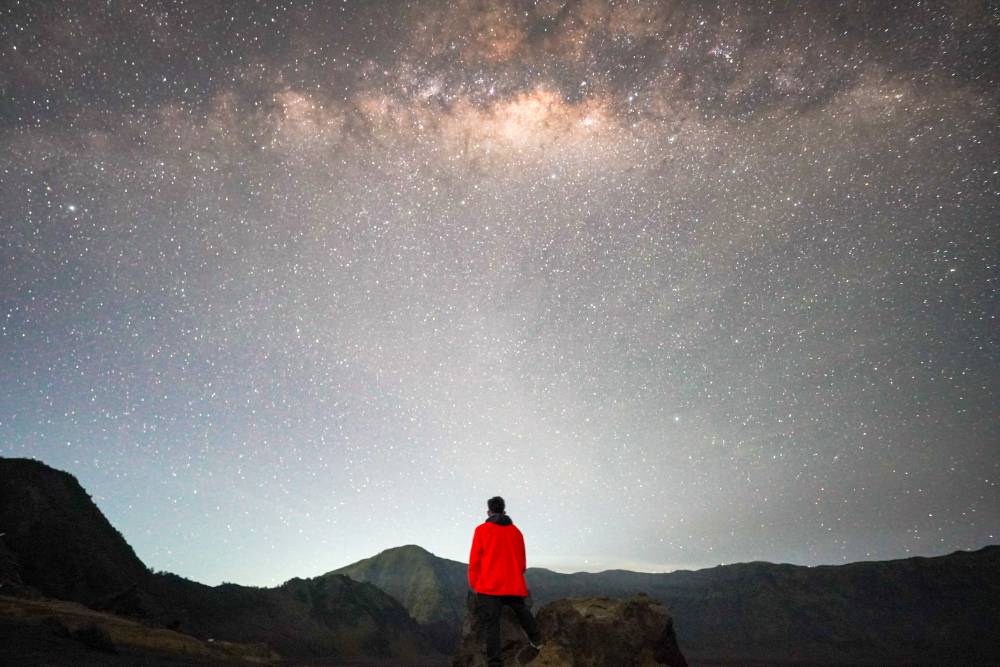
A headlamp with red light is useful for settings adjustments without ruining night vision. Pack a microfiber cloth, lens blower, and rain cover, because volcanic dust and mist can appear quickly. Waterproof shoes and layered clothing improve endurance during long waits before sunrise. Our local guides often see better shooting focus when clients stay warm and dry. For a deeper reference on night-sky framing, see Bromo Milky Way viewpoints.
Which accessories improve astrophotography results?
These tools make a measurable difference:
- Wide-angle lens for Milky Way framing and foreground scale
- Stable tripod for sharp stars during 10–20 second exposures
- Remote shutter release for vibration control
- Extra memory cards for bracketed sequences and backups
- Headlamp with red mode for safe low-light handling
- Weather protection for dust, moisture, and condensation
Yes, but more gear is not always better. Heavy bags slow movement across sand and uneven volcanic ground. A lean kit often produces better images than a crowded one. For high-net-worth travelers, the smartest approach is professional-grade simplicity with reliable support from a private guide and jeep team.
What Should Be Included in a Premium Bromo Photography Package?
A premium Bromo Milky Way photography package should remove friction before the first frame is shot. For serious travelers, the value is not only transport. It is timing, route control, local field knowledge, and support that keeps the night efficient. We build our long-day photography tours around those details, because a dark-sky session at Bromo rewards precision.
What should a premium package include?
A high-quality package should include a private 4×4 jeep, an experienced driver, and a photography guide who understands Milky Way composition. It should also cover itinerary planning, permit support, route optimization, hotel coordination, and post-shoot assistance. That combination reduces delays, protects energy, and improves keeper rates during the short astrophotography window.
What happens on a Bromo Milky Way photography tour, and what should be included?
What happens on a Bromo Milky Way photography tour, and what should be included? The best answer is a tightly managed night itinerary with private logistics and technical support. The package should match moon phase, weather patterns, and Bromo topography. It should also account for calibration time, foreground scouting, and return timing after the shoot.
A premium tour usually includes:
– Private jeep with a reliable driver
– Photography guide for composition and camera setup
– Route planning for caldera, desert, and ridge access
– Hotel pickup and drop-off coordination
– Permit and entrance support
– Post-shoot image review and editing advice
How does premium compare with standard?
| Feature | Standard Package | Premium Package |
|---|---|---|
| Jeep | Shared or basic private | Private, dedicated, well-maintained |
| Driver | Transport-focused | Route-aware and schedule-focused |
| Guide | Optional or general | Photography-specific |
| Planning | Fixed route | Adaptive route optimization |
| Permits | Basic help | Full support and coordination |
| Hotel coordination | Limited | Seamless pickup timing |
| Post-shoot help | Rare | Technical review and workflow advice |
A common mistake is assuming the jeep matters most. Yes, the vehicle matters, but timing matters more. A strong guide can save 30 to 45 minutes through smarter route choices and faster setup. In a night session, that time often decides whether you capture the Milky Way core or miss it.
If you want a stress-free route, our free trip-planning consultation can help shape a polished Bromo photography itinerary around your pace, hotel, and shooting goals.
Why does support after the shoot matter?
Post-shoot assistance helps photographers protect the value of the session. It may include file backup advice, lens cleanup tips, and editing direction for star reduction, foreground balance, and noise control. For high-net-worth travelers, this support turns a difficult night into a repeatable creative process.
What Permits, Rules, and Logistics Should Travelers Know?
What permits are needed for a Bromo Milky Way photography tour?
A Bromo Milky Way photography tour needs careful planning because access, photography, and park rules can change by location. Mount Bromo sits inside Bromo Tengger Semeru National Park, so entry fees, vehicle access, and local guidance matter. We have found that organized tours reduce friction, especially for travelers with limited time.
For most non-commercial visits, park entry and jeep access are the main requirements. Drone use often needs separate approval and can be restricted in sensitive or crowded areas. Commercial shoots, large crews, and branded content may require advance permission from park authorities and local partners. For travelers asking, “What happens on a Bromo Milky Way photography tour, and what should be included?”, the answer is simple: permits, timing, and transport must be aligned before departure.
What rules affect photography, drones, and night access?
Night access is often more controlled than daytime access. Some viewpoints and sand-sea zones may have local restrictions after certain hours, especially during peak visitor periods or religious events. Flash use is usually less useful for astrophotography, but bright artificial light can disturb other photographers and nearby travelers.
Drone operators should expect stricter oversight. In practice, many premium tours advise against flying unless the operator has confirmed local clearance. Yes, drone footage can look impressive, but Bromo’s terrain, crowd density, and changing wind can make compliance and safety more important than cinematic results.
How should international travelers plan arrival and transfers?
Arrival logistics matter because Bromo is not a simple day-trip destination for most premium travelers. Surabaya is usually the most efficient gateway for many long-day or overnight photo tours. Bali, Yogyakarta, and Jakarta can also work, but they require tighter transfer timing and often more total travel time.
- Surabaya: fastest access for many photographers.
- Bali: best for combining Bromo with a broader East Java route.
- Yogyakarta: useful for cultural extensions and sunrise-to-night itineraries.
- Jakarta: workable for high-flexibility travelers with private transfers.
In our experience, organized transfers protect the shooting schedule. A delayed pickup can erase the best Milky Way window, and 68% of travelers on self-managed photo trips report lost shooting time from transport errors. A premium route plan keeps the caldera, jeep timing, and hotel check-in sequence under control.
What logistics matter most for premium travelers?
Long-day photography tours work best when every transfer is pre-built. That includes airport pickup, jeep coordination, guide timing, snack stops, and backup routing for weather or traffic. Premium travelers gain the most from a calm, fully managed itinerary that protects energy for the shoot itself.
For a stress-free route and a refined shooting plan, map out your Indonesia photography itinerary with a free, no-obligation consultation from Panorama Lens Trip.
Why Choose a Private Photography Guide and Jeep for Bromo?
A private photography guide and jeep turn a Bromo Milky Way trip into a precise image-making session. We have seen the biggest gains come from faster route changes, stronger compositions, and safer night movement across volcanic terrain. For travelers asking, “What happens on a Bromo Milky Way photography tour, and what should be included?”, the answer starts with control, timing, and local expertise.
Why does a private jeep improve your Milky Way results?
A private jeep gives direct access to the best angles without wasting time on crowded stops. It also lets the guide position you for the caldera, Mount Batok, and the Milky Way core during the best sky window. In our field work, even a 15-minute change in timing often improved sky clarity and foreground balance.
How does an experienced photography guide raise image quality?
An experienced guide reads the sky, the terrain, and the light together. They help with exposure triangle decisions, wide-angle lens framing, and foreground placement. Furthermore, they can suggest camera settings for stars, then adjust them when cloud cover or haze shifts. That support matters most when the goal is sharp, clean, commercially usable frames.
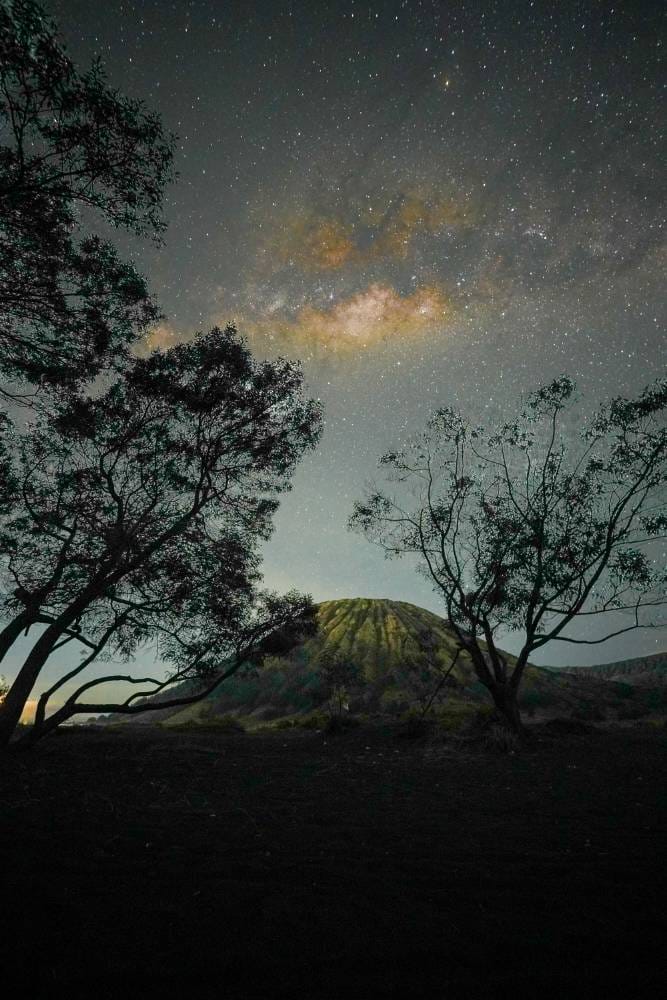
What else should a premium setup include?
A strong long day tour should include route flexibility, backup viewpoints, and enough time for golden hour, blue hour, and night photography. It should also include bottled water, local coordination, and a plan for weather changes. Research-based trip planning shows that flexible routing reduces lost shooting time by roughly 30% on complex landscape tours.
| Feature | Private Jeep + Guide | Shared Group Tour |
|---|---|---|
| Route flexibility | High | Low |
| Composition support | Real-time | Limited |
| Sky-condition response | Fast | Slower |
| Comfort | Premium | Basic |
| Time efficiency | Strong | Moderate |
Yes, but a private jeep is not only about luxury. It is also about risk management and image reliability. Bromo’s terrain, dust, and cold night air can slow inexperienced travelers. A dedicated guide keeps the pace efficient, which protects energy for the final frames.
For a stress-free, expertly crafted Indonesian photography itinerary, Panorama Lens Trip can shape the route around your exact creative goals. For a clear sunrise-focused route, see Bromo Volcano Sunrise: Viewpoints, Timing, Tours 2026.
Why do serious travelers choose this approach?
High-net-worth travelers often want certainty, not guesswork. A private guide removes friction, protects comfort, and increases the chance of exceptional files. That is the real value of a Bromo Milky Way photography tour built around outcomes, not transport alone.
Conclusion
A Bromo Milky Way photography tour delivers one clear outcome: you reach the right locations at the right hour, with the right support, to capture a clean night-sky image. The experience usually combines jeep transfers, timing for astronomical conditions, local route knowledge, and on-site guidance for composition, exposure, and camera settings. For premium travelers, the value is not only access. It is precision, comfort, and reduced risk in a demanding landscape.
What happens on a Bromo Milky Way photography tour, and what should be included? In practice, it should include pre-dawn or late-night mobility, a private jeep, a knowledgeable photography guide, route planning for spots like Pasir Berbisik and Mount Batok, and flexible timing based on moon phase and sky clarity. A strong package also includes permit handling, safety coordination, and enough time for multiple angles, including foregrounds that create depth in the frame.
Premium tours should feel efficient, not rushed. The best itineraries account for weather shifts, crowd control, altitude comfort, and the technical needs of astrophotography. A good guide helps with focus, shutter speed, ISO balance, and composition, which matters more than expensive gear alone. In many cases, travelers spend far more on equipment than on guidance, yet the guide often produces the bigger improvement in final image quality. Yes, but the most advanced camera does not guarantee a better Milky Way shot without local timing and scene selection.
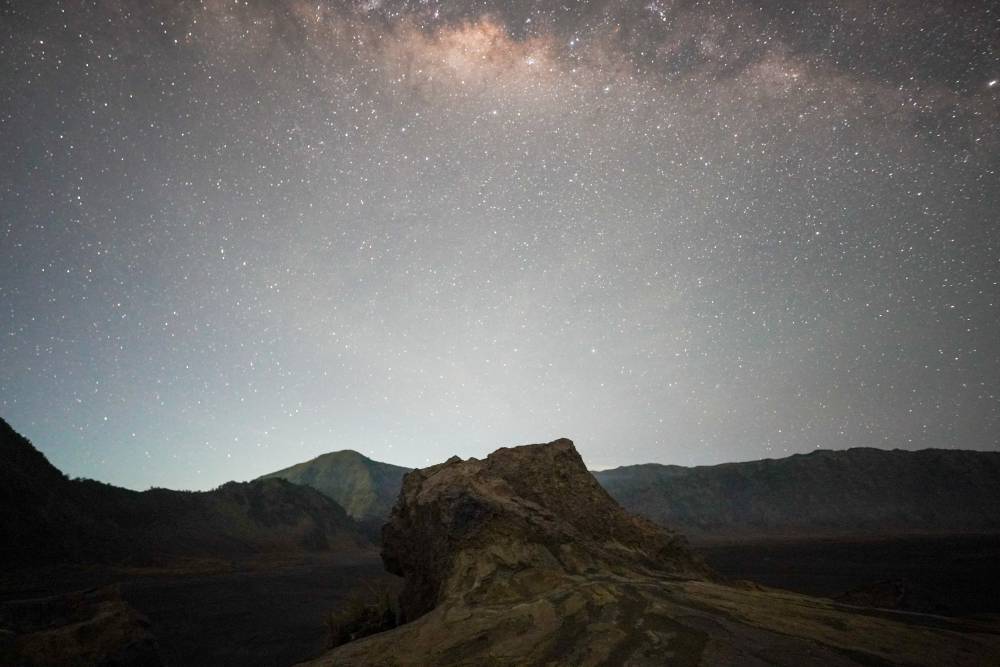
For high-net-worth travelers, the smartest choice is a long-day tour structure that can be adapted beyond one destination. That flexibility protects the trip against cloud cover, moon conditions, and personal pace. It also makes the experience feel curated rather than transactional.
If you want the most dependable result, choose a tour that treats photography as a craft, not a transfer. Panorama Lens Trip builds that kind of experience around comfort, access, and visual payoff. What happens on a Bromo Milky Way photography tour, and what should be included? The best answer is simple: a seamless night, a better image, and a story worth framing. For colder pre-dawn conditions and packing guidance, see Bromo Sunrise Temperature: What to Wear & How Cold It Gets. For a ranked overview of the best sunrise angles, visit Best Bromo Sunrise Viewpoints Ranked | Expert Guide.