
I spent three days aboard a traditional klotok boat navigating Borneo’s Sekonyer River. I tracked wild orangutans across three feeding camps—Camp Tanjung Harapan, Pondok Tanggui, and Camp Leakey. Each camp has its own dominant male: Roger, Silent, and Nova. I trekked rainforest trails at night discovering nepenthes plants and ancient Dayak weapons. I photographed proboscis monkeys at dawn and flew drones over blackwater rivers. My 3-day tour cost approximately $600 – 1,000 USD including klotok accommodation, meals, park fees, and ranger-guided feeding sessions. Book during dry season (May-September) for best Borneo orangutan tour sightings, though fruit season may reduce feeding camp attendance.
I stood on the wooden deck of my klotok boat as it sliced through the black water of Borneo’s Sekonyer River. The humidity wrapped around me like a warm towel. Proboscis monkeys crashed through branches overhead. This was my first moment entering Tanjung Puting National Park for a Borneo orangutan tour. I had traveled from Pangkalan Bun airport specifically to witness wild orangutans in Central Kalimantan’s last remaining wilderness. Over three days, I would track orangutans across three feeding camps, sleep on a traditional river boat, and trek rainforest trails that few tourists experience. This guide contains everything I learned during my expedition through one of Indonesia’s most important orangutan conservation areas.
What Is a Borneo Orangutan Tour in Tanjung Puting?
A Borneo orangutan tour in Tanjung Puting is a multi-day klotok boat expedition through Central Kalimantan’s protected rainforest. Visitors travel by traditional wooden boat along the Sekonyer River. Rangers guide tourists to three main feeding stations where semi-wild orangutans gather. The standard tour lasts 2-3 days with overnight accommodation aboard the klotok. Tours include ranger-led jungle trekking, wildlife photography opportunities, and educational sessions about orangutan conservation.
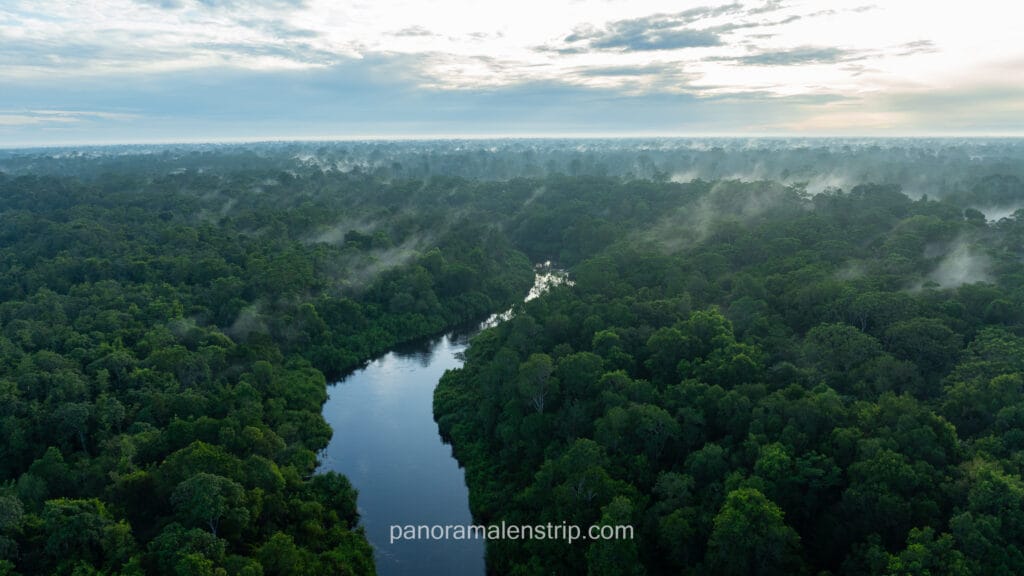
I boarded my klotok at Kumai Harbour at 10 AM. The boat crew consisted of a captain, cook, and local guide. My klotok measured approximately 10 meters long with a covered sleeping area, dining space, and open-air observation deck. The wooden vessel moved slowly upstream against the current. I watched the riverbanks transform from residential areas to dense primary rainforest. The water turned from muddy brown to tea-colored black as tannins from peat swamps darkened the river. This color change signaled our entry into genuine wilderness.
My three-day itinerary included visits to Camp Tanjung Harapan, Pondok Tanggui, and Camp Leakey. Each feeding camp operates at different times. Rangers maintain these stations to supplement orangutan diets and facilitate research. I learned that approximately 6,000 orangutans inhabit Tanjung Puting. The feeding camps allow researchers to monitor health, behavior, and population dynamics. Tourists observe from designated platforms maintaining a mandatory 15-meter distance.
Also read: Best Time to See Orangutans in Borneo: Fruit Seasons & Weather
How Do You Reach Tanjung Puting National Park?
Getting to Pangkalan Bun Airport
The primary gateway is Iskandar Airport in Pangkalan Bun, Central Kalimantan. Direct flights operate from Jakarta (2 hours), Surabaya (1.5 hours), and Semarang. Garuda Indonesia, Lion Air, and Sriwijaya Air service this route daily. I flew from Jakarta’s Soekarno-Hatta International Airport on a morning departure. The flight crossed Java Sea before descending over Borneo’s endless green canopy.
I arrived at Iskandar Airport around 11 AM. The small terminal processed passengers quickly. No international flights land here, so immigration is straightforward for domestic travelers. I collected my camera equipment and waterproof bags from baggage claim. The airport sits approximately 25 kilometers from Kumai Harbour where klotok boats depart. Taxis wait outside the terminal offering fixed-price transfers.
Transfer from Airport to Kumai Harbour
I hired a taxi directly from the airport arrival area. The driver quoted 150,000 Indonesian Rupiah (approximately $10 USD) for the 15-minute journey to Kumai Harbour. The road quality was decent with minimal traffic. We passed through Pangkalan Bun town with its markets and residential neighborhoods. Palm oil plantations lined sections of the route.
The taxi dropped me at the klotok dock area around 11:30 AM. My boat crew was already waiting with provisions loaded. I stepped aboard my klotok exactly at the scheduled 10 AM departure time after brief introductions. Most tour operators coordinate airport pickup and transfer as part of their package. I recommend confirming these logistics before arrival to avoid confusion at the small airport and in your Borneo orangutan tour.
What Should You Expect on Day 1: Camp Tanjung Harapan?
The Klotok Journey to Tanjung Harapan
My klotok departed Kumai Harbour heading upstream along the Sekonyer River. The journey to Camp Tanjung Harapan requires 2 to 2.5 hours depending on current and water levels. During this time, I sat on the open deck watching the landscape transition. Initially, we crossed the main Sekonyer River where fishing boats operated near residential areas. Gradually, the river narrowed as we penetrated deeper into Tanjung Puting.
As we progressed, I observed the water color shift dramatically. Near Kumai, the river appeared muddy brown from sediment. However, as we traveled upstream, tannins from decomposing peat turned the water dark like strong tea. Meanwhile, the forest canopy closed overhead in sections creating tunnels of green. Soon after, I spotted my first wildlife—long-tailed macaques drinking at the riverbank. Above us, a Brahminy kite circled hunting for fish. Throughout the journey, the humidity intensified under the forest cover. I estimated temperature around 32 degrees Celsius with 80 percent humidity.
Finally, we arrived at Camp Tanjung Harapan wharf around noon. The wooden dock extended from the riverbank into a small clearing. Nearby, a ranger station and tourist information post sat among the trees. Upon arrival, I disembarked to explore the visitor center. Inside, educational displays explained orangutan biology and conservation status. At the entrance, a large orangutan statue marked the trailhead to the feeding platform.

Afternoon Feeding Session with Roger
At 2 PM, my guide assembled our group for the trek to the feeding area. The trail required approximately 15 minutes of moderate hiking through primary rainforest. The path was well-maintained but muddy in sections. I wore closed-toe hiking shoes that gripped the slippery wooden boardwalks. The forest canopy blocked most direct sunlight creating dim, filtered green light.
We reached the feeding platform at 2:45 PM. Rangers had already prepared fruit—primarily bananas and sometimes sweet potatoes. At exactly 3 PM, the ranger began calling orangutans using a distinctive vocal pattern. I learned that only authorized rangers can call orangutans to feeding areas. Within minutes, Roger appeared in the canopy. Roger is the dominant male orangutan controlling this territory. His massive cheek pads identified him as a fully mature flanged male.
Roger descended slowly, brachiating between branches with remarkable strength. He weighed approximately 90 kilograms based on ranger estimates. His reddish-brown hair appeared darker in the humidity. Roger approached the feeding platform maintaining awareness of human observers. He selected bananas methodically, peeling each one with practiced fingers. I maintained the mandatory 15-meter distance while photographing with my telephoto lens. The ranger enforced strict rules: no smoking, no loud talking, no sudden movements. These protocols protect both visitors and orangutans.
Several juvenile orangutans joined Roger during the 45-minute feeding session. They exhibited playful behavior, swinging between trees and mock-wrestling. I observed their remarkably human-like expressions and problem-solving abilities. One juvenile used a stick to probe a tree hollow searching for insects. After feeding concluded around 4 PM, Roger retreated into the canopy. The juveniles lingered briefly before dispersing.

Night Trekking Experience
I returned to my klotok around 4:30 PM for rest and preparation. After dinner at 6 PM, a specialized night guide arrived for the evening jungle trek. Night trekking revealed completely different flora and fauna compared to daytime. I equipped myself with a headlamp, long-sleeve jacket for mosquito protection, and anti-insect lotion containing at least 30 percent DEET.
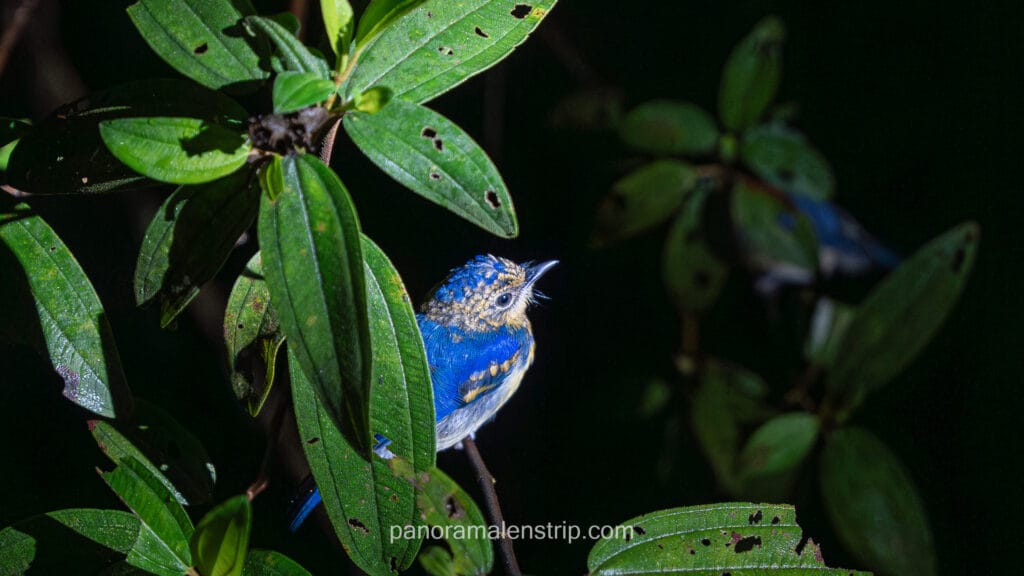
We departed at 7 PM when darkness had fully settled. My headlamp beam illuminated the trail ahead. The forest transformed into an alien landscape of shadows and sounds. Nocturnal insects created a constant chirping symphony. I photographed unique carnivorous nepenthes plants growing from tree trunks. These pitcher plants displayed vibrant colors—deep reds, purples, and greens. My guide explained that Dayak people traditionally drink water collected inside closed nepenthes pitchers, believing it has medicinal properties. I sampled the clear liquid which tasted slightly acidic but refreshing.
We discovered pakis ferns used in traditional Borneo handicrafts. The guide pointed out sleeping birds tucked into branches and a slow loris moving through the canopy. The night trek lasted approximately one hour. I returned to my klotok around 8 PM, exhausted but exhilarated. The crew had prepared my sleeping area with mosquito netting. That night, I fell asleep to the sounds of boats passing nearby and nocturnal wildlife calling. We were still relatively close to residential areas on this first night.
What Happens on Day 2: Pondok Tanggui Exploration?
Morning Journey and Drone Photography
I woke at dawn to proboscis monkey calls echoing across the river. These distinctive primates vocalized with deep honking sounds. The morning air felt fresh and cool before the day’s heat arrived. I stepped onto the klotok deck to observe the sunrise. Golden light filtered through morning mist rising from the river. I launched my drone to capture aerial footage of the surrounding wilderness. The bird’s-eye view revealed the true scale of Tanjung Puting’s rainforest canopy.
After breakfast at 7 AM, our klotok began the journey to Pondok Tanggui. This second feeding camp sits approximately 2 hours upstream from Camp Tanjung Harapan. I positioned myself on the anjungan, the traditional open-air platform at the boat’s front. This vantage point offered unobstructed views as we navigated the winding river. The vegetation grew noticeably thicker. Primary rainforest pressed close to both riverbanks. I felt the profound isolation of true wilderness.

Meeting Silent: The Pondok Tanggui King
We arrived at Pondok Tanggui around 9 AM. The trekking trail to this feeding camp required approximately 20 minutes through dense jungle. I moved slowly, pausing frequently to photograph unusual plants along the path. I discovered multiple species of nepenthes pitcher plants displaying various colors and sizes. Some pitchers measured over 20 centimeters long with elaborately patterned lids.
Halfway to the feeding platform, we encountered Silent. This dominant male orangutan controlled the Pondok Tanggui territory. Silent appeared massive—even larger than Roger. His presence commanded immediate respect. Despite orangutans being naturally solitary animals, Silent demonstrated remarkable intelligence in social situations. He shared feeding space with several females and juveniles without aggression. This behavior indicated high cognitive adaptation.
I observed Silent for nearly an hour during the feeding session. He consumed bananas and vegetables methodically. His movements appeared deliberate and calm, befitting his name. Younger orangutans watched him carefully, learning feeding techniques through observation. Rangers explained that Silent has been monitored for over 15 years, providing crucial long-term behavioral data.
The Alternative Trail Discovery
After feeding concluded, my guide suggested an alternative return route. This longer trail exposed me to additional ecosystem elements. I discovered a venomous tree species that Dayak peoples have traditionally used for their sumpit—traditional blowgun weapons. The tree’s toxic sap served as arrow poison for hunting and warfare. Interestingly, this same tree provides protective habitat for small birds and mammals hiding from predators.
Along the trail, I found evidence that orangutans are omnivorous. A destroyed bee hive hung from a branch with honeycomb scattered below. Orangutans had clearly raided this hive for protein-rich larvae and honey. My guide confirmed that orangutans occasionally supplement their primarily frugivorous diet with insects, bird eggs, and small vertebrates. As we approached the klotok, Silent appeared one final time in the middle of the trail. His body language seemed to communicate a farewell message, as if saying “safe travels through our forest.”

How Is Day 3 Different: Camp Leakey Experience?
The Journey to Camp Leakey
After lunch on day two, we departed for Camp Leakey. This final feeding camp required approximately one hour of upstream navigation. I noticed the river becoming progressively narrower. Vegetation grew so dense that branches occasionally brushed our klotok’s roof. The water appeared significantly blacker here compared to downstream sections. This indicated we had reached the heart of peat swamp forest.
Midway to Camp Leakey, we stopped for my final drone flight. Strict regulations prohibit drone usage near Camp Leakey feeding areas. The aerial noise disturbs orangutan behavior and violates park conservation rules. I launched my drone from the klotok capturing footage of the blackwater river snaking through unbroken rainforest. The aerial perspective revealed why this ecosystem is called “the lungs of Borneo.” Literally millions of trees extended to every horizon.

As I retrieved my drone, heavy rain began falling. The downpour intensified rapidly, which I had hoped would happen to experience different weather conditions during my trip. Rain drummed against the klotok’s metal roof creating a deafening percussion. We continued sailing as water streamed off the forest canopy. I put on my waterproof rain jacket anticipating a wet arrival at Camp Leakey.
Nova’s Kingdom: The Main Feeding Camp
We arrived at Camp Leakey wharf as rain continued falling steadily. I donned full rain gear before disembarking. The trail to this feeding area differed dramatically from the previous camps. A wooden boardwalk stretched 1.3 kilometers through the swamp forest. Walking this elevated pathway in the rain created an otherworldly atmosphere. Water dripped from every surface. The forest appeared darker and more primeval under storm clouds.
Camp Leakey is Tanjung Puting’s most famous research station. Dr. Biruté Galdikas established this site in 1971, making it one of the world’s longest-running orangutan research programs. The feeding platform accommodated many more visitors than the previous camps. I joined tourists from one-day tour packages and numerous Indonesian domestic visitors. This created a more crowded, less intimate experience compared to Tanjung Harapan and Pondok Tanggui.
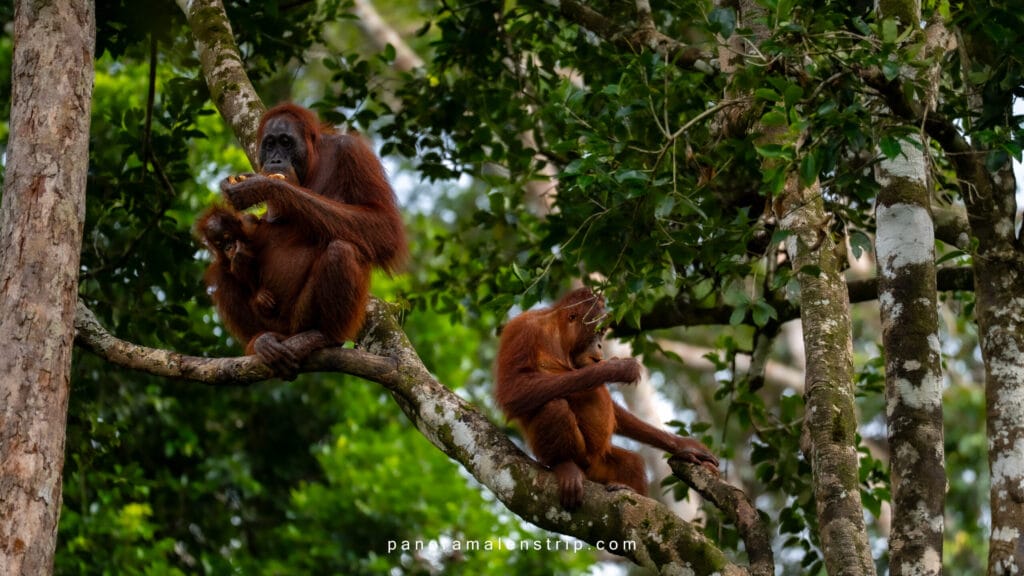
Nova, the dominant male here, presided over the feeding session with imperial authority. He appeared even more massive than Silent. Nova’s enormous cheek pads extended beyond his face width, indicating peak male development. He fed deliberately, ignoring the crowd of observers. Several females with clinging infants attended the feeding. I photographed a mother orangutan carefully sheltering her baby from the rain using a large leaf as an umbrella. This tool-use behavior demonstrated the advanced intelligence that makes orangutans so fascinating.
The Return Journey
Walking back along the 1.3-kilometer boardwalk, I encountered long-tailed macaques sitting directly on the wooden planks. These monkeys appeared unafraid of humans, likely habituated from years of tourist traffic. Their body language conveyed a message I interpreted as “save our planet.” Whether this was anthropomorphism or genuine communication, the encounter reinforced the conservation importance of protecting this ecosystem.
We returned to our klotok in late afternoon. The crew sailed to an overnight mooring point midway between Camp Leakey and Kumai Harbour. This final night aboard the klotok felt different. We had penetrated deep into wilderness and were now returning to civilization. I spent the evening reviewing thousands of photographs and drone footage captured over three days. The morning of day four, we continued sailing downstream. By noon, we arrived back at Kumai Harbour where my Borneo orangutan tour expedition concluded.
What Are the Essential Rules for Borneo Orangutan Tours?
Tanjung Puting National Park enforces strict regulations protecting orangutans and visitors. These rules exist for ethical wildlife viewing and conservation science. I observed rangers enforcing these protocols consistently across all three feeding camps. Violating regulations can result in expulsion from the park or legal penalties under Indonesian conservation law.
The mandatory 15-meter distance rule proved most critical. Orangutans share 97 percent of human DNA, making them susceptible to human diseases including influenza and COVID-19. Close contact could transmit pathogens potentially devastating to wild populations. Rangers carried measuring sticks to enforce spacing. I used telephoto lenses (200-400mm focal length) for close-up photography while maintaining safe distance.
| DO | DON’T |
| Maintain 15-meter minimum distance from all orangutans | Never approach, touch, or feed orangutans directly |
| Follow ranger instructions immediately and completely | Do not smoke anywhere near feeding areas |
| Speak quietly and move slowly around orangutans | Never yell, shout, or make sudden loud noises |
| Photograph orangutans using telephoto lenses only | Do not use flash photography at feeding platforms |
| Pack out all trash and leave no trace behind | Never fly drones near Camp Leakey feeding areas |
Rangers explained that only authorized personnel can call orangutans to feeding platforms. This prevents habituation to tourist voices and maintains research protocol integrity. I watched rangers use specific vocal patterns developed over decades. Different calls elicited different responses from individual orangutans. This sophisticated communication system demonstrates the deep relationship between researchers and study subjects.

What Should You Pack for a Tanjung Puting Tour?
Packing appropriately determines comfort and safety during a Borneo orangutan tour. Tanjung Puting’s climate features high humidity (75-90 percent), temperatures around 28-32 degrees Celsius, and potential rain any time of year. I learned through experience which items proved essential versus unnecessary. The klotok provides basic sleeping mats and mosquito nets but limited storage space dictates minimalist packing.
| Category | Essential Items | My Notes |
| Clothing | Quick-dry pants, long-sleeve shirts, rain jacket, closed-toe hiking shoes | Lightweight, moisture-wicking fabrics essential. Cotton stays wet. |
| Photography | Camera body, 200-400mm telephoto lens, extra batteries, memory cards, waterproof bags | Humidity damages electronics. Silica gel packets recommended. |
| Night Trekking | LED headlamp with spare batteries, flashlight backup | Hands-free lighting crucial for jungle trails. |
| Insect Protection | 30%+ DEET lotion, permethrin-treated clothing, mosquito head net | Malaria risk exists. Consult travel medicine clinic. |
| Sun Protection | SPF 50+ sunscreen, wide-brimmed hat, sunglasses with UV protection | River reflection intensifies UV exposure significantly. |
| Health | Prescription medications, anti-diarrheal, oral rehydration salts, basic first aid kit | No pharmacies near park. Bring complete medical supplies. |
| Miscellaneous | Dry bags, portable power bank, water bottle, binoculars | Klotok has limited electrical outlets for charging devices. |
For serious wildlife photographers, I recommend bringing multiple camera bodies and lenses. My setup included a full-frame DSLR with 100-400mm zoom lens for orangutan photography and a wide-angle lens (16-35mm) for landscape shots. I also packed a lightweight drone (DJI Mavic series) for aerial photography, though drone usage is restricted near Camp Leakey. Extra batteries proved essential as charging opportunities on the klotok were limited to evening hours when the generator ran.
How Much Does a Borneo Orangutan Tour Cost?
Borneo orangutan tour costs vary significantly based on duration, group size, and accommodation quality. Standard 3-day klotok tours range from $400-600 USD per person for groups of 4-6 people. Solo travelers or couples pay premium rates around $800-1,200 USD for the same itinerary. These prices include klotok boat rental, crew salaries, all meals, park entrance fees, ranger fees, and guided trekking. International flights to Indonesia and domestic flights to Pangkalan Bun cost extra.
| Tour Type | Duration | Cost (USD) | What’s Included |
| Budget 1-Day | 8-10 hours | $80-120 | Camp Leakey only, lunch, basic guide |
| Standard 2-Day | 2 days/1 night | $300-450 | Two camps, klotok sleep, all meals, ranger fees |
| Standard 3-Day | 3 days/2 nights | $400-600 | All three camps, night trek, full meals, permits |
| Luxury 3-Day | 3 days/2 nights | $1,200-2,000 | Premium klotok, private guide, gourmet meals, AC |
I paid $525 USD for my 3-day tour as part of a group of five travelers. This mid-range package included a comfortable klotok with mattresses and mosquito nets, three meals daily prepared by an onboard cook, experienced English-speaking guide, all park entrance fees, and ranger-guided sessions at each feeding camp. The price did not include tips for crew (I budgeted an additional $50 USD), personal expenses, or alcoholic beverages.
High-net-worth travelers seeking luxury experiences can book private klotoks with air-conditioned cabins, Western-style bathrooms, professional wildlife photography guides, and customized itineraries. These premium tours cost $1,500-3,000 USD for 3-4 days. Some operators offer helicopter transfers from Pangkalan Bun directly to luxury riverside lodges near the park, though this significantly increases environmental impact.
When Is the Best Time for Borneo Orangutan Tours?
The optimal period for Borneo orangutan tours runs from May through September during the dry season. Rainfall decreases significantly compared to monsoon months (November-March). Trails remain passable and river water levels stay navigable. I visited during late dry season experiencing only one afternoon of heavy rain. Daytime temperatures averaged 30-32 degrees Celsius with lower humidity than wet season.
Orangutan behavior varies seasonally based on fruit availability. During fruiting season (typically June-August), wild orangutans find abundant natural food in the forest canopy. This reduces their attendance at feeding platforms. Rangers explained that some days no orangutans appear at camps during peak fruiting periods. They survive entirely on wild figs, durians, and other rainforest fruits. Conversely, during low-fruit periods (September-November), orangutans visit feeding platforms more reliably seeking supplemental nutrition.
I traveled in early October transitioning between seasons. This timing offered balanced conditions—moderate orangutan attendance at feeding camps plus occasional rain creating dramatic atmospheric conditions for photography. The rain I experienced on day three added authentic jungle expedition character without disrupting the overall itinerary. Water levels remained suitable for klotok navigation throughout.
Wildlife photographers should consider the wet season (December-February) despite higher rainfall. This period produces lush green vegetation, dramatic storm clouds, and active wildlife behavior. Orangutans appear more energetic during rains. However, flooding can close trails and make certain camps inaccessible. Wet season tours require greater flexibility and rain-tolerant equipment. Some tour operators offer discounted rates during these months acknowledging increased weather uncertainty.
FAQ: Your Borneo Orangutan Tour Questions Answered
Can orangutans be aggressive during feeding sessions?
Orangutans rarely display aggression toward humans at feeding platforms. I observed peaceful behavior throughout all sessions. Dominant males like Roger, Silent, and Nova maintain social hierarchies among orangutans but ignore human observers. Rangers enforce the 15-meter distance rule preventing potential conflict situations. Aggression primarily occurs between competing adult males during mating season. Female orangutans with dependent infants may display defensive postures if approached too closely, which is why ranger supervision remains critical.
Is klotok accommodation comfortable for Western travelers?
Klotok accommodation is basic but adequate for short expeditions. My boat featured thin mattresses on a wooden platform with mosquito netting. No air conditioning exists—only natural ventilation. The bathroom consisted of a squat toilet and bucket bathing system. I found sleeping surprisingly peaceful despite minimal amenities. The authentic experience outweighed comfort concerns. Luxury travelers should book premium klotoks with upgraded facilities or consider combining klotok tours with land-based lodge stays.
Do I need a guide or can I visit independently?
Independent visits to Tanjung Puting are not permitted. All tourists must hire licensed guides and book through registered tour operators. Park regulations require ranger accompaniment at feeding platforms. Klotok captains need proper permits to navigate park waters. Attempting independent entry violates Indonesian conservation law and risks substantial fines. I recommend booking reputable tour operators in Pangkalan Bun or online through established ecotourism companies.
What wildlife besides orangutans will I see?
Tanjung Puting hosts diverse wildlife beyond orangutans. I observed proboscis monkeys, long-tailed macaques, silver leaf monkeys, and gibbons daily. Birdlife includes hornbills, kingfishers, Brahminy kites, and various tropical species. Crocodiles inhabit the river though sightings are rare. Monitor lizards sun themselves on riverbanks. Night treks reveal nocturnal species like slow lorises, flying squirrels, and insects. The ecosystem contains over 200 bird species and numerous endemic Borneo mammals.
Are Borneo orangutan tours suitable for children?
Families with children aged 8 and above typically manage well on standard tours. Younger children may struggle with trekking distances, heat, and basic accommodation. I observed several families on my tour with children ages 10-15 who thoroughly enjoyed the experience. Parents should assess their children’s tolerance for jungle conditions, insects, and limited entertainment options. Educational borneo orangutan tour value is exceptional for school-age children interested in wildlife and conservation.
How physically demanding is the trekking?
Trekking difficulty ranges from easy to moderate. The longest trek at Camp Leakey spans 1.3 kilometers on wooden boardwalks. Pondok Tanggui requires 20 minutes through muddy jungle trail with some elevation gain. Tanjung Harapan involves just 15 minutes on maintained paths. Heat and humidity create the primary challenge rather than distance or terrain. I recommend basic fitness for comfort though the pace is very slow with frequent photography stops.
What vaccinations are required for visiting Tanjung Puting?
Indonesia requires no mandatory vaccinations for most travelers. However, medical professionals recommend typhoid, hepatitis A, hepatitis B, and tetanus vaccines. Malaria prophylaxis is advisable as Tanjung Puting lies in a malaria-endemic zone. I took anti-malarial medication starting one week before arrival. Consult a travel medicine clinic at least 6-8 weeks before departure for personalized recommendations based on your medical history and itinerary.
Can I see wild orangutans outside the feeding platforms?
Wild orangutan encounters occur occasionally during klotok travel and trekking. I spotted two orangutans building nests in trees far from feeding camps. These sightings are unpredictable and brief. The feeding platforms provide guaranteed orangutan viewing opportunities under controlled conditions. Truly wild orangutans avoid human contact and inhabit deep forest areas inaccessible to tourists. The semi-wild orangutans at feeding camps bridge research and tourism objectives effectively.

Why This Borneo Orangutan Tour Changed My Perspective
My three days aboard a klotok transformed my understanding of conservation tourism. I witnessed the delicate balance between protecting endangered orangutans and enabling educational tourism. The feeding camps serve dual purposes—supplementing orangutan nutrition during low-fruit periods and providing researchers access to study populations. Tourist fees directly fund ranger salaries and park infrastructure. This model demonstrates how sustainable ecotourism Borneo orangutan tour can support conservation rather than exploit it.
I left Tanjung Puting with profound respect for orangutan intelligence and vulnerability. Watching Roger, Silent, and Nova navigate their territories revealed complex social dynamics in supposedly solitary animals. These great apes face existential threats from palm oil plantations, logging, and habitat fragmentation. Borneo has lost over 50 percent of its rainforest in my lifetime. Organizations like the Orangutan Foundation International work to preserve remaining wilderness. Your visit directly supports these efforts.
For high-net-worth travelers seeking authentic wildlife Borneo orangutan tour experiences, I recommend the 3-day klotok tour over shorter alternatives. The extra time allows deeper forest penetration, multiple orangutan encounters, and genuine wilderness immersion. Budget $500-600 USD for standard tours or $1,500-2,500 USD for luxury private expeditions. Book during dry season (May-September) for optimal conditions. Hire reputable operators committed to ethical wildlife tourism practices. This journey will challenge your comfort zone while rewarding you with irreplaceable memories of Earth’s last wild orangutans.


