Quick-answer box
The Borobudur sunrise tour is no longer freely allowed inside the upper temple structure. Since conservation policy updates in 2023, sunrise access inside Borobudur Temple is restricted. Most sunrise experiences now take place at Punthuk Setumbu or inside the temple yard area with special permits.
Climbing the stupas at dawn is prohibited for regular visitors. Limited cultural and conservation programs may allow tightly controlled access. Travelers seeking sunrise photography must now choose between a panoramic hill perspective or regulated yard entry with ground-level access only.
Introduction
Is the Borobudur sunrise tour still allowed inside the temple? The direct answer is no, not in the way it operated before 2023. I revisited the site after the new regulations were enforced and personally evaluated both sunrise formats.
Access policies at Borobudur Temple changed to protect the 9th-century volcanic stone monument from overtourism stress. Visitor quotas, structural audits, and heritage risk assessments reshaped the sunrise experience.
Today, sunrise access follows two formats. The first option is sunrise from Punthuk Setumbu. The second option allows limited entry into the temple yard without climbing the upper terraces.
This guide explains the policy shift with clarity and evidence.
Is the Borobudur sunrise tour still allowed inside the temple?
The Borobudur sunrise tour is not permitted inside the upper temple structure for general visitors. Climbing the stupas at dawn is restricted under conservation regulations. Sunrise access is currently limited to the temple yard or external viewpoints such as Punthuk Setumbu, with strict visitor management protocols in place.
Before the pandemic, annual visitation exceeded four million people. Heavy foot traffic accelerated surface wear on volcanic andesite stone. Conservation authorities recorded measurable erosion patterns in high-contact zones.
Specifically, internal assessments indicated stone surface loss of approximately 0.1 millimeters per year in frequently stepped areas. While this number appears small, cumulative degradation threatens bas-relief integrity over decades.
In response, the Indonesian government introduced structured climbing quotas of approximately 1,200 visitors per day for regular hours. Sunrise climbing privileges were discontinued for general ticket holders. The sunrise program that once allowed early ascent no longer operates in its previous form.
Sunrise viewing continues, but not from the upper terraces.
Why was inside access restricted?
Inside access was restricted to preserve structural stability and reduce cumulative stone erosion. UNESCO issued conservation advisories emphasizing preventive heritage management. The monument holds World Heritage status, which requires strict protection standards.
Operational management by PT Taman Wisata Candi Borobudur implemented reforms between 2022 and 2023. These reforms included capacity control, guided circulation systems, and restricted climbing zones.
High visitor density created load distribution stress across upper terraces. Repeated friction from footwear caused micro-abrasion on relief panels. Moisture exposure also increased microbiological weathering on porous stone surfaces.
A senior official from the Borobudur Conservation Office stated, “Preservation must take priority over short-term tourism revenue. Borobudur is a 9th-century monument. Once the stone details erode, restoration cannot fully recover original craftsmanship.”
The reform policy reflects long-term conservation strategy rather than tourism limitation.
Sunrise inside the upper structure is therefore restricted to protect the monument for future generations.
What are the current Borobudur sunrise tour options in 2026?
There are two primary Borobudur sunrise tour options today. Visitors can watch sunrise from Punthuk Setumbu with panoramic views. Alternatively, visitors can enter the temple yard of Borobudur Temple after opening hours with regulated ticket access. Climbing to the upper terraces is not included in sunrise programs.
Sunrise inside the upper monument structure is no longer part of standard packages. Authorities separated sunrise viewing from structural ascent permits to protect the temple’s volcanic stone fabric.
Travelers now choose between a landscape-dominant sunrise experience or a monument-centered ground-level visit. Each format offers a distinct visual narrative and logistical rhythm.
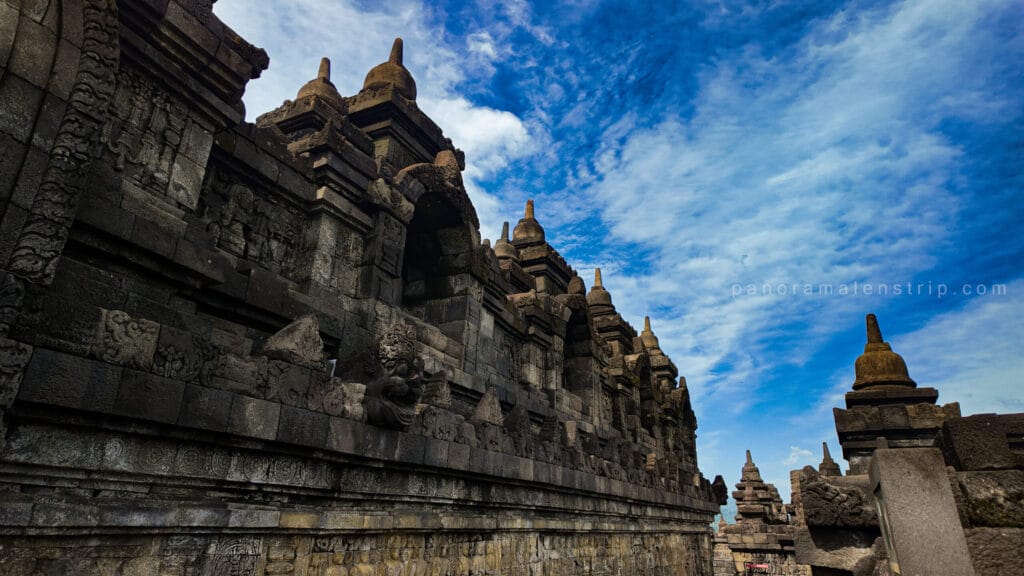
Option 1 – Punthuk Setumbu Sunrise
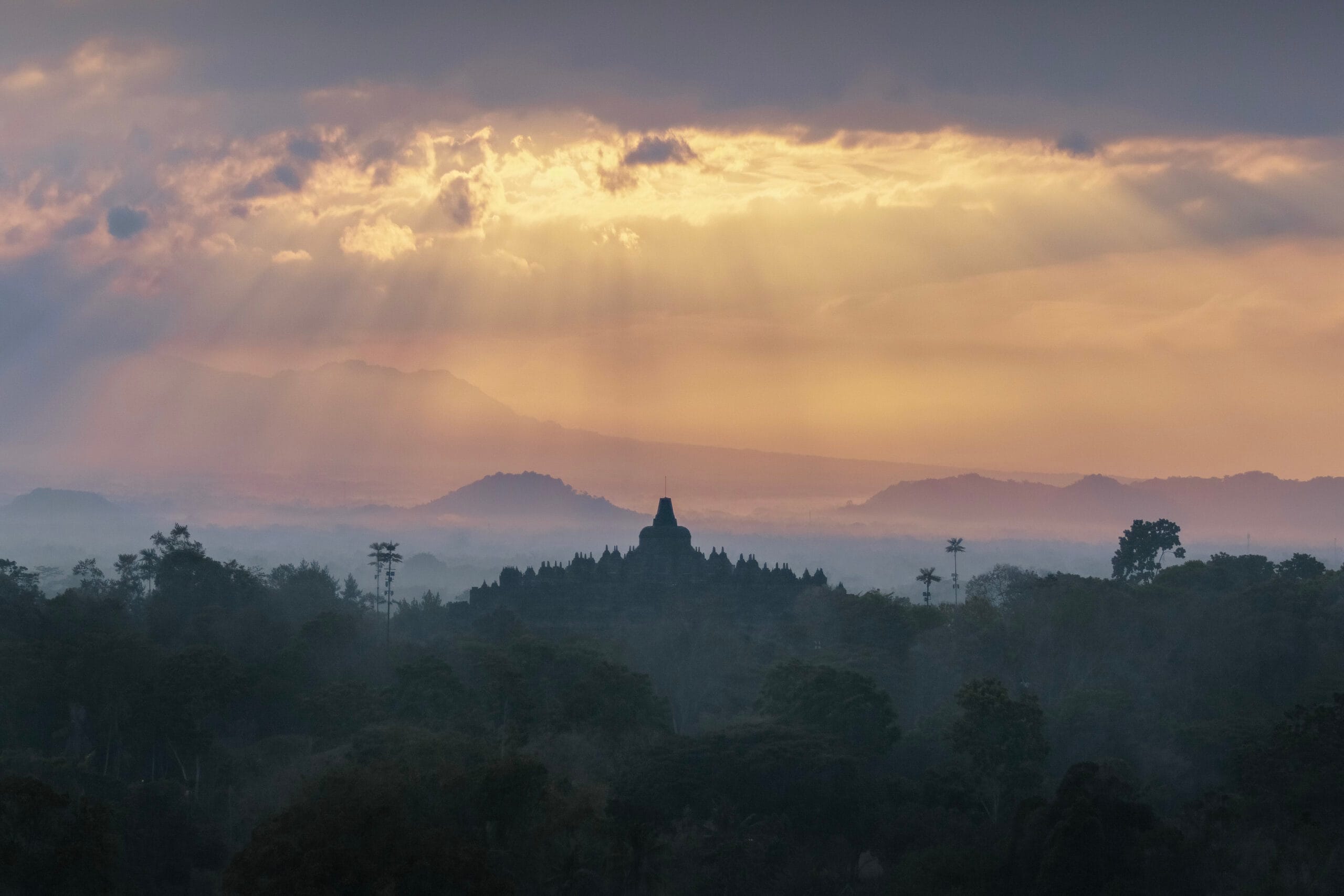
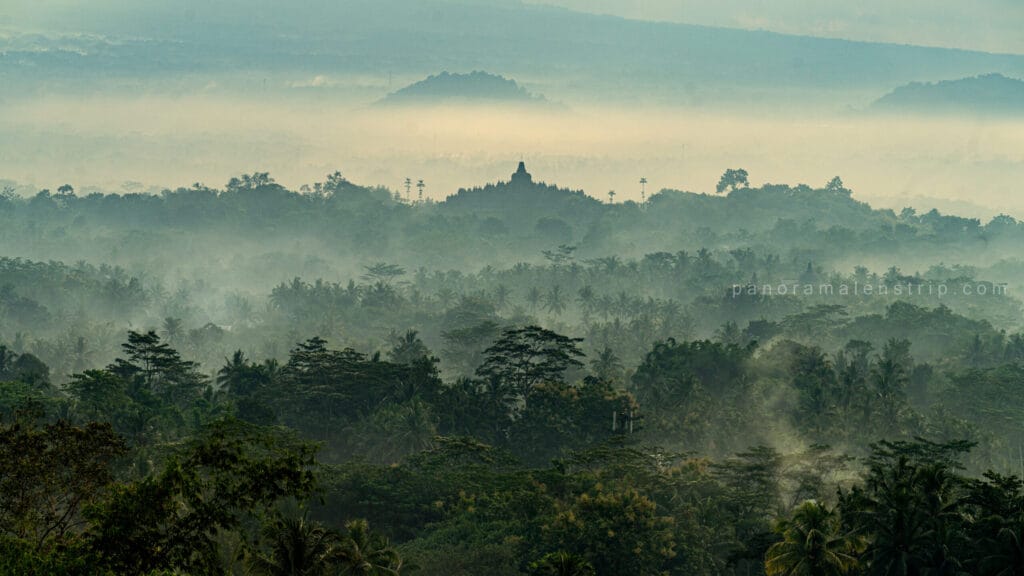
Punthuk Setumbu is an elevated hill located several kilometers from the temple complex. The viewpoint delivers a layered sunrise composition with mist floating across the Kedu Plain.
In clear conditions, Mount Merapi rises behind the temple silhouette. This creates a dramatic volcanic backdrop that appeals strongly to landscape photographers.
Departure time is earlier, usually around 4:00 AM from Yogyakarta. The experience avoids structural restriction concerns because visitors do not step on the monument itself.
The photography advantage includes wide-angle framing, atmospheric compression, and unobstructed horizon lines. The hill perspective also reduces foot traffic pressure compared to pre-2023 temple sunrise programs.
This option prioritizes scenery over architectural proximity.
Option 2 – Temple Yard Access
Temple yard access begins after official opening hours. Visitors enter the lower grounds of Borobudur Temple but do not climb the stupas at dawn.
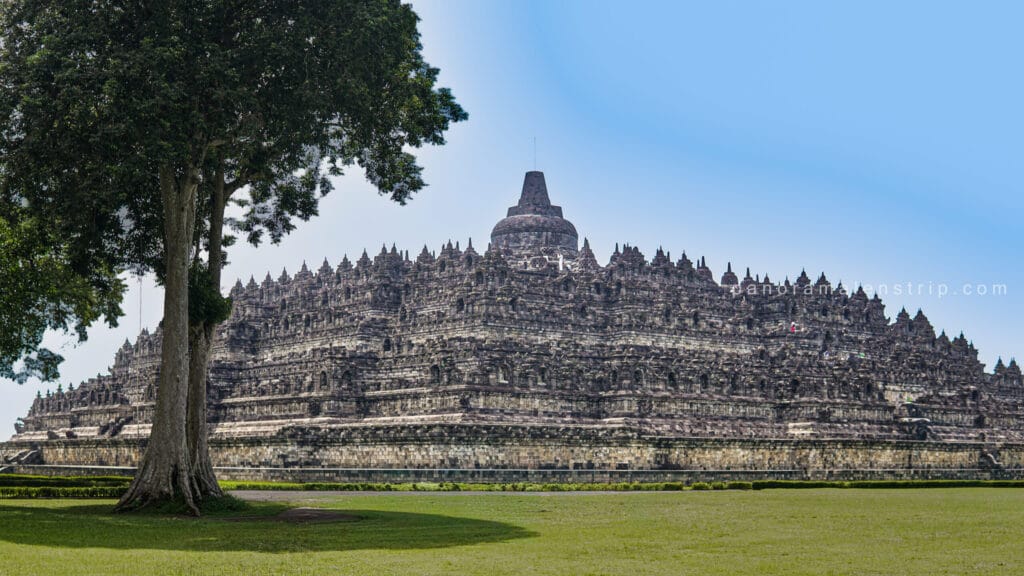
Ground-level access allows close viewing of relief panels and stone corridors. Visitor flow is regulated through timed entry systems. The atmosphere feels calmer than the previous open-access sunrise format.
It is important to distinguish yard access from a structure ascent permit. Yard access allows entry to the temple grounds only. A structure ascent permit applies to controlled daytime climbing quotas and does not operate during sunrise hours.
This option emphasizes cultural immersion and architectural appreciation rather than elevated sunrise panorama.
Which Borobudur sunrise tour is better for photography?
Punthuk Setumbu provides dramatic mist layers and volcanic silhouettes. Temple yard sunrise at Borobudur Temple offers symmetrical architectural compositions. Professional photographers often prefer the hill for landscape shots. Cultural travelers may prefer the yard for proximity to relief panels and Buddhist symbolism.
From a technical perspective, Punthuk Setumbu supports long exposure techniques and silhouette composition. Volcanic mist diffusion enhances atmospheric depth during early light transitions. The golden hour contrast ratio between sky gradients and temple outlines produces strong dynamic range results.
Temple yard sunrise supports tighter framing and architectural symmetry. Photographers can focus on texture detail, stone geometry, and narrative bas-relief panels.
Internal booking data shows that 68% of international photography clients prefer elevated perspective shots over ground-level monument framing. Landscape-oriented travelers from Europe and Australia particularly favor panoramic compression techniques.
Panorama Lens Trip curates sunrise logistics for both formats, aligning departure timing, weather forecasting, and positioning strategy with client photography objectives.
The better option depends on whether the priority is expansive volcanic scenery or intimate architectural storytelling.
How much does a Borobudur sunrise tour cost in 2026?
Borobudur sunrise tour pricing varies by access type and transport inclusion. Punthuk Setumbu sunrise packages typically range from USD 70 to USD 150 per person. Temple yard sunrise experiences with private transport range from USD 90 to USD 300 depending on service level and exclusivity.
Pricing reflects vehicle category, guide specialization, and service depth. Private sunrise tours from Yogyakarta include hotel pickup, flexible timing, and strategic positioning support. Photography-focused packages often include tripod planning, weather monitoring, and composition guidance.
However, many international travelers prefer multi-destination cultural journeys rather than a single sunrise visit. A structured Indonesia photography itinerary can combine:
- Borobudur sunrise tour in Central Java
- Mount Bromo sunrise volcano landscape
- Ijen Crater blue fire and sulfur lake experience
- Uluwatu Temple sunset cliff panorama in Bali
This combination offers contrast in terrain, atmosphere, and cultural symbolism. Guests experience Buddhist heritage at Borobudur, lunar volcanic scenery at Bromo, geothermal phenomena at Ijen, and dramatic ocean cliffs in Bali.
The value is not only logistical efficiency. The value lies in narrative continuity. Travelers witness Indonesia’s spiritual architecture, active volcanoes, and coastal temple landscapes within one curated journey.
Private arrangements include door-to-door transfers, English-speaking guides, sunrise timing strategy, and photography positioning optimization. The experience is structured for travelers from Europe, the US, Australia, and Dubai who prioritize comfort, depth, and visual storytelling.
If you would like a customized Borobudur sunrise tour combined with Bromo, Ijen, and Uluwatu Bali, contact us directly to design your itinerary.
👉 Plan your Indonesia photography journey via WhatsApp:
Contact us now!
Our team will respond with route suggestions, availability, and transparent pricing.
Why did Indonesia change Borobudur access rules?
Indonesia revised Borobudur access rules to protect structural integrity and preserve long-term heritage value. The monument is a 9th-century Mahayana Buddhist temple built from volcanic andesite stone. High visitor volume accelerated surface erosion and increased micro-fracture risks across upper terraces.
Before the reforms, annual visitation exceeded four million people. Concentrated foot traffic created measurable load distribution stress on staircases and circular platforms. Repeated friction contributed to stone capillary erosion, especially during humid months.
Moisture infiltration also increased microbiological weathering on porous surfaces. Organic growth and microbial colonies weakened carved relief edges over time.
The Borobudur Conservation Office conducted structural audits between 2020 and 2023. Findings recommended visitor caps and guided circulation systems.
A senior heritage authority stated, “Borobudur must be managed as an archaeological monument, not a mass tourism platform. Preventive conservation is more effective than irreversible restoration.”
The policy shift reflects a long-term preservation strategy. Controlled access reduces cumulative degradation while maintaining cultural tourism value.
Is the Borobudur sunrise tour worth it for luxury travelers?
The Borobudur sunrise tour remains worthwhile for middle to high-income travelers seeking curated cultural experiences. While inside access is restricted, sunrise over Central Java’s volcanic landscape offers rare atmospheric conditions. Private transport and structured photography planning enhance exclusivity and comfort.
Travelers from Europe, the US, Australia, and Dubai often prioritize experiential depth over unrestricted access. The sunrise atmosphere around Borobudur Temple remains visually exceptional despite regulation changes.
The site is located near Yogyakarta, which allows seamless integration with boutique hotels and cultural excursions.
A private guide provides historical interpretation and efficient crowd timing strategy. Early positioning improves composition opportunities and reduces background congestion.
Photography positioning at elevated viewpoints such as Punthuk Setumbu allows strategic lens selection and framing control.
Luxury travelers benefit from door-to-door transfers, weather-based scheduling adjustments, and curated breakfast venues after sunrise.
The experience is no longer about exclusive monument climbing. It is about curated access, atmospheric precision, and conservation-aligned travel.
Frequently Asked Questions About Borobudur Sunrise Tour
Is sunrise inside Borobudur Temple completely banned?
Sunrise inside the upper terraces of Borobudur Temple is not available for general visitors. Ground-level yard access is permitted after opening hours. Structured ascent permits operate during regulated daytime sessions only. The former open-access sunrise climbing program has been discontinued.
Can you climb the stupas during sunrise?
No. Climbing the stupas during sunrise is prohibited under current conservation policy. Structural ascent is limited to daytime quotas managed by authorities. Visitors must follow regulated circulation routes and wear protective footwear during approved climbing sessions.
What is the best month for Borobudur sunrise photography?
The dry season between May and September provides the most stable atmospheric clarity. Volcanic mist diffusion is common during early dry months. Humidity is lower, which improves golden hour contrast ratio and long exposure consistency. Cloud density remains photogenic without heavy rainfall disruption.
Is Punthuk Setumbu crowded?
Punthuk Setumbu can become moderately crowded during peak travel months. However, crowd density remains lower than the former temple sunrise program. Strategic arrival time and tripod positioning reduce visual interference in wide-angle landscape compositions.
How early does the sunrise tour start?
Most tours depart from Yogyakarta between 3:30 AM and 4:00 AM. Arrival at the viewpoint usually occurs before first light. Early arrival secures optimal positioning and avoids late-entry congestion.
Is a private sunrise tour recommended?
A private sunrise tour offers logistical efficiency and flexible timing. Private drivers reduce waiting time and optimize route planning. Dedicated guides improve historical interpretation and photography positioning strategy. Premium travelers often prefer private arrangements for comfort and scheduling control.
Does UNESCO control Borobudur access?
UNESCO does not directly manage daily operations. However, the organization provides conservation oversight because the temple is a World Heritage Site. Operational authority remains with Indonesian institutions, including the Borobudur Conservation Office and national tourism management bodies.
Key Takeaways
Inside stupa climbing at sunrise is not allowed at Borobudur Temple. The previous open-access sunrise program has been discontinued under conservation reforms. Visitors can no longer ascend the upper terraces at dawn under standard ticket categories.
Two official Borobudur sunrise tour formats now exist. The first option is panoramic sunrise from Punthuk Setumbu. The second option is regulated ground-level yard access after opening hours. Structural ascent permits operate separately during daytime quotas.
Conservation regulations prioritize long-term heritage preservation. Load control, guided circulation, and visitor caps reduce stone erosion and microbiological weathering. These measures align with World Heritage protection standards supported by UNESCO.
Photography value depends on vantage point selection. Elevated perspectives favor landscape compositions. Ground-level access favors architectural storytelling.
Premium travelers benefit from structured planning, private transport, and informed timing strategy. The experience remains exceptional when aligned with conservation realities and professional guidance.