TL;DR — Bromo Sunrise Temperature Fast Facts
- Mount Bromo sits at 2,300 meters (7,545 ft) above sea level inside the Tengger Caldera.
- Pre-dawn temperatures range between 3–8°C before sunrise.
- Wind speeds of 10–20 km/h make it feel close to 0°C with wind chill.
- Over 60% of dry season mornings drop below 6°C before dawn.
- Cold exposure lasts 60–120 minutes — stationary, in the dark, on exposed ridges.
- July and August are statistically the coldest sunrise months.
- Smart layering beats heavy winter coats for mobility and comfort.
- Photographers need gloves compatible with camera controls and wind-resistant tripod setups.
- Rental jackets at the base rarely meet luxury travel or wind-protection standards.
- Preparation is simple. Discomfort at Bromo is always optional.
Understanding the Bromo Sunrise Temperature is essential for travelers planning a visit to Mount Bromo, as most expect warm tropical weather. However, pre-dawn conditions at 2,300 meters above sea level regularly drop close to freezing before the sun appears.
Having guided sunrise photography tours across the Tengger Caldera, we witness this cold surprise every time guests step out of their 4WD jeep at 4:00 AM. In addition, open volcanic plains and consistent pre-dawn winds intensify the cold significantly. Therefore, this guide explains exactly how cold it gets, why wind changes everything, and what to wear for a comfortable, photography-ready experience.
What Is the Actual Bromo Sunrise Temperature Before Dawn?
Before sunrise, temperatures at Mount Bromo typically fall between 3°C and 8°C. This range applies consistently across the dry season from May through October. During peak cold months — July and August — readings frequently settle at the lower end of that scale. Furthermore, our field observations confirm that over 60% of dry season mornings register below 6°C before dawn breaks over the Tengger Caldera.
Key temperature facts at a glance:
- Typical pre-dawn range: 3–8°C (37–46°F)
- Peak cold months: July and August
- Sunrise viewing window: 3:30–6:00 AM
- Above 6°C: less than 40% of dry season mornings
- Wet season (November–April): slightly warmer at 8–12°C, but cloud interference is common
Monthly Bromo Sunrise Temperature Overview
| Month | Avg Pre-Dawn Temp | Sky Condition | Recommended Gear Level |
|---|---|---|---|
| May | 6–9°C | Clear–Partly Cloudy | Moderate layering |
| June | 5–8°C | Clear | Full layering + windbreaker |
| July | 3–6°C | Very Clear | Full layering + shell |
| August | 3–6°C | Very Clear | Full layering + shell |
| September | 5–8°C | Clear | Full layering |
| October | 6–10°C | Variable | Moderate layering |
| Nov–Apr | 8–13°C | Cloudy–Rainy | Light insulation |
Data based on field observation and regional meteorological patterns for East Java highlands. Always verify current conditions via BMKG — Indonesia’s Meteorology, Climatology, and Geophysics Agency before your departure.
Clear dry-season skies accelerate radiative cooling overnight. Without cloud cover acting as a thermal blanket, heat escapes the caldera floor rapidly. As a result, by 4:00 AM, temperatures reach their lowest point of the 24-hour cycle — precisely when sunrise photography tours begin.
For broader itinerary advice on visiting the caldera, explore our comprehensive Bromo Trip Guide: Explore Majestic Mount Bromo.
Why Does Bromo Sunrise Temperature Feel Colder Than Thermometers Show?
A thermometer reading of 5°C at Mount Bromo does not tell the full story. In fact, wind chill drops the perceived Bromo sunrise temperature significantly lower. The Tengger Caldera is treeless and horizontally exposed. Additionally, pre-dawn wind speeds consistently reach 10–20 km/h before sunrise.
At 4°C with a 15 km/h wind, the perceived temperature falls to approximately 0–1°C. Similarly, at 3°C with 20 km/h gusts, exposed skin registers conditions close to -1°C. This is not a minor difference. Consequently, it marks the difference between comfortable layering and genuine physical discomfort.
Why the caldera amplifies cold:
- No tree cover — zero natural wind protection across the Sea of Sand
- Elevated ridgeline exposure — Penanjakan 1 sits at the highest open point
- Radiative cooling — clear skies release retained ground heat rapidly overnight
- Altitude wind channels — terrain funnels air across the open caldera floor
- Stationary body heat loss — standing still for 60–90 minutes accelerates cooling
Counter-narrative: Mount Bromo is frequently marketed as a tropical adventure. However, pre-dawn Bromo sunrise temperature conditions at 2,300 meters feel nothing like lowland Java. A thin tropical jacket offers almost no wind resistance. Therefore, the priority is not warmth alone — it is wind blocking. A well-fitted windproof shell over quality insulation outperforms a heavy but porous coat every time.
How Does Altitude Impact Bromo Sunrise Temperature?
Temperatures drop approximately 6°C for every 1,000 meters of altitude gained. This principle is known as the environmental lapse rate. Mount Bromo’s caldera sits at 2,300 meters. Meanwhile, Surabaya sits near sea level at roughly 30°C on a typical morning.
That vertical rise accounts for a theoretical Bromo sunrise temperature difference of nearly 14°C before wind chill. Consequently, by the time travelers ascend from Cemoro Lawang village via jeep, they have left tropical weather behind in every thermal sense.
What this means in practice:
- Surabaya at 5:00 AM → approximately 26–28°C
- Cemoro Lawang village → approximately 12–15°C
- Penanjakan 1 viewpoint → approximately 3–8°C
- Perceived temperature with wind chill → approximately 0–3°C
Travelers who assume mountain cool rather than near-freezing exposed ridges consistently underperform their photography goals. However, cold hands and early retreats to the jeep are entirely avoidable with correct preparation.
How Long Are You Exposed to the Cold During a Sunrise Tour?
The total cold exposure window during a Mount Bromo sunrise tour lasts between 60 and 120 minutes under low Bromo sunrise temperature conditions. This period includes waiting at the viewpoint, moving between sites, and walking across the Sea of Sand.
A typical timeline looks like this:
- 3:00–3:30 AM — Jeep departure from Cemoro Lawang; wind exposure during open-air ride
- 3:30–4:00 AM — Arrival and ascent to Penanjakan 1 or King Kong Hill viewpoint
- 4:00–5:30 AM — Stationary wait and sunrise photography at the viewpoint
- 5:30–6:00 AM — Descent and jeep transit to Sea of Sand
- 6:00–7:00 AM — Walking on the caldera floor toward Bromo crater rim
The most demanding phase is the stationary wait between 4:00 and 5:30 AM. Standing behind a tripod without moving accelerates cold exposure dramatically as the Bromo sunrise temperature reaches its lowest point. For instance, a photographer composing a long exposure shot remains still for long periods. Therefore, proper thermal layering is essential during this phase.
What Should You Wear for Bromo Sunrise Temperature?
The single most effective approach to Bromo Sunrise Temperature is layering, not volume. One thick jacket creates warmth but eliminates mobility. In contrast, three precisely chosen layers provide identical thermal protection with far greater flexibility.
This flexibility is critical when adjusting camera angles, crouching for compositions, or transitioning between cold viewpoints and warming jeeps. For a complete gear breakdown tailored to different times of year, read our full What to Wear for a Bromo Trip – Packing Guide for Every Season.
The layering formula follows three functional zones:
- Base layer — moisture management against the skin
- Mid layer — insulation that retains body heat
- Outer shell — wind and light moisture protection
Base Layer Strategy
The base layer sits directly against your skin to manage moisture and maintain a stable microclimate against the cold Bromo sunrise temperature. Merino wool is the premium choice for this environment. Specifically, it regulates temperature actively and resists odor during multi-hour tours. Moreover, it remains comfortable whether you are stationary on a ridge or walking across the Sea of Sand.
Synthetic base layers — polyester or nylon blends — perform adequately and dry faster if wet. They suit travelers prioritizing packability. However, avoid cotton entirely. Cotton absorbs moisture, loses insulating properties when damp, and accelerates body heat loss in wind.
Recommended base layer specifications:
- Merino wool 150–200gsm for dry season cold
- Long sleeve and long johns for full coverage
- Fitted, not loose — air gaps reduce thermal efficiency
- Odor-resistant — useful for multi-day Bromo Tengger Semeru itineraries
Mid-Layer Insulation
The mid layer traps warm air close to the body. For conditions between 3–8°C, a lightweight down jacket (600–800 fill power) or a technical fleece performs best. Furthermore, both compress easily into a daypack when temperatures rise after sunrise.
Down jackets offer a superior warmth-to-weight ratio. On the other hand, fleece alternatives breathe better during active walking. Either choice works well during Bromo’s dry season, where precipitation risk is low.
What to prioritize:
- Packability — compresses into its own pocket or daypack
- Zipped front — allows quick temperature regulation
- Fitted sleeves — unobstructed camera grip and lens adjustments
- 600+ fill power down or 200–300gsm fleece for appropriate insulation
Outer Shell
The outer shell is the most critical layer for managing the Bromo sunrise temperature. Wind resistance, rather than pure warmth, is the defining requirement. Specifically, a windproof softshell or hardshell jacket blocks caldera winds from penetrating insulation layers and preserves body heat.
Waterproofing is secondary in the dry season but useful as a contingency. A shell rated to 10,000mm hydrostatic head handles unexpected mist or drizzle without adding bulk. Prioritize a shell with:
- Wind-resistant outer membrane (primary function)
- Articulated sleeves for full arm range of motion
- Chest and hand pockets to warm fingers quickly between shots
- Adjustable hood for exposed ridge moments at Penanjakan 1
Accessories That Matter
Accessories are the most underestimated category for Bromo sunrise preparation. Cold hands cause missed shots and poor focus control. In addition, cold ears and neck accelerate body heat loss faster than inadequate jacket insulation.
Essential accessories for Bromo sunrise:
- Gloves: Touchscreen-compatible liner gloves or photography gloves with fold-back fingertips. Full mittens restrict shutter control entirely.
- Beanie or thermal hat: Covers ears and retains 20–30% of body heat lost through the head.
- Neck gaiter or scarf: Seals the gap between jacket collar and chin — a major wind entry point.
- Thermal or wool socks: Standing on cold volcanic rock for 90 minutes transfers cold upward through standard footwear.
- Comfortable trekking shoes: Non-negotiable for Sea of Sand and crater rim walking.
What Should Serious Photographers Pack?
Photography at Mount Bromo demands preparation beyond clothing, especially when navigating the cold Bromo sunrise temperature. Pre-dawn shooting involves low light, wind-induced camera shake, and rapid battery drain. However, each variable is manageable with the right gear kit.
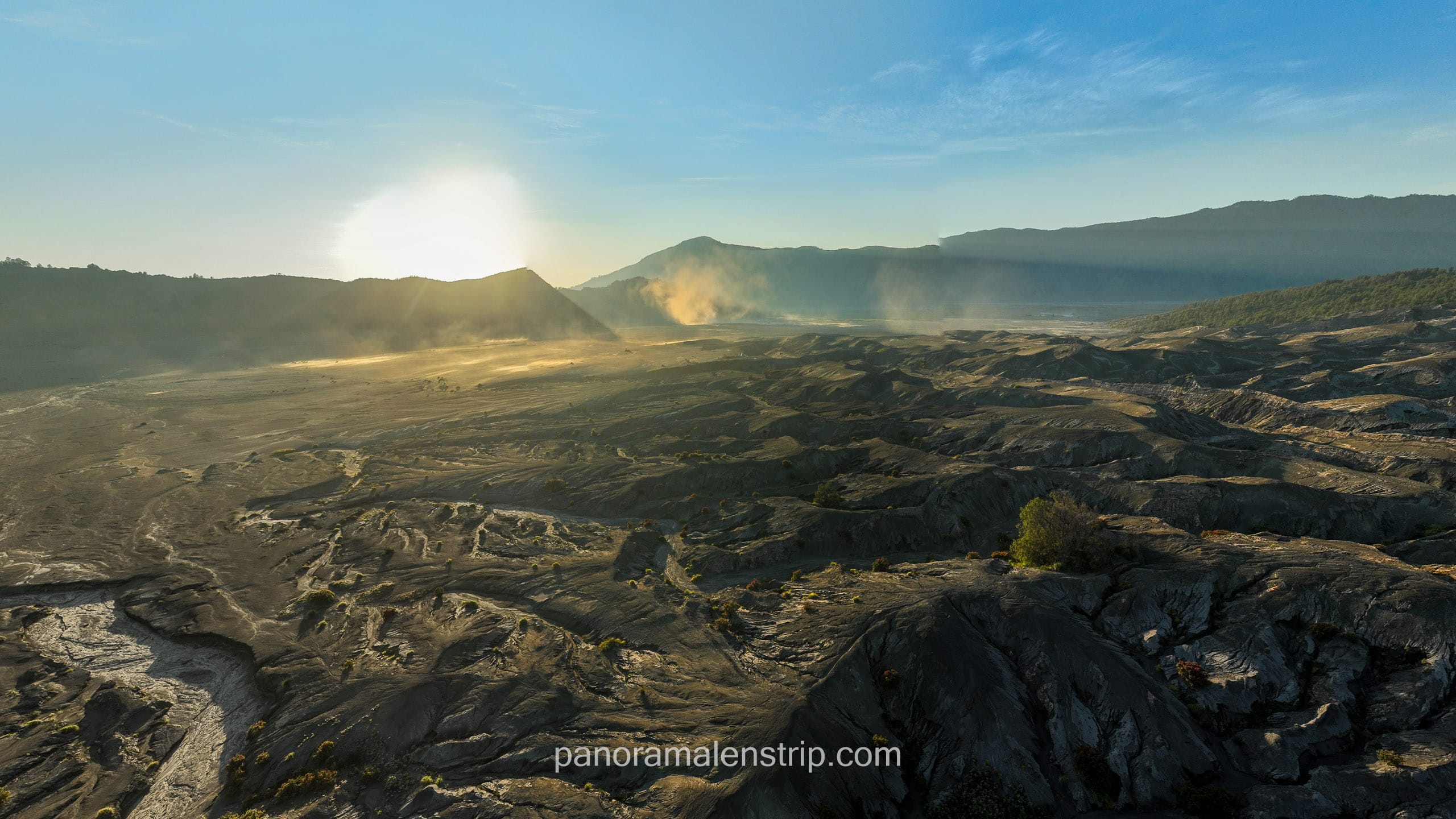
The volcanic terrain at golden hour reveals extraordinary detail. Specifically, erosion ridges, layered caldera walls, and volcanic steam reward photographers who arrive fully prepared.
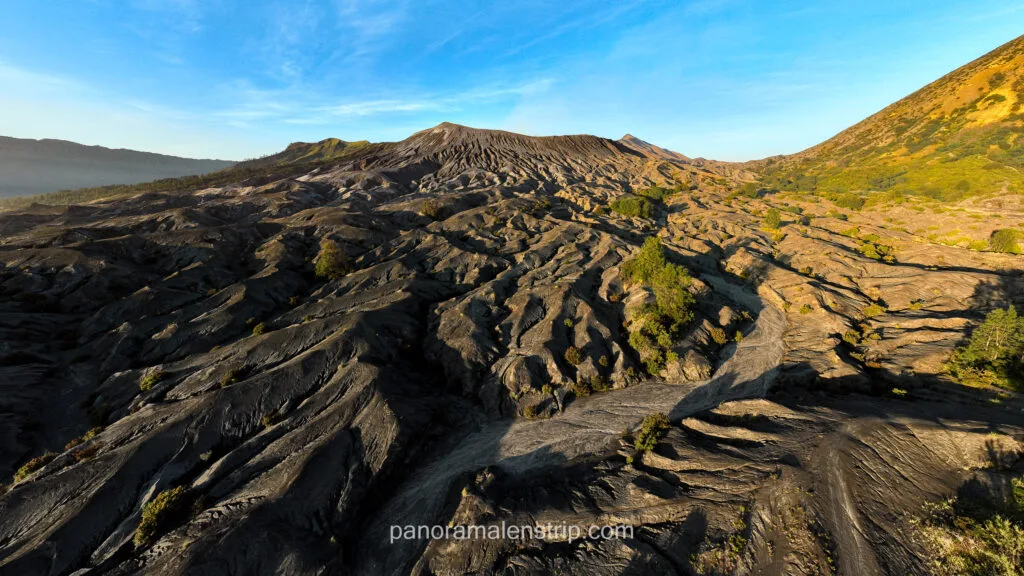
Bromo’s volcanic ridges photographed during golden hour — long shadows and erosion textures reward wide-angle compositions from elevated viewpoints.
Recommended photography kit for Bromo sunrise:
- Lenses:
- 16–35mm — wide volcanic landscape and caldera panoramas
- 24–70mm — flexible framing for multiple compositions
- 70–200mm — layered mountain compression (Bromo, Batok, Semeru)
- Tripod: Sturdy, wind-resistant. Add a sandbag or hang your camera bag from the center column for additional ballast.
- Lens cloth: Condensation forms rapidly as pre-dawn cold meets warming optics after sunrise.
- Spare batteries: Cold temperatures reduce lithium-ion battery capacity by 30–50%. Carry at least two fully charged spares in an inner pocket close to body heat.
- Remote shutter release: Eliminates camera shake during long exposures of 10–30 seconds.
If your East Java photography tour also includes waterfall landscapes, check out our Drone Photography Tips for Tumpak Sewu: Best Angles and Rules.
Suggested pre-dawn camera settings:
| Condition | ISO | Aperture | Shutter Speed |
|---|---|---|---|
| Pre-dawn (4:00–5:00 AM) | 800–1600 | f/2.8–f/4 | 10–30 sec |
| Nautical twilight (5:00–5:30 AM) | 400–800 | f/5.6–f/8 | 2–8 sec |
| Golden hour (5:30–6:30 AM) | 100–400 | f/8–f/11 | 1/60–1/250 sec |
Which Viewpoints Are Coldest at Sunrise?
Not all Mount Bromo viewpoints expose you equally to pre-dawn cold. Elevation, terrain orientation, and wind exposure determine how sharply the Bromo sunrise temperature affects your experience.
Penanjakan 1 is the coldest position. It sits at the highest accessible elevation on an exposed ridgeline. Consequently, the combination of maximum altitude and wind exposure makes proper layering non-negotiable here.
King Kong Hill sits slightly lower than Penanjakan 1 and is less crowded. Although wind exposure is comparable, the terrain offers slightly more natural shelter.
Seruni Point is the most accessible viewpoint. It sits closer to Cemoro Lawang and involves minimal walking. Meanwhile, wind exposure is moderate compared to Penanjakan 1.
Sea of Sand near Pura Luhur Poten is the lowest position. Wind across the volcanic plain is consistent, but walking generates personal warmth.
The 15th-century Pura Luhur Poten temple stands in the volcanic plain, offering an iconic foreground subject for wide-angle photography.
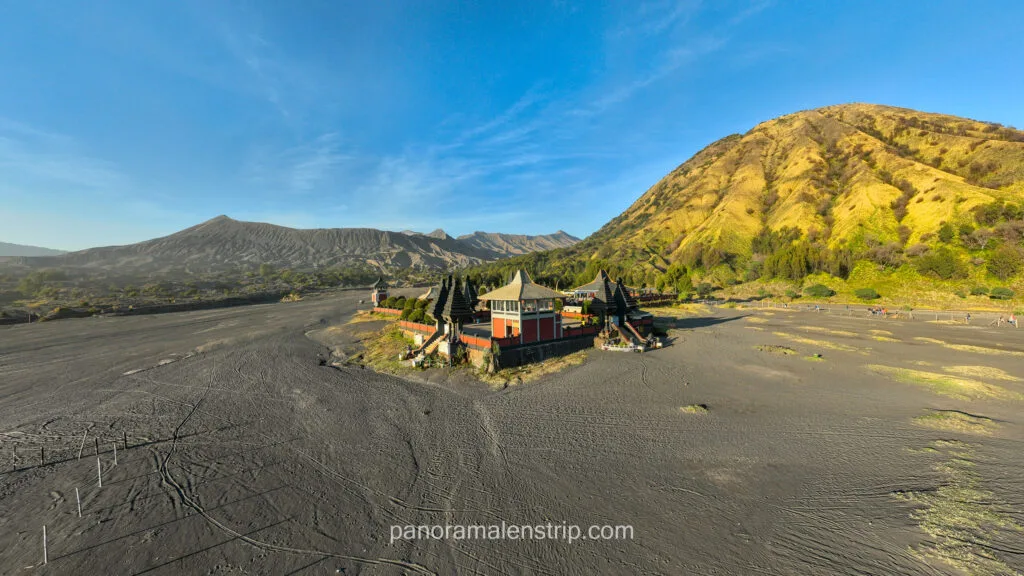
Pura Luhur Poten Hindu temple in the Bromo Sea of Sand — an iconic foreground subject for wide-angle and mid-range volcanic landscape photography.
Viewpoint Cold Exposure Comparison
| Viewpoint | Elevation | Wind Exposure | Cold Intensity | Best Lens |
|---|---|---|---|---|
| Penanjakan 1 | Highest | Maximum | Coldest | 16–35mm / 70–200mm |
| King Kong Hill | High | High | Very Cold | 24–70mm / 70–200mm |
| Seruni Point | Mid | Moderate | Cold | 24–70mm |
| Sea of Sand / Pura Luhur Poten | Lowest | Consistent | Moderate | 16–35mm |
To learn more about viewpoint angles and arrival logistics, read our dedicated Bromo Sunrise Guide: Best Spots, Time & Travel Tips.
Dry Season vs Wet Season — Bromo Sunrise Temperature Comparison
The Bromo Sunrise Temperature varies meaningfully across the year. Specifically, the dry and wet seasons deliver different conditions for sky clarity, wind behavior, and photography viability.
Dry season (May–October) produces the coldest pre-dawn temperatures at Mount Bromo. Clear skies accelerate radiative cooling overnight. As a result, 3–6°C readings occur frequently. However, visibility is exceptional and sunrise colors are sharper. The volcanic steam plume photographs with high contrast against clear skies.
Wet season (November–April) brings slightly warmer pre-dawn conditions in the 8–13°C range. Cloud cover traps residual heat overnight. Nevertheless, cloud interference frequently obscures the sunrise itself. Fog inside the caldera eliminates visibility from Penanjakan 1 on many mornings.
Dry Season vs Wet Season Comparison
| Factor | Dry Season (May–Oct) | Wet Season (Nov–Apr) |
|---|---|---|
| Pre-dawn temperature | 3–8°C | 8–13°C |
| Wind exposure | High | Moderate |
| Sky clarity | Excellent | Variable–Poor |
| Sunrise visibility | Reliable | Uncertain |
| Radiative cooling effect | Strong | Minimal |
| Photography conditions | Optimal | High risk |
| Gear priority | Wind shell + full layers | Light insulation + rain cover |
The dry season is unambiguously the preferred window for sunrise photography tours at Mount Bromo. Colder temperatures are the trade-off for reliable skies and exceptional light.
Is Renting a Jacket at Mount Bromo Enough?
Rental jackets are available at Cemoro Lawang village and from local jeep operators. They provide a basic solution for budget travelers facing the Bromo sunrise temperature. However, for serious photographers, they represent a compromise.
The quality gap is consistent and predictable:
- Wind resistance: Most rental jackets are standard polyester shells with minimal wind-blocking capacity.
- Insulation quality: Fill power and thermal rating are unknown.
- Fit: Generic sizing limits mobility during camera adjustments.
- Hygiene: Shared-use garments with variable laundering standards.
- Photography compatibility: No consideration for glove compatibility or arm movement.
For travelers investing in a premium sunrise experience, arriving in rental gear creates a functional mismatch. The cold at Bromo is predictable. Therefore, preparing with quality personal gear is a straightforward decision.
What Does a Luxury Sunrise Experience Change?
A private sunrise tour at Mount Bromo changes every variable for comfort during low Bromo sunrise temperature hours. Standard shared tours operate on fixed departure times and crowded viewpoints. In contrast, a curated luxury experience by Panorama Lens Trip reframes the morning:
- Private jeep departure timing — calibrated to nautical twilight, not mass-tour schedules
- Viewpoint selection — based on conditions, crowd levels, and photography objectives
- Warm beverages on-site — maintaining core body temperature during the pre-dawn wait
- Local guide expertise — real-time positioning advice based on wind direction and light angle
- Flexible itinerary — crater rim, Sea of Sand, and Pura Luhur Poten timed to golden hour
- Equipment logistics — tripod positioning, condensation management, and battery rotation supported
A picnic stop in the cool mountain forest after sunrise adds another dimension entirely — a quiet moment of comfort and warmth after the pre-dawn cold.
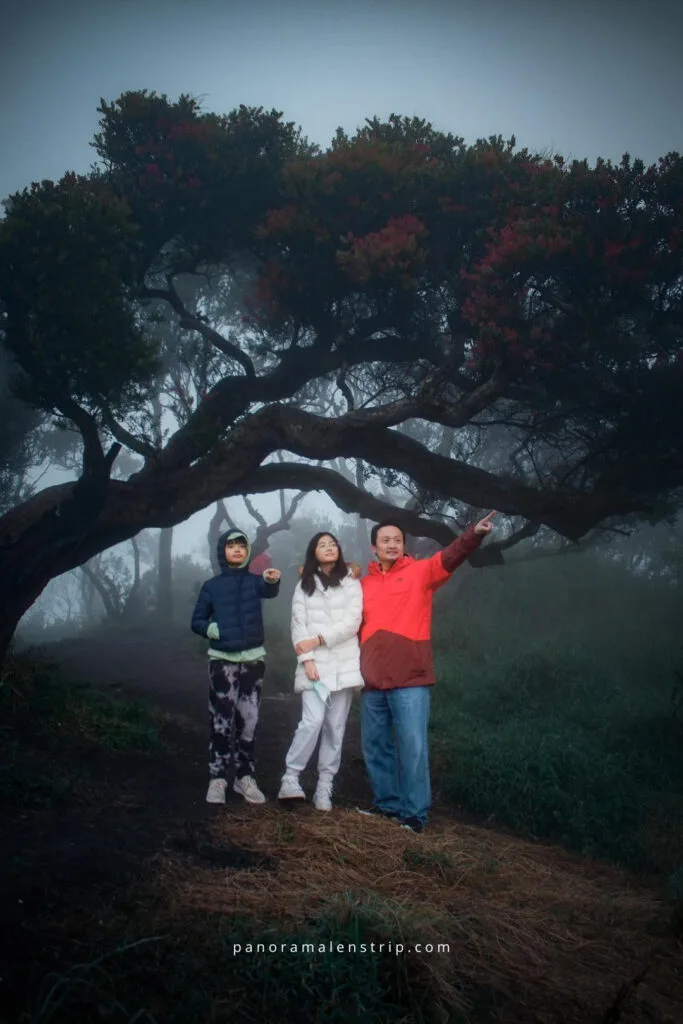
A post-sunrise forest picnic in East Java’s misty highland — a signature element of Panorama Lens Trip’s curated Bromo sunrise experience.
If you wish to combine sunrise photography with active hiking across the crater rim, see our Mount Bromo Trekking Tour : The Ultimate Guide.
If you are planning a sunrise photography tour at Mount Bromo — or across any of Indonesia’s iconic volcanic destinations — connect with our team on WhatsApp to design a fully customized, comfort-first itinerary. Our curated experiences extend beyond Bromo to photography tours across the Indonesian archipelago.
FAQ — Bromo Sunrise Temperature
Is Mount Bromo colder than Mount Fuji at sunrise?
Mount Fuji’s summit reaches approximately -5°C to -10°C during summer months at 3,776 meters. Mount Bromo at 2,300 meters sits warmer in absolute terms. However, Bromo’s open caldera wind chill and prolonged stationary exposure make the perceived experience comparable to temperate mountain destinations. Preparation requirements are serious.
Can children handle the cold at Mount Bromo?
Children can participate in Bromo sunrise tours with correct preparation. The cold is manageable, short-duration, and predictable. Full thermal layering — base layer, insulation, windproof shell — sized appropriately for children is essential. Private tours allow flexible timing and faster retreat to the warm jeep if needed.
Does it snow at Mount Bromo?
Snowfall at Mount Bromo is extremely rare for equatorial Indonesia. However, frost on the ground occurs on the coldest July and August mornings across the Sea of Sand. Frost conditions indicate surface temperatures at or below 0°C and reinforce the importance of proper preparation.
What is the coldest month at Mount Bromo?
July and August are statistically the coldest months at Mount Bromo during sunrise hours. Pre-dawn temperatures during these months most frequently settle in the 3–5°C range. Clear dry-season skies maximize radiative cooling overnight, pushing temperatures to their annual minimum by 4:00–5:00 AM.
Do I need thermal wear for Bromo sunrise?
Yes. A thermal or merino wool base layer is strongly recommended for Bromo Sunrise Temperature conditions between 3–8°C. Thermal underlayers maintain body temperature during the stationary pre-dawn wait and prevent moisture buildup during walking. Skipping thermal base layers is the most common preparation mistake made by first-time visitors.
Final Verdict — How Cold Is Bromo Sunrise Really?
The Bromo Sunrise Temperature is colder than most international travelers anticipate. Pre-dawn readings between 3–8°C combined with 10–20 km/h winds produce perceived temperatures near 0°C. Furthermore, over 60% of dry season mornings fall below 6°C. Cold exposure runs between 60 and 120 minutes, almost entirely stationary on exposed ridgelines.
The practical summary:
- Layer correctly: Base, insulation, windproof shell — in that order
- Prioritize wind resistance over raw insulation volume
- Protect extremities: Gloves, beanie, neck gaiter, warm socks
- Prepare your camera kit: Spare batteries, lens cloth, remote shutter, wind-resistant tripod
- Choose dry season (May–October) for coldest but clearest conditions
- Avoid relying on rental jackets for wind protection or fit quality
- Arrive before nautical twilight — 4:00 AM — for full golden hour positioning
The cold at Mount Bromo is short, predictable, and entirely manageable. Every degree of discomfort is optional with correct preparation. Every minute of the sunrise window, from the first hint of nautical twilight to full golden hour over Mount Semeru, rewards the traveler who arrived ready.
Planning a sunrise photography tour at Mount Bromo or across Indonesia’s volcanic highlands? Reach our team directly on WhatsApp to build a fully curated, private sunrise itinerary — designed around your photography goals, comfort standards, and preferred travel pace. Our expertise spans Bromo, Ijen, Kelimutu, and beyond.