
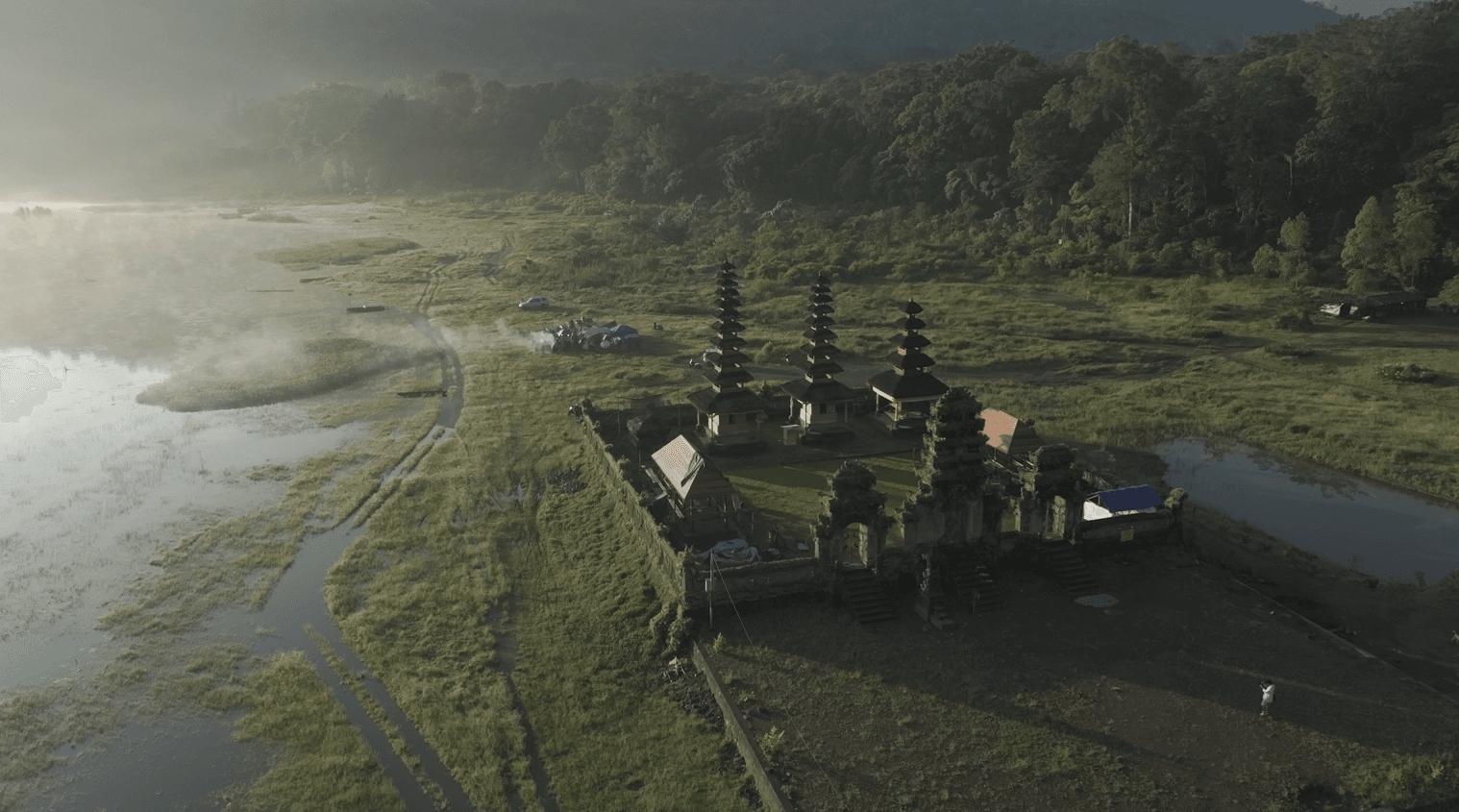
Tamblingan Lake Temple History – Nestled in the highlands of North Bali, Tamblingan Lake is more than just a scenic freshwater lake. Indeed, it is a sacred ground cloaked in mist and mystery, where time seems to stand still. At its heart lies Pura Dalem Tamblingan, an ancient temple believed to be a spiritual gateway between the physical and the divine. Here, myth, culture, and nature intertwine, ready to tell you their age old story.
Unveiling The Beauty of Tamblingan Lake
Location and Geography
To begin with, Tamblingan Lake lies quietly in Buleleng Regency, surrounded by thick rainforests and crisp highland air. Moreover, it is one of Bali’s famed Twin Lakes, alongside Lake Buyan, nestled within the caldera of an extinct volcano.
Natural Scenery and Surroundings
In addition to its serene location, the lake feels untouched by modern chaos. Misty mornings and golden twilight reflections set a magical tone. Meanwhile, birdsong replaces city noise, and temple silhouettes gently reflect on the calm waters.
Significance in Balinese Culture
Beyond its natural beauty, this lake holds profound spiritual value. Furthermore, the Balinese believe it possesses cleansing powers. As a result, many temples were built nearby to honor the gods believed to reside within its waters.
The Origins of Tamblingan Lake Temple
Etymology of “Tamblingan”
The name “Tamblingan” derives from “Tamba” (medicine) and “Elingang” (spiritual awareness). In essence, it symbolizes healing through spiritual awakening—perfectly setting the tone for the temple’s sacred role.
Historical Background of the Temple
From a historical perspective, Pura Dalem Tamblingan dates back to the 10th century. During this period, the surrounding village thrived. Eventually, when spiritual signs encouraged the people to relocate, temples were left behind to preserve the sanctity of the land.
Founding Legends and Myths
According to legend, a devastating plague struck the area. Remarkably, a local priest healed the sick using holy water from the lake. Therefore, in reverence to this miraculous healing, the temple was erected.
The Spiritual Essence of the Temple
Role in Local Hindu Beliefs
In terms of religious significance, the temple is dedicated to Lord Shiva, locally revered as Sang Hyang Dalem Tamblingan. It embodies the cosmic balance between destruction and rebirth.
Importance of Lake Temples in Bali
More broadly, lake temples across Bali are sacred guardians of life. Consequently, Pura Tamblingan plays both a religious and ecological role in maintaining balance.
Sacred Rituals and Ceremonies
For instance, ceremonies such as Melasti (purification rites) and Ngusaba offerings are practiced here. These rituals reflect Tri Hita Karana, the Balinese principle of harmony among humans, nature, and the divine.
Architectural Marvels of Pura Dalem Tamblingan
Traditional Balinese Architecture
Architecturally, the temple features thatched multi-tiered shrines (meru) and moss-covered gates. This traditional design reflects a harmonious blend of structure and nature.
Symbolic Structures and Statues
Additionally, you’ll find statues of mythical beasts, guardian deities, and Lingga-Yoni symbols—all infused with deep philosophical meaning.
Influence of Ancient Balinese Design
Significantly, the temple adheres to the Tri Mandala concept dividing space into three zones representing progressive levels of spiritual purification.
Mystical Legends and Local Folklore
Stories Passed Through Generations
Over the years, villagers have passed down stories of disappearing boats and spirits appearing during full moons. Interestingly, these tales are respected, not feared.
The Tale of the disappearing Village
One such legend claims that the original village sank beneath the lake due to divine intervention. Even today, the partially submerged temple serves as a spiritual reminder of that event.
Spirits and Supernatural Events
Furthermore, many mediums believe the site holds high spiritual energy, which explains why rituals here often involve offerings to restore balance.
Religious Practices and Cultural Events
Annual Temple Ceremonies
Every Purnama (full moon), locals paddle across the lake in traditional canoes to make silent offerings—a ritual rich with symbolism and devotion.
Pilgrimages to the Sacred Site
Additionally, Hindus from across Bali visit the temple during major holy days. These pilgrimages serve as spiritual cleansing journeys.
Connection with Other Temples (Catur Muka System)
Moreover, Tamblingan is one of four temples forming the Catur Muka system—guardians of Bali’s spiritual equilibrium, along with Buyan, Beratan, and Batur.
Nature and Spiritual Harmony
Coexistence of Temple and Forest
Importantly, the temple is nestled within the Munduk forest, which amplifies its sacred seclusion and fosters deep reflection.
Spiritual Healing Traditions
In local belief, meditating by the lake or bathing in its waters can cleanse karma and invite clarity.
Meditation and Peaceful Energy
As a result, the site attracts yogis, artists, and seekers drawn to its calming and restorative energy.
Tamblingan in the Eyes of Explorers and Historians
Colonial-Era Accounts
Early 20th-century Dutch explorers were captivated by Tamblingan’s mysticism and remoteness, recording their awe in travelogues.
Anthropological Studies
Likewise, scholars note that the temple preserves pre-Majapahit Hindu practices that are now rare across the island.
Recent Archaeological Findings
Interestingly, recent discoveries of stone relics and ancient altars near the lake suggest a once-thriving spiritual civilization.
The Role of Tamblingan in Modern Balinese Identity
Preservation of Balinese Heritage
Today, the temple stands as a cultural stronghold, reminding future generations of their spiritual roots.
Symbol of Environmental and Spiritual Balance
As such, Tamblingan promotes a dual philosophy of ecological and spiritual harmony.
Educational Importance
Consequently, schools organize trips here to instill awareness of heritage conservation and religious respect.
Challenges to Conservation
Environmental Threats
However, climate change and deforestation pose significant risks to the temple’s delicate ecosystem.
Tourism Impact
Likewise, unregulated tourism introduces litter, noise, and potential disrespect for sacred customs.
Cultural Erosion
If traditional values aren’t preserved, there’s a risk that global influences may dilute the site’s authenticity.
Sustainable Tourism and Local Involvement
Community-Based Tourism Initiatives
Encouragingly, local villagers now offer respectful, educational tours—turning tourism into preservation.
Eco-Friendly Practices
In addition, eco-initiatives like plastic-free zones, lake cleanups, and meditative eco-walks are in place.
Role of Local Spiritual Leaders
Most importantly, spiritual elders ensure that ceremonies and traditions continue in their purest form.
How to Visit Tamblingan Lake Temple
Best Time to Visit
Ideally, the dry season (April to October) provides the clearest views. Even so, misty mornings during the rainy season add a mystical touch.
Travel Tips
- Wear modest attire
- Bring an umbrella or jacket (weather is chilly)
- Hire a local guide for deeper insight
Respectful Behavior for Visitors
- Do not enter inner sanctums unless permitted
- Avoid loud noise
- Never touch sacred offerings
Must See Spots Around Tamblingan Lake
Munduk Waterfall
A short drive away, this cascading beauty is perfect for a refreshing hike.
Twin Lakes Viewpoint
Panoramic shots of Tamblingan and Buyan are stunning from this high vantage point.
Local Villages and Coffee Plantations
Explore Munduk and Gobleg villages for traditional crafts and locally brewed Balinese coffee.
Final Reflections on Tamblingan’s Mystique
Ultimately, Tamblingan Lake Temple is not just a destination—it’s a soul experience. Whether you visit for its stories, silence, or spiritual aura, one thing is certain: the moment you stand by its waters, you’ll feel a deep, ancient pull.
Conclusion
In summary, the Tamblingan Lake Temple is a living tapestry of myth, devotion, and natural splendor. Beyond its scenic beauty lies a sacred realm where Balinese heritage lives on. Visiting Tamblingan is more than travel, it’s a pilgrimage of spirit and story.
FAQs
1. Why is Tamblingan Temple considered sacred?
– Because it was built to honor divine spirits believed to dwell in the lake, serving as a place for ancient Hindu rituals.
2. Are tourists allowed to attend rituals?
– Yes, respectfully. However, certain ceremonies may be restricted to locals.
3. What should I wear when visiting the temple?
– Modest attire is essential. Wearing a sarong and sash is highly recommended and often required.
4. Is the temple accessible during rainy season?
– Yes, but some parts may be submerged or slippery, adding to the mystical experience. A waterproof jacket and proper footwear are advisable.
5. Are there guided tours available?
– Yes. Local guides, often from nearby villages, offer culturally rich tours that share insightful stories and temple etiquette.
https://panoramalenstrip.com or contact us.