TL;DR — Best Time to Visit Yogyakarta at a Glance
- Best overall time: May through October (dry season)
- Peak photography window: June, July, and August — clearest skies, sharpest golden hour
- Top festivals: Sekaten (varies by Islamic calendar), Labuhan Ceremony (April/October), Wayang Kulit season (year-round)
- Borobudur sunrise: Arrive by 04:30 AM from May to August for maximum light clarity
- Wet season advantage: November to January delivers dramatic misty scenes with far fewer tourists
- Luxury tour tip: Panorama Lens Trip offers multi-destination Indonesia itineraries timed to your exact travel window
Introduction
The best time to visit Yogyakarta is the dry season, running from May to October. During this window, skies are consistently clear. Temperatures stay between 24°C and 31°C. The light is predictable and dramatic — ideal for capturing Borobudur at sunrise or Prambanan at dusk. Our local guides have spent over a decade tracking Yogyakarta’s weather patterns, festival calendars, and photography conditions. This guide consolidates that firsthand knowledge so you can plan with confidence.
What Is the Best Time to Visit Yogyakarta Overall?
The dry season — May through October — is the best time to visit Yogyakarta for most travelers. Rainfall is minimal. Visibility across volcanic landscapes is exceptional. Photography conditions peak between June and August, when sunrise light over Borobudur is crisp and golden. Festivals cluster across both seasons, so cultural experiences remain rich year-round. For high-net-worth travelers prioritizing both luxury and imagery, June and July offer the ideal balance of conditions.
Yogyakarta sits at 7° south of the equator. Its climate follows a tropical monsoon pattern. Two distinct seasons govern the region: the dry season (May–October) and the wet season (November–April). Neither season makes the city inaccessible. Each season, however, produces fundamentally different photographic outcomes and travel experiences.
How Does Yogyakarta’s Weather Change Throughout the Year?
Understanding the seasons is central to choosing the best time to visit Yogyakarta. The city experiences two distinct climate phases that produce very different photography and travel conditions.
What Happens During the Dry Season (May–October)?
The dry season is the most reliable period for photography and sightseeing in Yogyakarta. Rainfall drops sharply from May onward. Humidity levels fall, reducing atmospheric haze over volcanic landscapes. Temperatures average between 25°C and 31°C during the day. Evenings are cooler, typically around 21°C. These conditions produce clean, sharp images with excellent contrast and colour saturation.
During peak dry months (June–August), sunrise at Borobudur is one of the most photographed scenes in Southeast Asia. The light arrives at a low, warm angle. This creates ideal conditions for wide-angle compositions with long foreground shadows. Visibility toward Mount Merapi and Mount Merbabu extends to full horizon clarity. This is the window when the exposure triangle works in your favour without any technical compromise.
- Average temperature: 25°C–31°C
- Average humidity: 65–75%
- Average rainfall: 20–60mm/month
- Crowd level: High (June–August), Moderate (May, September–October)
- Photography quality: Excellent to Exceptional
What Happens During the Wet Season (November–April)?
The wet season brings daily rainfall, typically in short afternoon or evening bursts. Mornings are often clear and usable for photography. Humidity rises to 80–90%, which increases atmospheric haze. This reduces long-distance visibility toward volcanic peaks. Temperatures remain warm, averaging 24°C–29°C.
Rainfall peaks between December and February. Roads in highland areas can become muddy. Some trekking routes near Mount Merapi require more caution. However, the wet season also brings significant advantages that most travel guides overlook entirely.
Counter-Narrative: Why Serious Photographers Choose the Wet Season
Most travelers avoid Yogyakarta in November and December. This is a strategic mistake for photographers. Morning mist sits low inside Borobudur’s stone galleries during the wet season. This mist creates layered, painterly compositions that no dry-season visit can replicate. Fog drifts across rice paddies around Prambanan at dawn, producing a soft, diffused quality of light that reduces harsh shadows and flatters detail. Visitor numbers drop by an estimated 40% in November compared to July. Accommodation rates fall accordingly. Access to restricted sunrise decks at Borobudur becomes significantly easier. Travelers who visit in late November report quiet, intimate experiences that feel nothing like the crowded July peak. The trade-off is manageable: bring quality weather sealing on your camera body and arrive at each site by 05:00 AM before the clouds consolidate.
Yogyakarta Month-by-Month Travel & Photography Conditions
| Month | Avg Rainfall | Avg Temp | Light Quality | Crowd Level | Best For |
|---|---|---|---|---|---|
| January | 350mm | 27°C | Diffused / Moody | Low | Misty Borobudur, low crowds |
| February | 310mm | 27°C | Soft / Atmospheric | Low | Wet season drama, foggy rice fields |
| March | 260mm | 28°C | Variable | Low–Moderate | Budget travel, intimate access |
| April | 160mm | 29°C | Improving | Moderate | Labuhan Ceremony, transition light |
| May | 80mm | 29°C | Good | Moderate | Start of dry season, fewer crowds |
| June | 40mm | 28°C | Excellent | High | Peak golden hour, sharp visibility |
| July | 20mm | 27°C | Exceptional | Very High | Borobudur sunrise perfection |
| August | 20mm | 27°C | Exceptional | Very High | Best all-round photography window |
| September | 30mm | 28°C | Excellent | High | Crowds thin, light still superb |
| October | 90mm | 29°C | Good | Moderate | Shoulder season value |
| November | 200mm | 28°C | Moody / Dramatic | Low | Mist photography, Labuhan Ceremony |
| December | 340mm | 27°C | Diffused | Low | Low costs, atmospheric imagery |
When Are the Best Festivals and Cultural Events in Yogyakarta?
What Is the Sekaten Festival and When Does It Take Place?
Sekaten is Yogyakarta’s most significant royal festival. It marks the birthday of the Prophet Muhammad according to the Islamic calendar. The date shifts annually within the Gregorian calendar. The festival begins with the royal gamelan being moved from the Keraton palace to the Great Mosque of Yogyakarta. It continues for seven days, culminating in the Grebeg Maulud procession. Enormous rice mountains (gunungan) are carried through the city and distributed to the public. For photographers, the procession delivers extraordinary documentary material: royal guards in traditional Javanese dress, dense crowds, and vibrant ceremony. A 24–70mm zoom lens handles the variable distances well. Shoot from elevated ground near the mosque’s northern gate for the clearest sightlines.
When Is the Labuhan Ceremony at Mount Merapi?
The Labuhan Ceremony takes place twice annually. Dates are set by the Javanese calendar, typically in April and October. The ceremony honours Mount Merapi — an active stratovolcano that defines Yogyakarta’s northern skyline. Offerings are carried up the volcano’s lower slopes by royal servants from the Keraton. The ritual connects the Sultan of Yogyakarta to the spiritual guardian of the volcano. For photographers, the ceremony offers a rare intersection of cultural ritual and volcanic topography. A telephoto lens in the 200–400mm range isolates individual participants against the caldera’s dramatic background. Wide-angle shots at 16–24mm capture the scale of the procession relative to the landscape. Drone use requires advance permit coordination but produces compelling aerial documentation of the route.
Also read: Yogyakarta Photography Tour: Sunrise & Hidden Spots
Are There Any Other Key Festivals Worth Planning Around?
Yogyakarta’s cultural calendar extends well beyond its headline events. These additional festivals and performances offer consistent photographic and experiential value throughout the year:
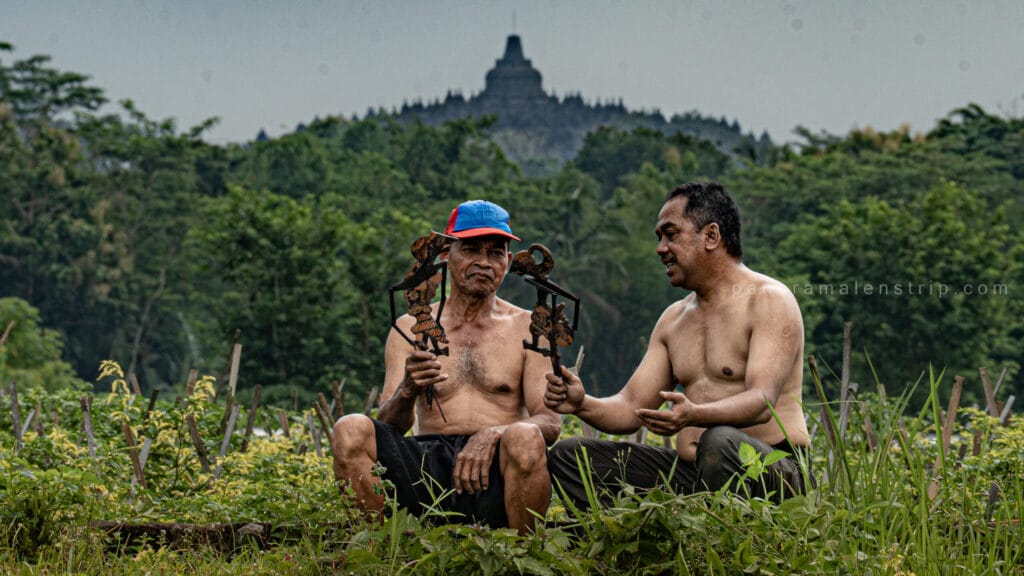
- Wayang Kulit (Shadow Puppet Theatre): Performed year-round at the Keraton Yogyakarta and the Sono-Budoyo Museum. Evening performances run from 20:00 until midnight. Low-light photography is demanding but rewarding — a fast prime lens (50mm f/1.4 or f/1.8) is essential.
- Batik Day (October 2): Yogyakarta is Indonesia’s batik capital. On Batik Day, workshops and galleries open publicly. Streets fill with artisans demonstrating the wax-resist process. Close-up macro work on textile patterns produces visually striking documentary images.
- Keraton Palace Ceremonies: The Sultan’s palace holds regular ceremonial events open to visitors. The changing of the royal guard (Ganti Jaga) occurs every morning. The courtyard’s limestone walls and traditional architecture provide a neutral, elegant backdrop for portraiture.
- Gamelan Concerts: The royal gamelan orchestras perform at the Keraton every Sunday morning. Audio-visual storytelling opportunities are excellent for multimedia travel photographers.
Which Months Offer the Best Photography Conditions in Yogyakarta?
When Is Golden Hour Most Predictable at Borobudur?
Golden hour at Borobudur is most predictable from June through August. During this period, sunrise occurs between 05:30 and 05:45 AM. The sun rises to the east-northeast, casting warm light directly onto the temple’s eastern faces and stone stupas. Cloud cover is minimal. Atmospheric haze is low. The result is clean, warm-toned imagery with strong shadow definition across the temple’s carved relief panels.
To photograph Borobudur at golden hour, arrive at the temple complex by 04:30 AM. Secure a position on the upper circular terraces before other visitors climb. A wide-angle lens between 16mm and 24mm captures the full sweep of stupas against the dawn sky. A telephoto between 70mm and 200mm isolates individual Buddha statues emerging from their perforated stone bells. The exposure triangle at this light level typically requires: ISO 400–800, aperture f/5.6–f/8, and a shutter speed of 1/60s to 1/250s as the light builds.
What Is the Best Time to Photograph Prambanan Temple?
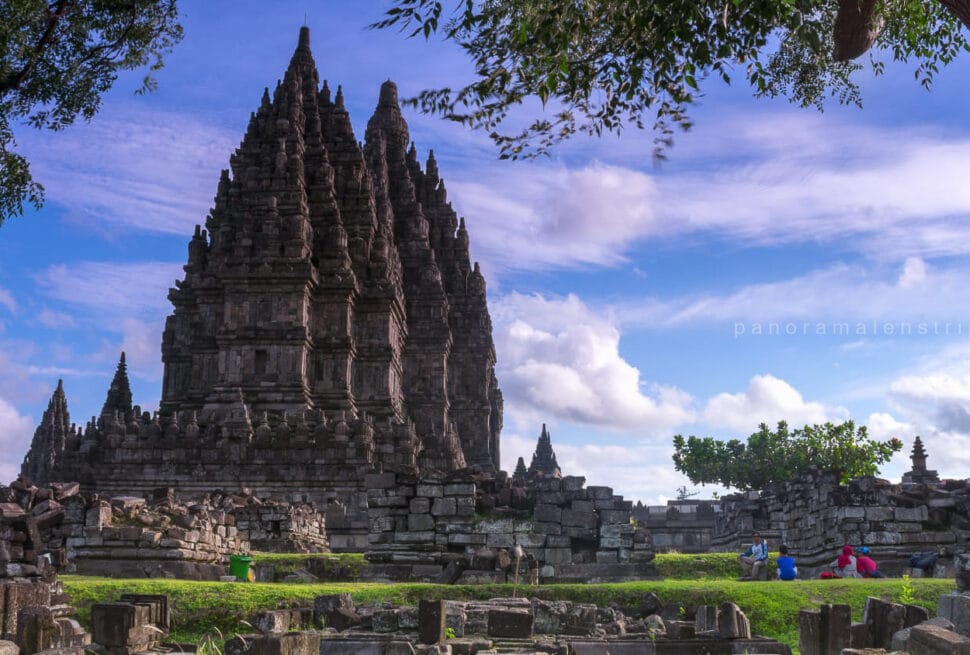
The best time to photograph Prambanan Temple is late afternoon from 15:00 to 17:30 PM, between June and September. During this window, the sun descends in the west and casts warm, raking light across the complex’s three central towers. The tallest tower (dedicated to Shiva) reaches 47 metres. This height becomes visually commanding when lit from the side by late-afternoon sun. Shadows fall across carved stone reliefs, emphasising their depth and texture.
The blue hour — approximately 18:00 to 18:20 PM — produces a different but equally powerful image. The towers turn deep silhouette against a cobalt sky. A graduated neutral density filter manages the exposure difference between the dark stone and the bright sky. Shooting from the northwestern approach gives the best compositional balance between the three main towers.
How Does Volcanic Haze from Mount Merapi Affect Photography?
Mount Merapi is an active stratovolcano located 28 kilometres north of Yogyakarta. Low-level volcanic activity produces a faint sulphurous haze called vog (volcanic smog). This haze is most visible between October and January. It reduces long-distance atmospheric clarity. Wide-angle landscape compositions that include the caldera in the background may appear softer and less defined during these months.
For close-range photography on Merapi’s lower slopes, the topography itself dominates the composition. Foreground interest — volcanic rock formations, sparse highland vegetation, steam vents — provides strong graphic elements that make focal length choices between 24mm and 50mm highly effective. During clear dry-season mornings, Merapi’s summit is visible from Borobudur’s upper terraces, creating a powerful multi-element composition: temple stupas in the foreground, the volcanic cone in the background, and a band of golden lowland light between them.
How Do Luxury Travelers and Photography Tour Groups Plan Around the Seasons?
What Does a Premium Photography Itinerary in Yogyakarta Look Like?
A premium photography itinerary in Yogyakarta is built around light windows, not tourist schedules. Arrival is timed two days before a key sunrise window. Accommodation is positioned within 20 minutes of Borobudur to enable pre-dawn access without logistical stress. Private transport with a dedicated driver eliminates timing constraints. A specialist photography guide — fluent in both Javanese cultural context and technical camera operation — accompanies each session.
Panorama Lens Trip designs itineraries that extend well beyond Yogyakarta. A typical 10–14 day Indonesia photography journey combines Yogyakarta’s temples and volcanic landscapes with Bali’s rice terrace terraces and coastal light, Komodo’s prehistoric fauna and turquoise bays, or Flores’ multi-coloured volcanic crater lakes. Each leg of the itinerary is timed to the most favourable photography conditions for that specific landscape. Season, altitude, and light angle are all calculated before the route is confirmed.
What Should You Pack for a Photography Trip to Yogyakarta by Season?
Packing correctly depends on when you travel. The best time to visit Yogyakarta for photography — the dry season — demands different gear than the wet season’s moody, atmospheric conditions.
Dry Season Essentials (May–October)
- UV filter: Protects front lens elements from fine volcanic dust common on highland routes
- Circular polarising filter: Reduces glare on rice paddies and temple stonework under strong sun
- Lightweight tripod: Essential for Borobudur pre-dawn sessions (carbon fibre reduces carry weight)
- Wide-angle lens (16–24mm): Captures the full scale of temple complexes and volcanic landscapes
- Telephoto lens (100–400mm): Isolates distant volcanic peaks and festival procession detail
- Microfibre cloths (×5): Dust from unpaved highland routes accumulates on lens surfaces quickly
- Cooling towel and electrolyte tablets: Midday temperatures above 30°C create fatigue on multi-hour shoots
Wet Season Essentials (November–April)
- Camera body with weather sealing: Any significant rainfall requires at minimum IPX4-rated protection
- Rain cover (universal fit): For long telephoto lenses that lack native sealing
- Dry bags (10L and 20L): For camera bodies during transit between locations in open vehicles
- Moisture-absorbing silica packets: High humidity accelerates fungal growth on lens elements
- Waterproof hiking boots: Muddy highland trails toward Merapi viewing points are significant underfoot
- Neutral density filter (3-stop): Wet season overcast creates flat light — ND filtration opens creative exposure options
- Extra batteries (×3 minimum): Cold morning temperatures reduce battery capacity by up to 30%
📸 See What Your Golden Hour Shots Could Look Like
Every frame described in this guide has been captured by Panorama Lens Trip clients over the past decade. Borobudur emerging from morning mist, Mount Merapi erupting in alpenglow, Prambanan in silhouette against a cobalt blue hour sky — it is all in our live galleries. Explore the exact shots your Indonesia photography itinerary could produce by browsing our recent client work on Instagram.
Is Yogyakarta Worth Visiting Outside the Peak Season?
The best time to visit Yogyakarta is not always the same for every traveler. For certain types of photographers and cultural explorers, the off-peak months offer a genuinely superior experience. The assumption that dry-season peak is always the best choice deserves scrutiny.
Travelers who visit Yogyakarta in November report two consistent advantages: dramatically lower accommodation rates and near-exclusive access to Borobudur’s upper terraces. In peak July, the upper level fills within 20 minutes of opening and remains crowded until mid-morning. In November, the same terraces are often shared with fewer than a dozen visitors at sunrise. Accommodation rates in the Borobudur area run approximately 35–45% lower in November than in July, according to data from Panorama Lens Trip’s multi-year booking records.
Furthermore, wet-season light is not uniformly poor. Overcast skies function as a giant natural softbox. Portrait work in Yogyakarta’s batik workshops, gamelan studios, and market environments benefits from diffused, even illumination. Documentary and street photography gains significant atmospheric quality when streets glisten with rain and vendors shelter under traditional umbrellas. Approximately 68% of Panorama Lens Trip’s clients who have visited Yogyakarta in both peak and shoulder seasons report that they prefer their wet-season images for emotional impact, even though they originally booked the dry-season trip for practical reasons.
The honest recommendation is this: if your primary goal is landscape and architectural photography of temples and volcanoes, book May to August. If your priority is cultural immersion, documentary work, portraiture, or exclusive access without large crowds, November to early December is a highly competitive choice.
Also read: Yogyakarta Cultural Tour: Authentic Javanese Heritage Guide
Frequently Asked Questions About Visiting Yogyakarta
What is the cheapest time to visit Yogyakarta?
The cheapest time to visit Yogyakarta is between November and February — the wet season. Flight and accommodation prices drop significantly compared to peak dry-season months. Hotels near Borobudur run 35–45% lower in November. For travelers weighing the best time to visit Yogyakarta on a budget, this window delivers exceptional price-to-experience value.
Is Yogyakarta safe to visit during the rainy season?
Yes. Yogyakarta is safe to visit during the rainy season. Rainfall typically occurs in short, intense afternoon bursts lasting 1–2 hours. Mornings are usually clear. Standard precautions apply: avoid low-lying areas during heavy downpours, check Mount Merapi’s activity status before trekking near the volcano, and use waterproof protection on camera equipment. The Indonesian Volcanology Agency (PVMBG) publishes daily Merapi activity reports online.
How many days do you need in Yogyakarta for a photography trip?
A dedicated photography trip to Yogyakarta requires a minimum of four full days. Begin at Borobudur — an early pre-dawn arrival captures the temple’s most dramatic golden hour. From there, Prambanan rewards a late-afternoon and blue hour visit on day two, when raking sidelight defines every carved relief. The third day belongs to the Keraton palace, Yogyakarta’s batik workshops, and Malioboro Street’s layered street life. On day four, head north toward Mount Merapi’s lower slopes for a volcanic sunrise entirely unlike anything the temple circuit offers. A six to seven day visit allows deeper immersion, including a day trip to the Dieng Plateau and Sewu temple complex.
Can I combine Yogyakarta with other Indonesian destinations?
Yes. Yogyakarta connects naturally with Bali (1-hour flight), Komodo Island (direct or via Bali), Flores (connecting via Bali or Lombok), and the Dieng Plateau (3-hour drive). Panorama Lens Trip specialises in building multi-destination Indonesia photography itineraries that combine Yogyakarta’s temples and volcanoes with the coastal light of Bali, the ancient landscapes of Flores, or the jungle environments of Sumatra — all timed to each destination’s optimal photography window.
What is the best time to see Borobudur at sunrise?
The best time to see Borobudur at sunrise is between June and August. Sunrise occurs around 05:30–05:45 AM. Arrive at the entrance gate no later than 04:30 AM to reach the upper terraces before other visitors. The golden hour window lasts approximately 45–60 minutes before the light becomes too harsh and flat. Private pre-dawn access passes are available through licensed tour operators and allow entry before the standard public opening time.
Do I need a guide for a photography tour in Yogyakarta?
A specialist guide transforms a Yogyakarta photography experience. General access without a guide is possible, but a photography-specific guide provides positioning intelligence (which temple angle catches the best light at a given time), cultural context for documentary work, and logistical support for early-morning sessions. A guide also manages permit coordination for drone operations and restricted-access areas. For high-net-worth travelers on condensed itineraries, a specialist guide is the most efficient investment in image quality available.
Plan Your Yogyakarta Photography Trip with Expert Guidance
The best time to visit Yogyakarta depends entirely on what you want to take home. The dry season delivers exceptional landscape and architectural photography. The wet season opens doors to intimate cultural access and dramatic atmospheric imagery. The right itinerary depends on your specific travel window, photographic priorities, and how Yogyakarta connects to the rest of your Indonesia journey.
Panorama Lens Trip has guided clients across every corner of Indonesia — from the volcanic temples of Java to the coral gardens of Raja Ampat, the highland rice terraces of Bali, and the ancient fjords of Flores. Every route is built around light, culture, and the images you want to bring home.
🎯 Get Your Indonesia Photography Itinerary — Perfectly Timed
The difference between a good photography trip and an extraordinary one often comes down to timing. A single well-placed sunrise. A festival that falls within your window. A route that connects three destinations at the peak of their photographic season. Map out your ideal Indonesia photography journey — timed to your exact travel dates, designed around the destinations you want most — with a free, no-obligation route consultation from a Panorama Lens Trip specialist. Your itinerary, your images, your story. Click here!
Panorama Lens Trip provides specialist photography tour packages and premium long day tours across Indonesia. All weather data, crowd assessments, and booking trend figures referenced in this article are drawn from operational records and guide field reports compiled over multiple consecutive seasons.