TL;DR
- Dagi Hill is a forested ridge viewpoint directly above the Borobudur temple complex in Central Java, Indonesia.
- It offers a closer, more intimate sunrise composition than Setumbu Hill, including ancient Candi Dagi ruins in the foreground.
- Setumbu Hill provides a wider panoramic view, with better visibility of Mount Merapi and Mount Merbabu on clear days.
- Best season: May–October (dry season) for maximum atmospheric clarity and golden hour color.
- Recommended gear: Wide-angle to standard zoom (16–70mm), tripod, and RAW shooting capability.
- Verdict: Dagi Hill wins for photographers who prioritize foreground depth and solitude. Setumbu wins for wide volcanic panoramas.
Dagi Hill delivers one of the most underrated sunrise experiences in all of Indonesia. Our local photography guides have tested both Dagi Hill and Setumbu Hill across multiple seasons and lighting conditions. The answer is not simple. Each viewpoint serves a different photographer and a different creative intent. This article presents our field findings, a direct side-by-side comparison, and the practical information you need to choose the right spot for your Indonesia photography tour.
What Is Dagi Hill — and Why Do Photographers Go There?
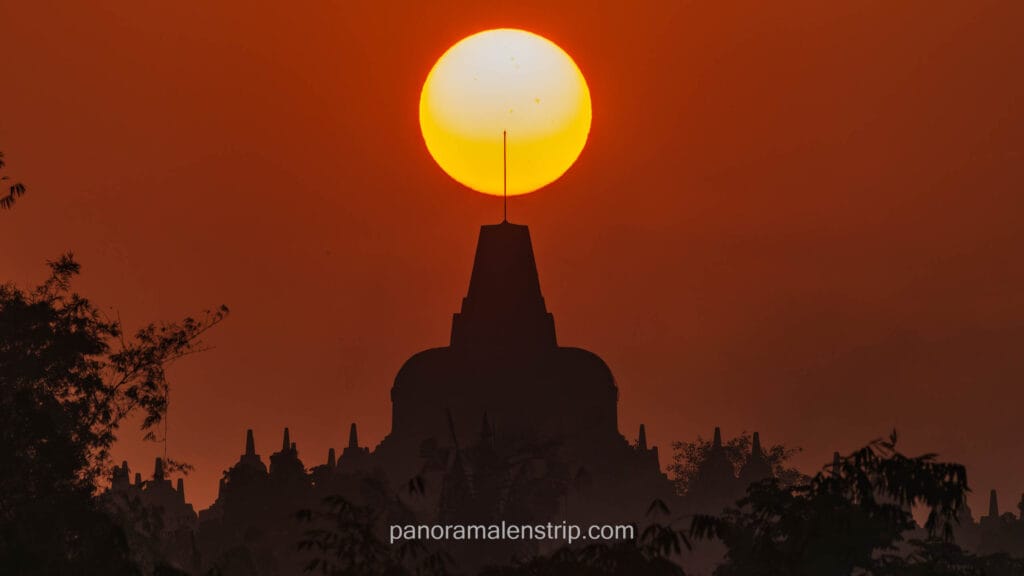
Dagi Hill is a forested ridge located approximately 1.2 kilometers northeast of the Borobudur temple complex in Magelang Regency, Central Java. It sits at roughly 400 meters above sea level. The hill offers a direct elevated sightline over Borobudur’s iconic nine-tiered stupa structure. Photographers specifically seek it out for its combination of foreground ruins, jungle canopy layers, and proximity to the temple.
Where Exactly Is Dagi Hill Located?
Dagi Hill sits within the Borobudur Archaeological Park zone, northwest of the main temple entrance. Coordinates place it near 7.607°S, 110.204°E. The access trail starts from a small parking area on Jalan Balaputradewa. The hike to the summit platform takes approximately 15–20 minutes on a paved stone path.
What Makes Dagi Hill Different From Other Borobudur Viewpoints?
The defining feature of Dagi Hill is Candi Dagi, a partially preserved ancient Hindu temple ruin sitting directly at the summit. This structure appears in the lower third of your frame when shooting toward Borobudur. No other viewpoint around Borobudur offers this kind of layered archaeological foreground. Photographers using a 24–35mm focal length can incorporate the ruins, the tree line, the temple platform, and the distant sky within a single wide composition.
Visitor numbers at Dagi Hill are significantly lower than at Setumbu Hill on most mornings. This means fewer light sources from other photographers’ headlamps disrupting long exposures. It also means more freedom to reposition your tripod without navigating a crowd.
Also read : Borobudur Sunrise View: Best Spots, Tickets & Tips
Dagi Hill vs. Setumbu Hill: Which Sunrise Viewpoint Is Better?
Dagi Hill is better for photographers who want compositional depth, foreground interest, and minimal crowds. Setumbu Hill is better for those who want a sweeping panoramic frame, maximum temple visibility, and clear volcano backdrops. The choice depends entirely on your creative priorities and the weather conditions during your visit.
| Feature | Dagi Hill | Setumbu Hill |
|---|---|---|
| Elevation | ~400 m | ~362 m |
| Distance from Borobudur | ~1.2 km (northeast) | ~2.8 km (northwest) |
| Crowd Level (Peak Season) | Low–Moderate | High |
| Ideal Focal Length | 16–50mm (wide to standard) | 70–200mm (telephoto compression) |
| Trail Difficulty | Easy (paved stone path) | Easy (paved steps) |
| Morning Mist Frequency | High (enclosed valley position) | High (elevated open plateau) |
| Entry / Ticket Required | Yes (park zone ticket) | Yes (separate Setumbu ticket) |
| Best For | Solo or small group (2–4 people) | Groups, tour buses |
| Composition Style | Foreground-layered, intimate | Wide-angle panoramic |
| Best Season | May–October | May–October |
| Volcano Backdrop | Partially visible | Merapi and Merbabu clearly visible |
| Unique Feature | Candi Dagi ruins in foreground | Full Borobudur silhouette at distance |
How Does the Composition Differ Between the Two Hills?
At Setumbu Hill, the standard composition places the full Borobudur temple platform as a mid-ground silhouette, with Mount Merapi and Mount Merbabu rising behind it on clear mornings. Telephoto compression (100–200mm) is highly effective here. It stacks the temple, the volcanoes, and the sunrise sky into a dramatically compressed frame.
At Dagi Hill, the temple is closer and higher in your field of view. The foreground is dominated by Candi Dagi ruins and dense jungle. A 24mm or 35mm focal length suits this location far better. The result is a more intimate, layered image that rewards compositional patience rather than straight telephoto power.
Which Hill Has Better Fog and Mist Conditions?
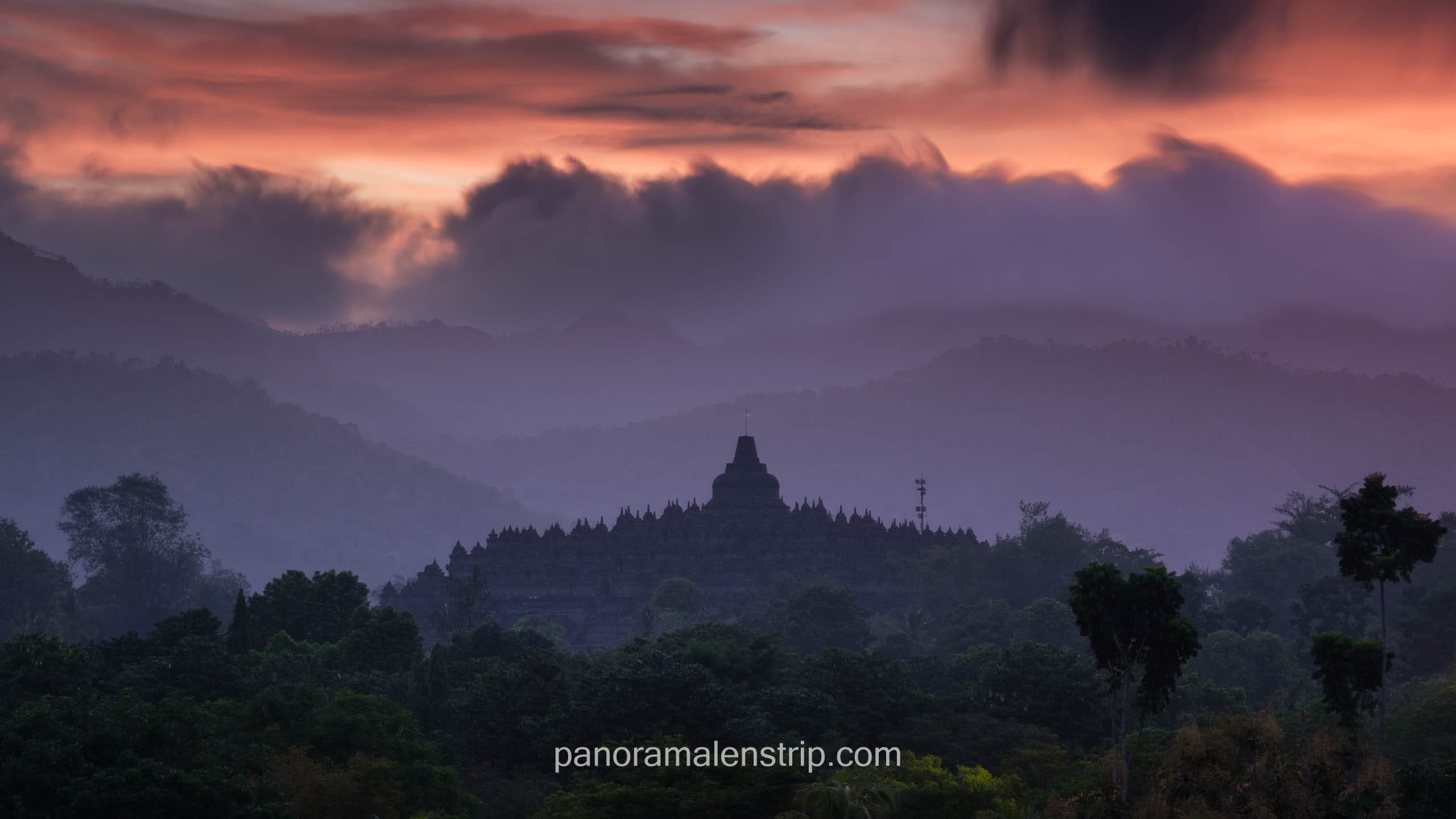
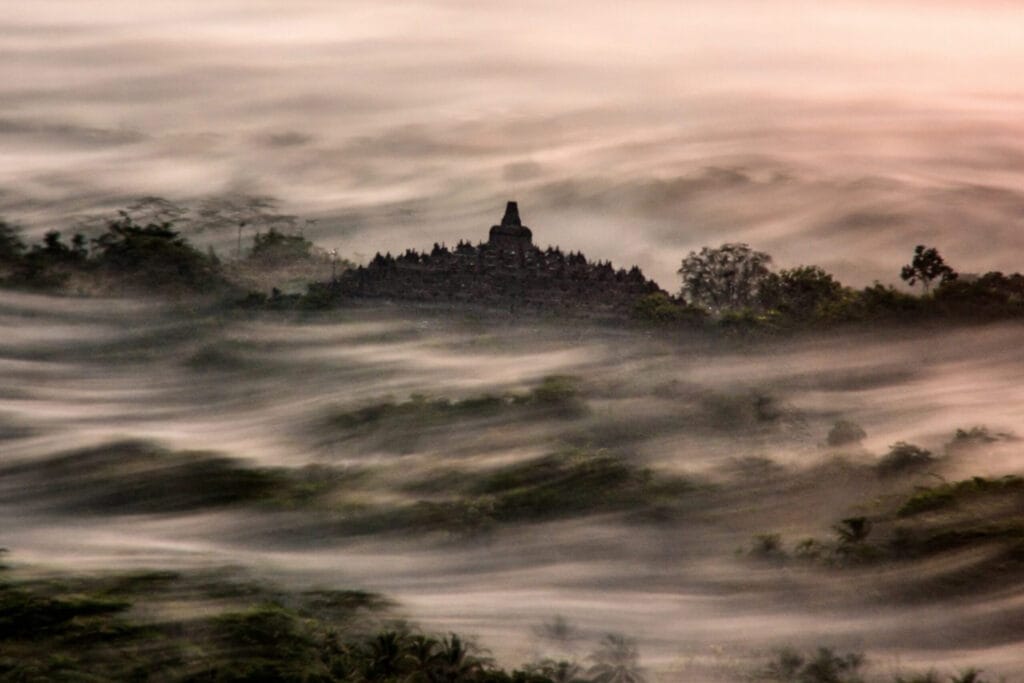
Both hills sit within the Kedu Plain, one of Java’s most mist-prone river valleys. Morning inversion layers typically form between 5:00–6:30 AM year-round. At Dagi Hill, the mist tends to sit lower and more densely around the temple base, because the hill is closer to the valley floor. This produces dramatic fog-wrapped stupa imagery on high-humidity mornings. At Setumbu, the fog can blanket the entire middle distance, occasionally obscuring the temple entirely — a risk that photographers at a greater distance face more often.
What Is the Counter-Argument for Choosing Setumbu Over Dagi?
Setumbu Hill has legitimate, objective advantages that serious photographers should not dismiss. On mornings with exceptional atmospheric clarity — typically in July and August — the dual volcanic backdrop of Merapi and Merbabu is a compositional element that Dagi simply cannot replicate. Setumbu’s greater distance from the temple also allows the entire nine-tiered pyramid structure to register as a complete silhouette against the sky. At Dagi’s closer proximity, only the upper tiers are cleanly visible above the tree line.
Furthermore, Setumbu has better-developed viewing infrastructure: a dedicated platform, handrails, and reliable toilet facilities near the base. For photographers managing mobility constraints or heavy gear bags, these are practical advantages. The “quiet = better” assumption does not always hold. If your primary goal is a clean, wide, volcanic-backdrop shot of Borobudur for large-format print, Setumbu is the objectively correct choice.
When Is the Best Time to Photograph Dagi Hill Sunrise?
The best time to photograph Dagi Hill sunrise is during Indonesia’s dry season, specifically May through October. Sunrise during this period occurs between approximately 5:30–6:00 AM local time. Arrive no later than 4:30 AM to secure your position, allow your eyes to adjust to the dark, and complete your tripod setup before civil twilight begins.
What Season Produces the Clearest Skies Over Borobudur?
July and August deliver the lowest average humidity and the highest rate of clear-sky mornings across Central Java. May, June, and September offer slightly higher mist probability, which can enhance or ruin a shot depending on your preferences. October marks the transition into the wet season. Rain probability increases significantly after late October. November through April brings overcast skies, heavier cloud cover, and frequent morning rain — manageable for experienced photographers but not ideal for first-time visitors.
How Early Should You Arrive at Dagi Hill?
Depart from central Yogyakarta no later than 3:00 AM. The drive to Borobudur takes approximately 1.5 hours without traffic. Parking and the short trail walk add another 20–30 minutes. Arriving at the summit viewing area by 4:30–4:45 AM gives you time to shoot through nautical twilight, civil twilight, and the full golden hour sequence. Missing the pre-dawn blue hour is one of the most common mistakes visitors make. The deep blue tones of nautical twilight over the jungle canopy are a distinct shot in their own right.
Learn more : Borobudur Sunrise Best Time: Weather & Best Months Guide
What Camera Gear Do You Need for Dagi Hill Sunrise?
The essential kit for Dagi Hill includes a wide-angle to standard zoom lens (16–70mm range), a sturdy carbon-fiber or aluminum tripod, and a camera capable of clean high-ISO performance. A two-stop or three-stop graduated neutral density filter is strongly recommended for balancing the bright sky against the darker jungle foreground during the first minutes of sunrise.
What Focal Length Works Best at Dagi Hill?
A 16–35mm f/2.8 or equivalent wide-angle zoom is the primary working lens at Dagi Hill. This focal length captures the full sweep of the scene: Candi Dagi in the foreground, the Borobudur temple platform in the mid-ground, and the open sky above. A standard 24–70mm zoom provides more compositional flexibility if you want to isolate specific architectural details of the ruins. Ultra-telephoto lenses above 200mm have limited application here. The proximity to the temple reduces the effectiveness of telephoto compression compared to Setumbu.
How Do You Handle Low-Light Exposure at Sunrise?
Dagi Hill’s pre-dawn light level requires a disciplined approach to the exposure triangle. Start with your lens at its widest usable aperture (f/2.8 to f/4). Set your ISO between 800 and 3200 — modern full-frame and APS-C mirrorless cameras handle this range cleanly. Use Manual mode to maintain control as the light shifts rapidly during the first 20 minutes after the horizon brightens. Shoot in RAW format exclusively. This preserves maximum dynamic range for shadow recovery in post-processing. Review your histogram after each exposure to avoid clipping in the sky. Exposure bracketing (three frames at ±1 stop) is advisable for HDR merging during high-contrast moments.
How Do You Get to Dagi Hill From Yogyakarta?
Dagi Hill is approximately 42 kilometers northwest of central Yogyakarta. The most direct route follows the Yogyakarta–Magelang highway (Jalan Magelang). Total drive time without traffic is 1 hour 15 minutes to 1 hour 30 minutes. The access point is within the Borobudur Archaeological Park boundary.
What Transport Options Are Available for the Pre-Dawn Drive?
A private chartered vehicle is the strongly recommended option for pre-dawn photography departures. Ride-hailing apps (Gojek, Grab) are available in Yogyakarta but operate with limited driver availability between 2:00–4:00 AM. Finding an available driver at 2:30 AM is unreliable. Motorcycle rental is an option for solo travelers comfortable on Indonesian roads in darkness, but it limits the amount of gear you can safely carry.
For photography groups of two or more people, chartering a dedicated minivan through a local guide service is the most practical and cost-effective solution. It eliminates transport uncertainty and allows you to load tripods, camera bags, and rain gear without restriction.
Is a Local Guide Necessary at Dagi Hill?
A local guide is not legally required at Dagi Hill. The trail is straightforward, and the park entrance is staffed. However, a guide delivers three specific advantages for photographers. First, they know the exact best standing positions on the viewing platform for different focal lengths and conditions. Second, they monitor real-time weather apps and can advise on whether to proceed or defer your sunrise attempt. Third, they manage park entry logistics so you arrive at the platform — not at a locked gate.
Map out your perfect Indonesia photography itinerary — from Dagi Hill at dawn to Bromo’s volcanic caldera, Raja Ampat’s reef-fringed islands, and the terraced rice fields of Bali. Our local photography specialists will build a custom, stress-free route around your schedule, gear, and creative goals. No templates, no obligations. → Book your free route consultation
Frequently Asked Questions About Dagi Hill Sunrise
Is Dagi Hill open to the public?
Yes. Dagi Hill is accessible within the Borobudur Archaeological Park zone. Visitors pay a standard park entrance fee. No separate Dagi Hill ticket is required beyond the general park access fee. Entry is managed at the main Borobudur park gate on Jalan Badrawati.
Do I need to book a ticket in advance for Dagi Hill sunrise?
Advance booking is not mandatory for individual visitors. However, during peak domestic travel periods — particularly Indonesian national holidays and school holidays in June–July — visitor numbers increase significantly. Purchasing your Borobudur park ticket online through the official Taman Wisata Candi platform is advisable to avoid queue delays at 4:30 AM.
Is Dagi Hill better than Setumbu Hill for photographers specifically?
For photographers prioritizing compositional layering, foreground archaeological elements, and low-crowd conditions, Dagi Hill is the superior choice. For photographers who require a wide volcanic panorama or full temple silhouette, Setumbu Hill produces more technically versatile images. The decision is creative, not logistical.
Can beginners hike to Dagi Hill in the dark?
Yes. The trail to the Dagi Hill summit viewing platform is paved with stone steps and is manageable for most fitness levels. A head torch or smartphone flashlight is sufficient for the 15–20 minute ascent. Beginners should allow extra time and avoid rushing on the unlit sections.
What happens if it rains or the sky is cloudy on my sunrise morning?
A fully overcast sky reduces color saturation but does not eliminate the shot. Diffuse cloud light produces even exposure across the scene without harsh contrast. Light cloud cover with a defined horizon gap — where the rising sun breaks through below the cloud base — often produces the most dramatic and dynamic sunrise images. Heavy rain before dawn can generate dense, low-lying mist that partially conceals the temple, creating an atmospheric effect some photographers prefer.
Is Dagi Hill worth visiting if I only have one day at Borobudur?
Yes, unequivocally. The sunrise view from Dagi Hill is a distinct experience from walking the temple platform itself. The two activities complement each other well: arrive at Dagi Hill for sunrise (5:00–6:30 AM), photograph from the hill, then descend and enter the main Borobudur temple complex during the cooler morning hours (7:00–9:00 AM) before crowds build.
Final Verdict — Should You Choose Dagi Hill or Setumbu?
Dagi Hill is the better choice for photography-focused travelers who value intimacy over scale. The Candi Dagi ruins as foreground, the closer proximity to Borobudur, and the reliably lower crowd density make it the more creatively rewarding option for most photographers. Choose Dagi Hill if you shoot wide-angle, prefer layered compositions, and want the freedom to work without crowds.
Choose Setumbu Hill if clear skies are forecast and your primary goal is a compressed telephoto shot featuring Mount Merapi rising behind the Borobudur silhouette. Both viewpoints are worth visiting across multiple mornings if your schedule allows.
Borobudur is one location within a much broader photography landscape across Indonesia. The same creative approach — seeking the uncommon angle, the foreground element, the uncrowded moment — applies equally to the caldera rim of Mount Bromo, the karst coastline of Komodo, and the mirror-still rice terraces of Bali’s Jatiluwih plateau. Indonesia rewards photographers who are specific in their intent, prepared in their logistics, and guided by genuine local expertise.
Also read : Borobudur Sunrise Photography Guide for Professionals